Good morning, everyone! It is just after six a.m. here but it is fairly normal for my family and I to be up before 7 a.m. on the weekend. During the week I wake up for work at 5:30 a.m. and today was just the same, without the alarm clock. Since I’m up and motivated I thought I would share with you an inspirational story one of my coworkers recently shared via Facebook. The story of Sergeant Elizabeth Marks is one that I did not know before and like retired Marine Sergeant Kirstie Ennis, Sergeant Marks also continues a physical fitness intensive regime in spite of her injuries. I am impressed and motivated by the determination of both these women in the face of such great odds and in the past few weeks have worked on incorporating fitness back in my life. I let that aspect of my wellbeing suffer greatly while I was working full-time and also working on my graduate degree.
I think one of the most powerful messages shared was her choice to wear the 22Kill ring in honor of her friend who committed suicide. While suicide victims are not just limited to individuals who serve (or served in the military) this profession, like other high stress employment fields, has a higher percentage of suicides compared to the civilian population and this percentage is higher for both men and women who serve(d). Even Marks’ physically small but powerful gesture represents a continuing effort to bring awareness to suicide prevention. Other organizations such as the American Foundation for Suicide Prevention are also ensuring work continues to help save lives.
Another message I wanted to share with you today was about the careful construction of Sergeant Marks’ leg tattoo. I thought it was beautiful the ESPN article discussed at length her choices for the design and the meaning behind those symbols. I have many peers who have service-related tattoos and the ones that commemorate fallen peers and pride of service are among the ones that catch my eye the most. Finding the right tattoo artist to craft those messages is something that I think many veterans can relate to and is worth the effort (and money).
I don’t believe I’ve spoken before about the tattoo piece I will have done later this year that commemorates my time at Camp Blue Diamond. I made the appointment for this tattoo about a year ago. Justin Nordine, who owns The Raw Canvas in Grand Junction, Colorado, is who I chose based on his watercolor work. The more I thought about his style the more I realized there wasn’t another single American tattoo artist whose work I came across that made me feel he or she was capable enough of conveying the complex emotions associated with my deployment. When I was explaining to one of our work studies how I am trying to find a balance between not only light and dark, but also feminine and masculine perception I thought more about the challenge this desire creates for the tattoo artist. I think the only thing I am hesitant to include is the color red because red is powerful in many ways that other colors are not especially for its representation of blood. The photographs below (copied from his website) are a small representation of his amazing skill set however I highly encourage you all to check out his Instagram page if you are on Instagram.
What a month! It’s not over yet but it has been busier and more stressful, complete with more opportunities and challenges. My nervousness over how fireworks would make me feel morphed into a bigger stress response than I imagined. As a result, I have logged my chest pains to keep track of them for an upcoming appointment with a cardiologist. Looking back, the 14 days of chest pains just gets exhausting. Thankfully, they are not all day long but once I do have an episode I do worry if I’ll have another attack during that day. While I have been extremely reluctant to seek medical assistance/further diagnosis about my chest pains the reality is after eleven years of suffering through them, sometimes I cannot manage them effectively on my own. I do find it difficult to carve out sufficient exercise time which keeps them in check. Separately, the sensation of these pains has changed over the years and I know that issue alone is pretty significant to go back to seek medical advice and assistance.
During the Fourth of July, I found it possible to avoid most of the fireworks. My husband and I went to the Keg for a late dinner and walked over to the movie theater in the San Tan mall. Unfortunately, some very overzealous individuals started shooting off fireworks before it was even 9 o’clock. I had some high hopes we could miss the fireworks that night in its entirety but not so much. Although I will be flattening the conversation significantly, being around fireworks does not upset me so much because it reminds me of the constant danger I was in while serving in Iraq. That sucks but it wasn’t the worst thing. It is a struggle because it is a reminder of the worst mortar attack we had which killed my officer. The sound of that attack is something that is seared in my memory more than any other one event. It is a struggle because I know I survived that attack and while so many of us knew Captain Brock we couldn’t save him. The Quick Response Force couldn’t save him. The Medevac crew couldn’t save him. We all–his Marine family–were powerless against an indirect weapon and the rest of us came home.
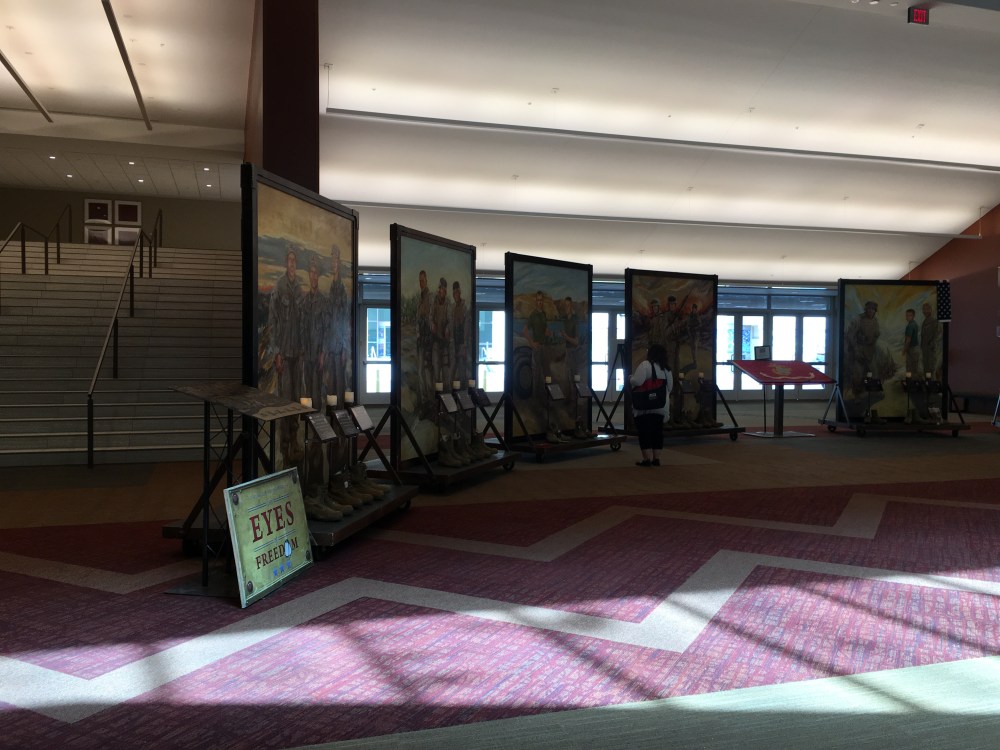
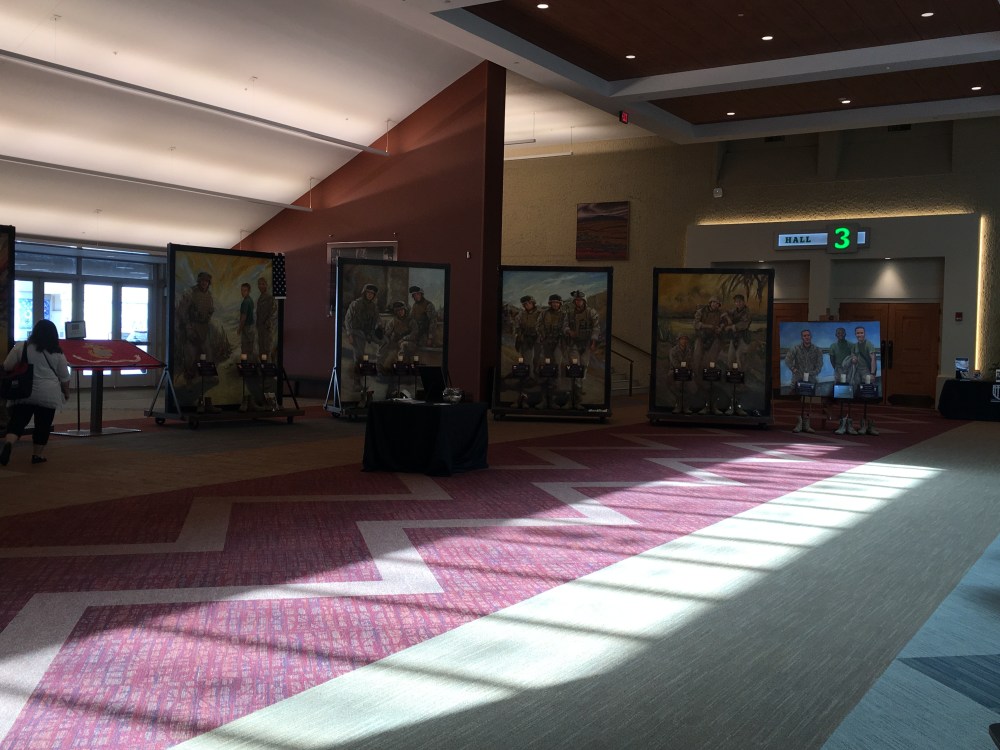
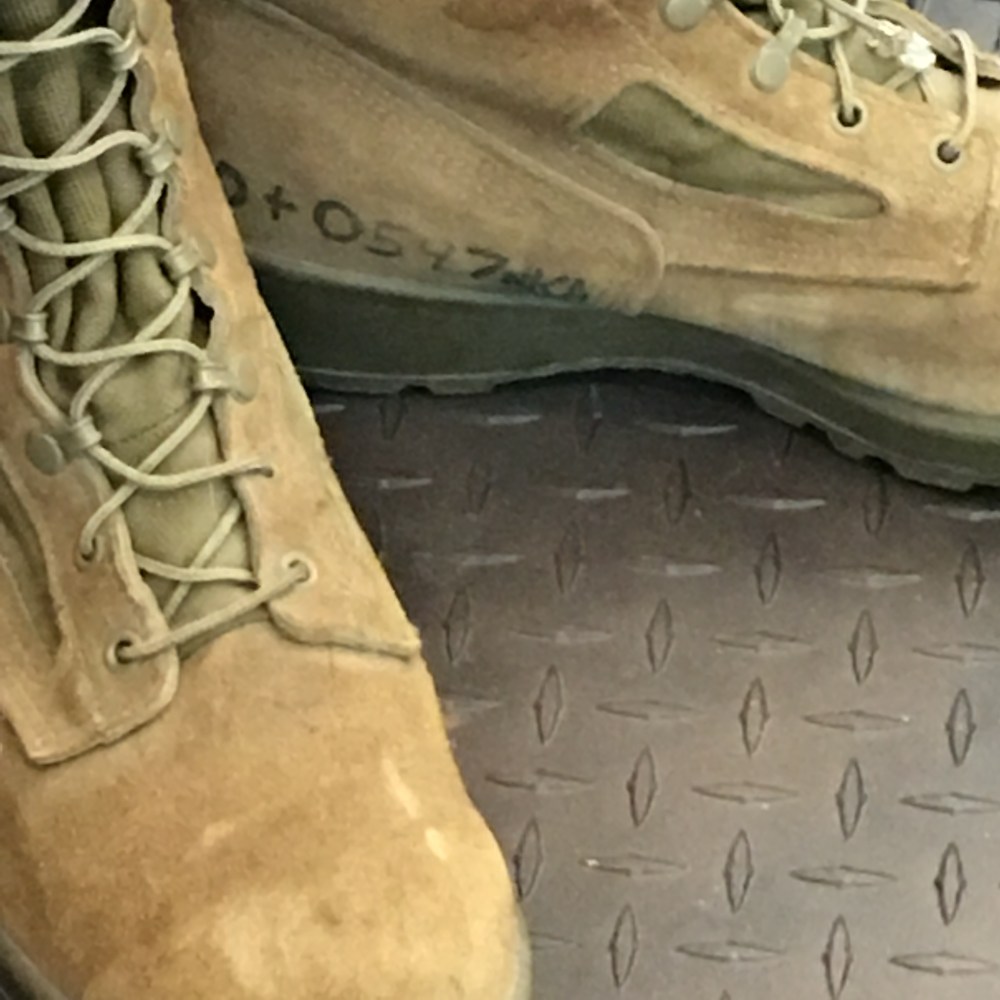
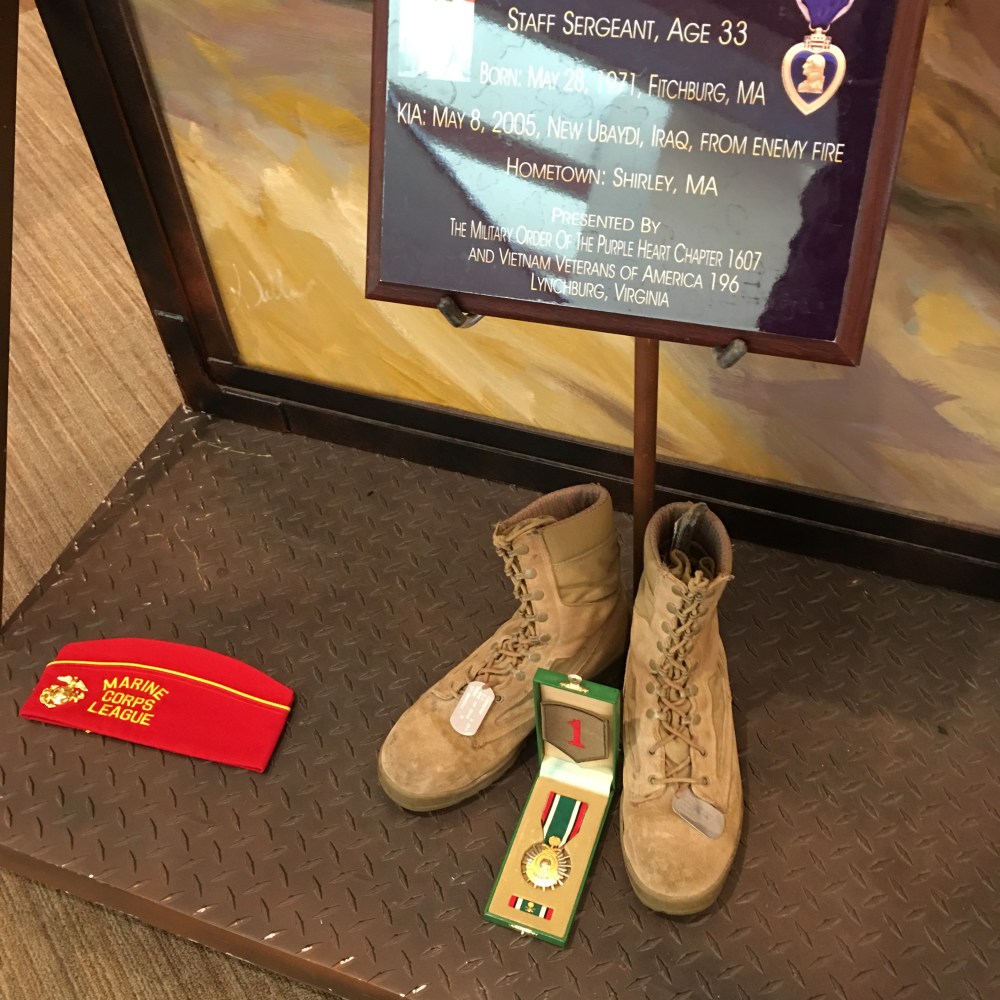
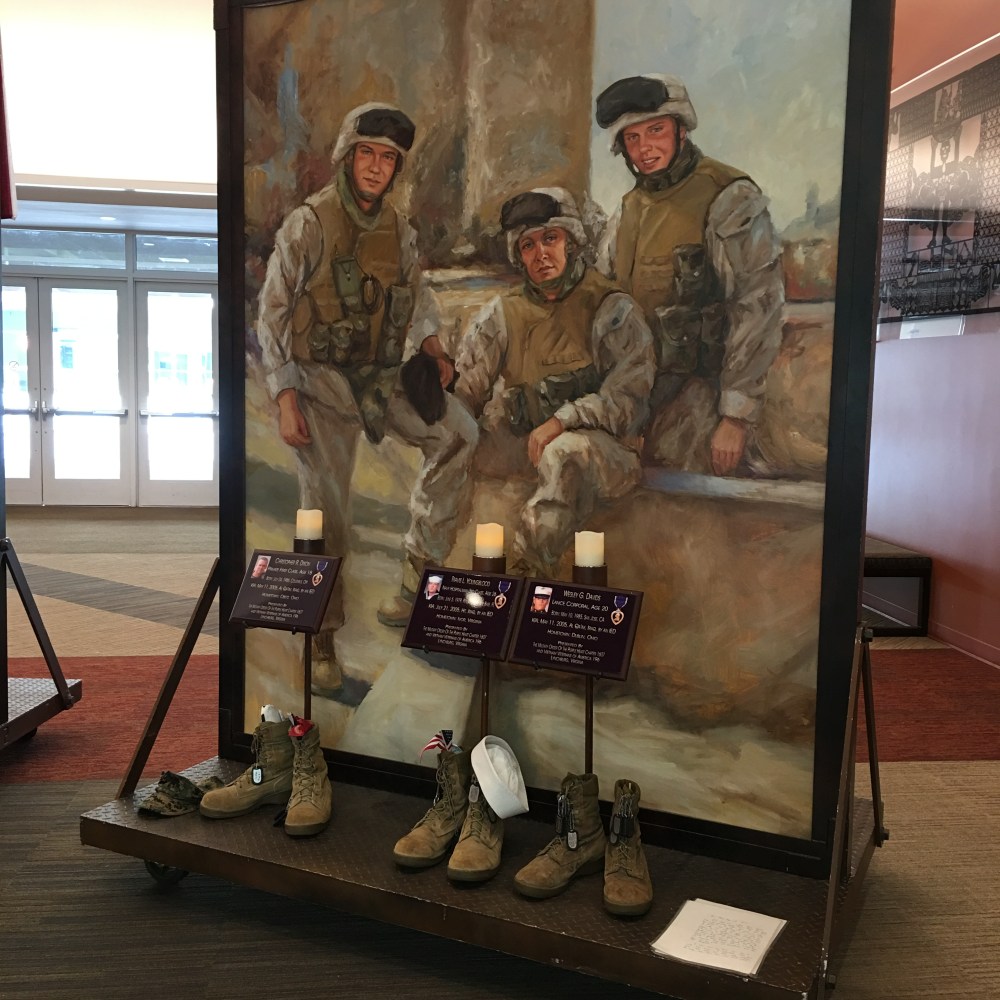
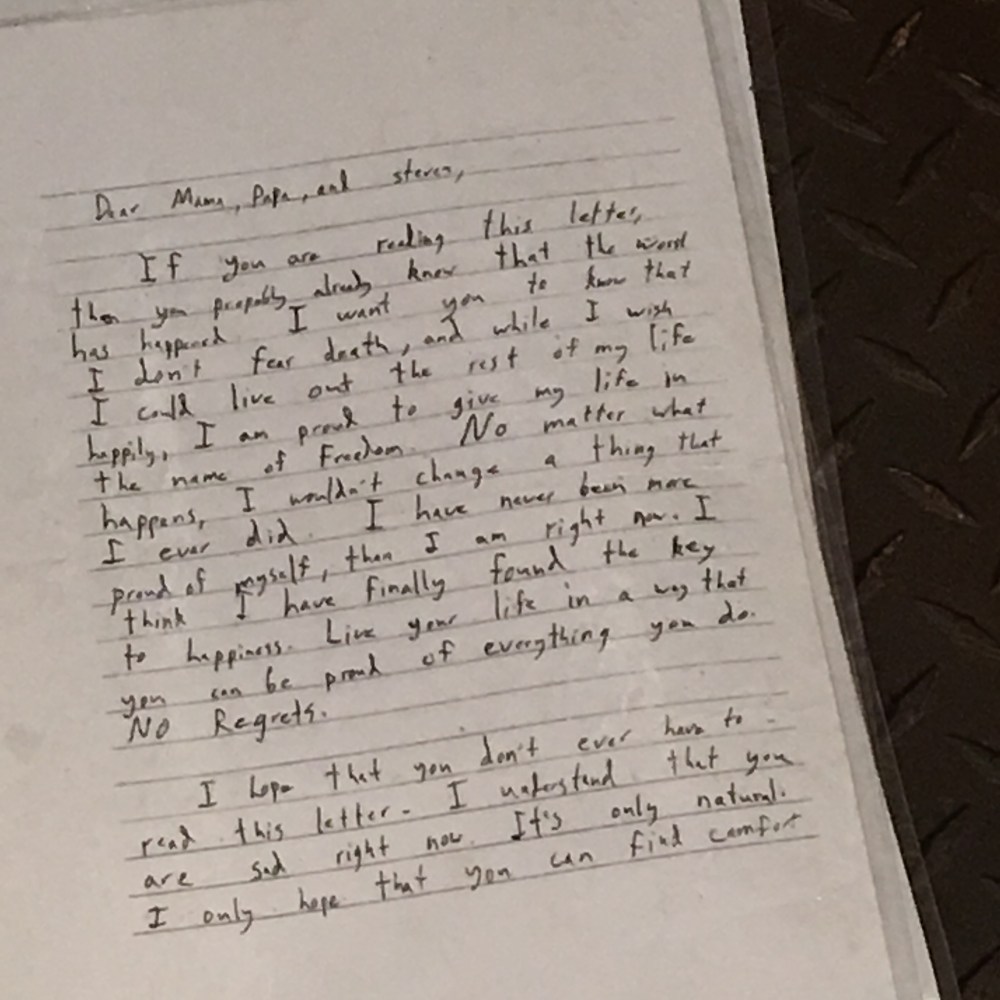
My daughter asked me recently why I didn’t die in Iraq. She asked this question of me after seeing the Eyes of Freedom memorial while I attended the WAVES conference (Western Association of Veterans Education Specialists) in Albuquerque, New Mexico. I had no answer for her other than that I was fortunate. Even then, it’s not a full answer. I was moved to the night shift in December of 2004. As such, I was at my barracks the day Captain Brock was hit outside our work. That day, it could have been almost anyone who worked in that building or it could have been no one. I was at my home talking to my grandmother on the phone and the blast was something that was easily felt from my location. It made the most terrifying sound of all the mortar impacts we took.
I know other war veterans understand why carrying survivors’ guilt is hard. We have the rest of our lives to carry the burden of those who didn’t make it home. Our existence, our homecoming, is tinged with the reminder we were granted years deprived of our peers. We will think of the accomplishments they didn’t get to enjoy; we will think of the children they didn’t have; and we will think of the fact their families will never be the same.
Please don’t take my extended absence from writing as a sign that I am not interested in continuing my veteran (and more specifically, female veteran) awareness efforts. During my recent absence I have attended to moving into my recently purchased home. You can read about that journey–should you be interested–at my other blog, Builder Grade and Reclaimed. The other large factor contributing to my absence has been my concern over the increasing violence in Fallujah and knowing that while I served in Iraq and Fallujah was in our area of operations there is nothing I can truly say as an American that speaks fully to the horror Iraqi citizens currently face on a daily basis. It is also hard not to feel a bit ashamed that I am quite privileged–enjoying the fruits and discussing the frustrations of homeownership for the first time–in the midst of such chaos, particularly when I see the large number of affected children.
In doing what I can given my current status as an amateur writer I wish to speak to you all about the fact June is PTSD Awareness Month. In the most recent couple of months I’ve begun to notice more articles that discuss the mental toll war takes on refugees and their disjointed access to support services. As a veteran, I cannot help but notice the focus on PTSD as it relates to war veterans and the stigma associated with treatment. Furthermore, the more recent shooting at Pulse in Orlando adds another layer to how violence plants the seeds for lifelong hurt in the community. I was stunned when I read about how first responders were dealing with the constant ringing of cellphones as they conducted their work at the crime scene and I realized I,too, need to broaden my perception of who is affected by violence locally (city, state), regionally, nationally, and globally. We do not always know the victims firsthand but we may know friends or family members of the victim or feel our shared identity allows us to empathize with their situation, perhaps it even brings up the hardships in our own past.
The older I get the more I realize it’s ok to talk about my own struggles with anxiety as it relates to fireworks and veteran deaths. The two issues are markedly similar to my first deployment experiences of frequent mortar fire and daily deaths of service members. I can tell you daily life is not always a challenge for me the way it is for other survivors (war, sexual assault, weather-related catastrophe, domestic violence, mass shootings, and so forth). The research I invested earlier this year crafting my applied project took a significant emotional toll on me but it’s coming close to that time of year where the celebratory use of fireworks by others makes me cringe.
After experiencing fireworks last year in my old Gilbert neighborhood on the 4th of July and then again for New Year’s the trepidation for the upcoming Fourth of July has been building and for that reason I decided to open up about my issues. I don’t know what my new neighbors are like and if they will shoot off fireworks from our shared driveway the way the former neighbors did. I don’t know if individuals in this neighborhood and the neighborhoods surrounding us will subject me to a marathon four-hour ‘celebration’ on New Years that will bring on a series of chest pains and hours of anguish. I cannot imagine what the Fourth looks like but I am nervous already about potentially losing a whole night’s sleep and still needing to go into work the next day.
I am exceptionally aware of the fireworks season when it crops up: local vendors set up stands on their vehicles on the side of local roadways and local stores clean floorspace for variety packs of fireworks for nearly every budget. While others plan fun for themselves, I’m counting down the days until I suffer through a particular hell I never imagined I’d be back in. In war after a mortar attack, I had a purpose and so I trudged through my tasks because my work helped keep people alive. A daily mortar attack here and there became normal and I adopted a casual brush off of this experience. So long as we looked around and everyone was ‘ok’ things were normal.
Looking back on my past, I am now rather grateful fireworks were–and are–such a rare exposure. I lived in the barracks for most of my Marine Corps career and so I did not encounter fireworks there. When I moved off base–residing in Oceanside–fireworks weren’t a concern either. From the alley of our home in Cody, Wyoming I could see the large public fireworks display off in the distance which I find enjoyable but none of my neighbors lit fireworks down the street. (To be honest, I also don’t know if it was permitted either but I am grateful my exposure was limited.) During the time I lived with my in-laws in Mesa and later in ASU’s family housing I also did not contend with fireworks.
So please know for the duration of June 24th to July 6th–the time period in which the use of fireworks is permitted here–I will be more on edge as I wait to see with what frequency my neighbors use fireworks.
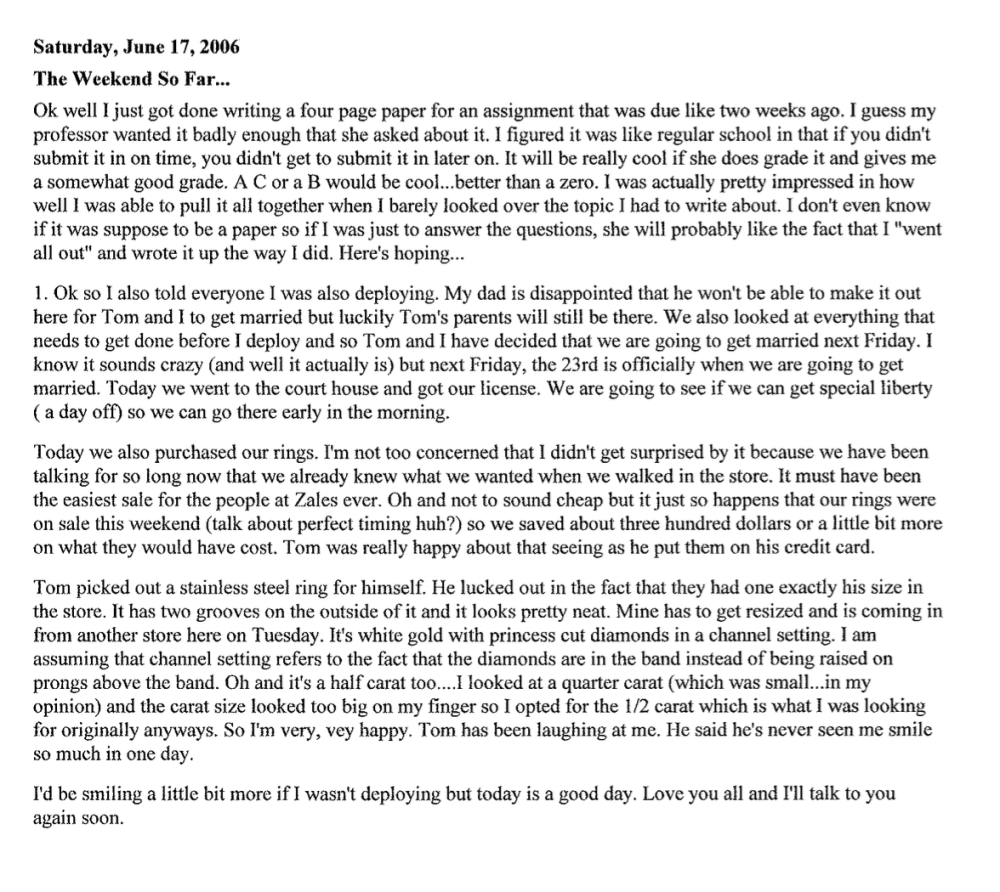
In also addressing the 2006 versus 2016 comparison I’ve promised you, below is one of my previous entries from 2006. I know I am off a day but I didn’t write as much in 2006 as I thought I did. However, this time period of entries is a good one because it gets close to when I left for my second deployment with 3rd MAW, serving on the deployment under MAG-16.
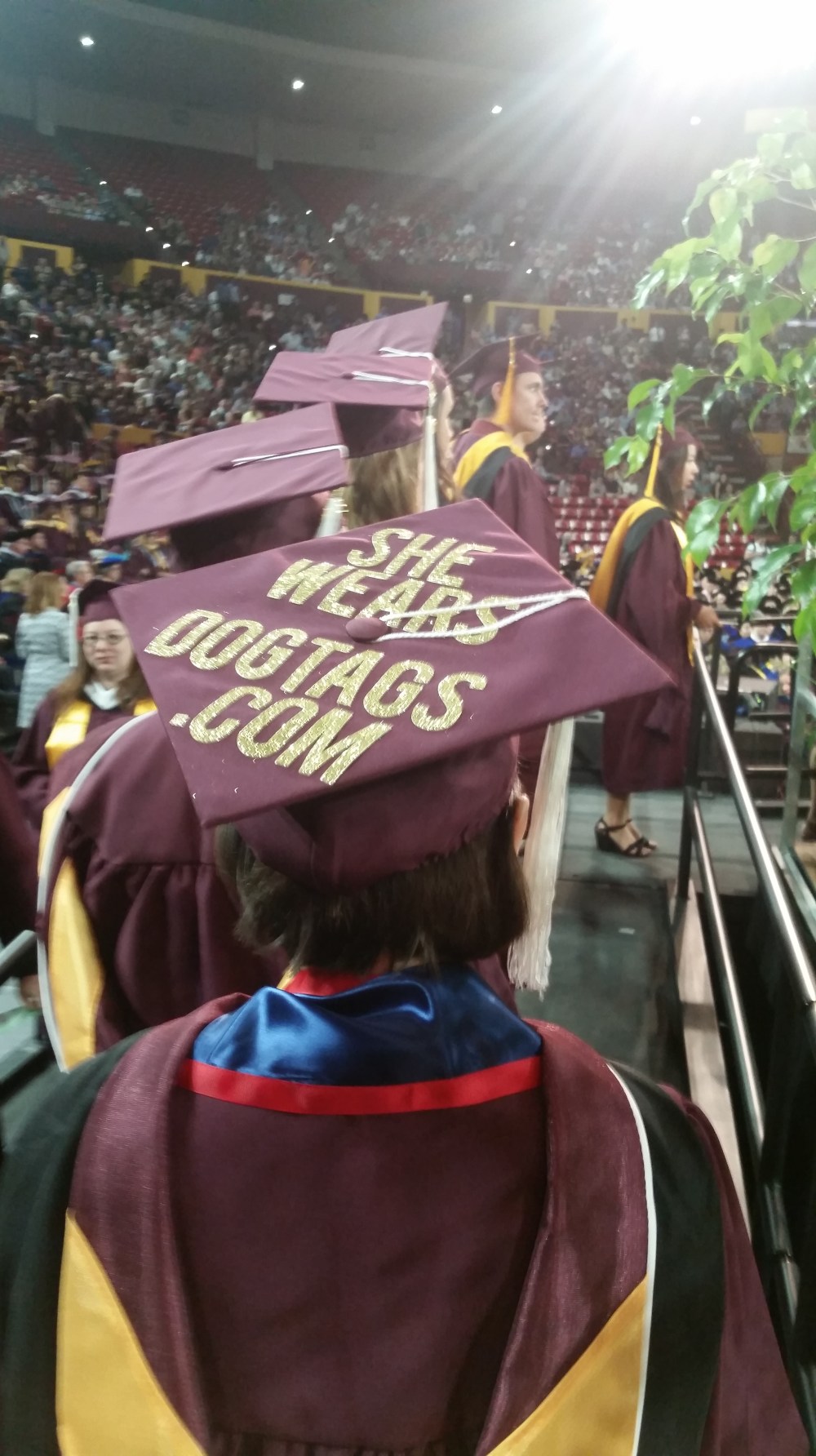
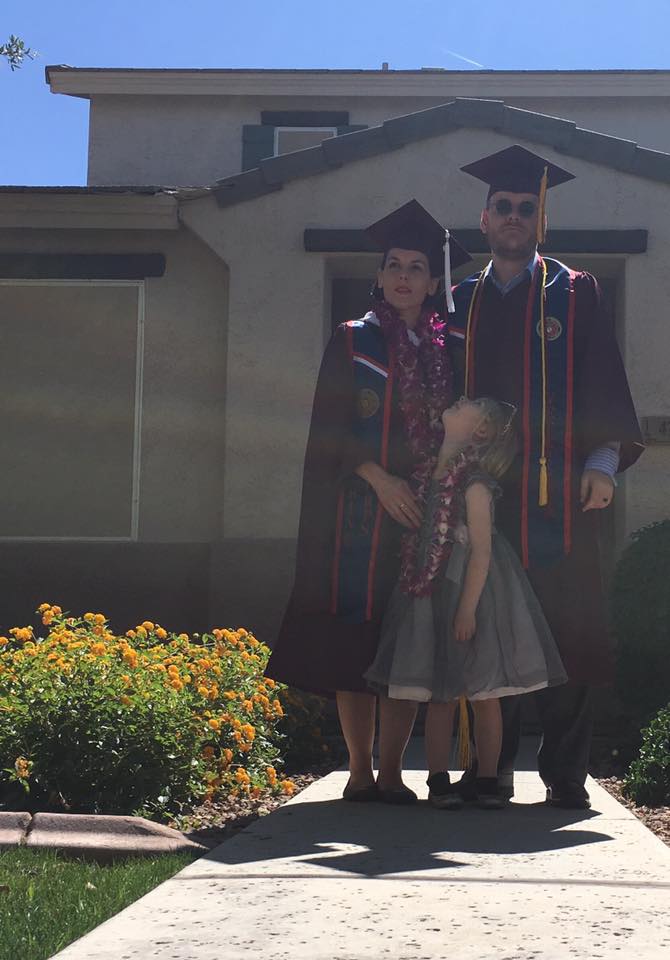
Good morning everyone! I am bummed to write this post so far removed from my graduation on May 9th but I encountered some technical difficulties when building my draft and deleted the entire thing a week after graduation. I am horribly mortified and sincerely disappointed to lose the fresh elation of graduation in my writing. Walking for graduation was a beautiful experience and I am sorry I cannot now do full justice to this celebration.
I did not walk for my undergraduate ceremony at University of Wyoming since Laramie, Wyoming (where the University is located) is just over 5 and a half hours from where we previously lived in Cody, Wyoming. Thankfully, I didn’t have such a large distance in the way for my graduate ceremony. Tempe is only about 40-45 minutes from where we live and I already make this commute for my daily work. I took the whole day off work to celebrate, which was really nice as well. This semester has been rather hectic and I am thankful I could escape from work to celebrate with my family.
I was also joined by my writing partner, Pieter Turley, and our professor, Dr. Beth Blue Swadener, for the actual ceremony. Pieter and I were partners in Dr. Swadener’s writing seminar class this semester and she also served on our respective applied project defenses. Pieter and I took different approaches in discussing war for our projects: he spoke on the different ways France is culpable but has not fully taken responsibility for its role in the Rwandan Genocide and I spoke about the human death toll of Operation Iraqi Freedom (from August 2004 to February 2005 to coincide with my first deployment) and the visibility of persons who do not fill infantry roles but are war participants nonetheless. For new blog followers, my applied project is available my entry titled The Final Reveal: An Alternative View of Operation Iraqi Freedom.
Photo Credit: Beth Blue Swadener
Photo Credit: Beth Blue Swadener
Photo Credit: Beth Blue Swadener
I am very grateful Dr. Swadener offered prior to graduation to take photographs of Pieter and I during graduation. My parents and siblings were not in attendance as they live out-of-state and my husband, daughter, and in-laws were up pretty high in the bleachers so I couldn’t even find them during the ceremony. I am even more grateful for her photographs as the professional graduation photograph proofs came in the mail recently and I look angry in two of the three images; Beth did an exceptional job capturing the joy of this occasion. And if you want to learn more about commencement traditions, I implore you to check out ASUNow’s May 6th article, The History and the Meaning Behind the Regalia of ASU’s Commencement.
Graduation 2016
My husband also graduated with his Bachelor’s degree this semester and will start law school in the fall. Pardon me for not saying much of his achievements. He is a very reserved person whereas I am an introvert with social tendencies in the right environments. I do my best to respect his privacy and therefore do not speak publicly about his military service, his social connections, or his academic achievements except in those incidents where the overlap with my identity is important for providing the full context of a situation. He has many adventures ahead of him and my daughter and I have a lot to learn about how to support his needs as a future law student.
Again, thank you for your patience for this blog entry. My forays with technology teach me daily to find peace with the process.
I would also like to remind you to please remember Memorial Day is about honoring our fallen. The commodification of this day (as with many of our holidays) provides an open door for purchases that are needed (or not) with reduced financial strain but the meaning behind our holidays–and this holiday in particular–should not be forgotten. I will not pester you to not purchase anything this weekend. In fact, I will be purchasing paint tomorrow morning for my daughter’s new bedroom. While I already had plans to paint her room, the savings on this purchase means I can likely afford to paint two rooms at this time versus just one. However, I would like to ask anyone, like me, who will make a purchase or two this weekend also provide a donation (time, money, or in-kind) to an organization that provides direct support to the families of fallen service members, such as housing services, educational scholarships, or counseling services. Your contributions, wherever they may go, make this world a better place for the families whose loved ones made the ultimate sacrifice.
I found a wonderfully inspirational story to share with you all this weekend. Through my Facebook feed, I came across the story of Kirstie Ennis who survived a helo crash in Afghanistan in 2012. She’s since dealt with a below the knee amputation and more recently lost more of her leg, but her perseverance to be an athlete continues.
As I’m working on my applied project and discovering how difficult it is to compile information for the wounded from my OIF II-II deployment, the courage of her storytelling reminded me to persevere in my own efforts. I may not have the capability to tell all the aspects of my deployment as I desire but adding my voice to the narratives out there is worthwhile in opening the discourse on deployment roles and the experiences of women in combat zones.
I implore you all to read Kirstie’s story as shared at Glam 4 Good. Kirstie also has a Facebook page you can follow.
Take care and whatever your struggles are today, keeping looking forward. You’ve made it past everything else so far. Keep your chin up and dream big.
For each of us, in different ways, there are those moments that stop us. The good day stops. It just does. My day was penetrated with bad news shortly after work began. One of my dearest friends and her family is struggling with the health of one of her family members. I am intentionally vague to protect their privacy, but I just felt so lost. I couldn’t help. My love and appreciation for her is akin to family. She knows some of my biggest secrets and pains I’ve experienced in the last year. I wish I could be there for her more than I can right now.
My day began more stressful when I was given the news we’ve lost another veteran student to suicide. Trying to concentrate all day in light of this news was challenging. The loss of this veteran brought the pain of losing Kiernan back to the surface, more than his memory already seeps into my day at Tempe. This person left behind a family and friends who will forever be changed by their loss.
I tried listening to music today to focus on my work but there are little things from time to time about my work that bring up the worst of my deployment. Being confronted with the death of a student is the worst, as it would naturally be for anyone in my office and for all of our ASU community. But for me, it’s returning to my first deployment and being confronting with nothing by the deaths and injuries accumulating over twelve hour shifts and in the same moment, I must step out of that mode to deal with other student concerns. And now, it’s that knife that digs at the fresh wound of losing Kiernan back in November. I cannot fully express what it’s like other than really sad.
While I wouldn’t say I was happy to leave work this evening, I was very relieved when my work day was over. Shortly before leaving, I tried listening to music to find some peace but one of the lines in Halsey’s “Colors” ruined my peace seeking:
I hope you make it to the day you’re 28 years old
I wish more people realized they do not need to carry their pain alone.
No one wants to lose a loved one to suicide. To those loved ones, I am truly sorry for your loss and unfortunately, I equally understand your pain.
Today’s post will be one of many down the road regarding the future of women in infantry roles. My insider perspective of being a woman who served as a United States Marine is useful in this discussion, but not the only perspective. I am more of an outsider on this topic, looking in with you all, and you must understand I do not speak as a subject matter expert. I did not take on the challenges numerous women have since integration testing began. Nor did I participate in something as uniquely different as female engagement teams the Marine Corps employed or the cultural support teams like the women featured in Ashley’s War during my time in.
For several months now you all know I’ve been caught up in my own civilian identity working a full-time job and attending graduate school part-time. These responsibilities eat up much of my free time and sadly, my focus on the news has waned greatly since November. My efforts to fully study the conversations about integration testing have been quite partial at best. I am torn at times between wanting to be fully invested in the dialogue and struggling to also focus on other areas of military life and veteran challenges for my program. I am interested though to see exactly how women’s roles progress in the military and will follow along as my current schedule permits. There will be some positive (and like always, negative) results as the military adapts to its new expectations, but hopefully everything is skewed more towards the former.
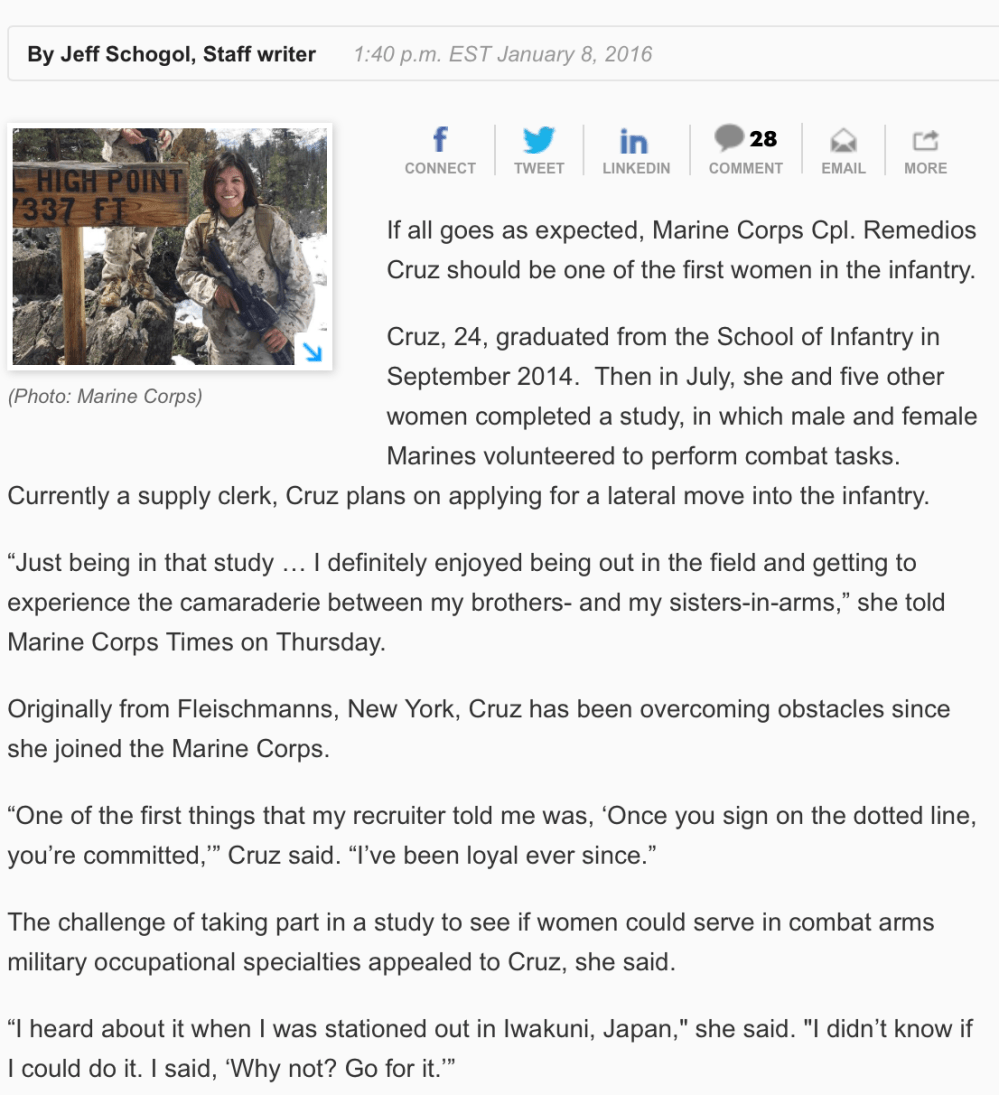
I am not one of those women who would have stepped up to the challenge Corporal Remedios Cruz did, which is why I find the integration testing to be so interesting. Before I served, I wrote a paper on the possibility of women in combat roles, but never thought Direct Combat Exclusion would be repealed. For my entire life, women have not been authorized to serve in direct infantry roles. When I enlisted, infantry (and some other military occupational specialities) was off limits, but I was not bothered or resentful I couldn’t serve in the infantry. For anyone who knows me well, even if I was a guy, I don’t think infantry would be my chosen profession. Instead, I found an equally (and always) challenging role for my life in being a Chemical, Biological, Radiological, and Nuclear (CBRN) Defense Specialist. Like Cpl Cruz, I didn’t know if I had what it took to serve in my desired role, but I went out, tried, and successfully passed the standards set for that particular military occupational specialty (MOS).
It was through this choice (and completing many objectives) that other doors opened up for me and I served a greater purpose for the Marine Corps because I was seen as a Marine and not the female Marine. Now, I wasn’t always so lucky to be see as a Marine first and a woman second, but we’ve discussed that scenario many times over. I am proud of all the women who have tried the integration testing, even those who did not successfully pass the qualification standards.
I think what’s important for individuals–inside and outside of military circles–to see and appreciate is the devotion to duty expressed by service members attracted to infantry roles (and thus far, integration testing). A service member who wants to be in the infantry and can make the same standards will usually serve well in that role. The physical demands are greater, the teamwork coordination issues are more significant, and the weapons knowledge (and gear to carry) are heavier burdens. You really must want it and that lifestyle. While the article focuses on a single Marine in this case, each participant (and those in similar Army training) deserves respect for her participation. Each volunteered with the full knowledge she could train (and potentially succeed) without necessarily EVER being bestowed the honor of serving in the infantry.
Regardless of where things go from here, I hope the lessons learned are intently studied for years to come. A quick change is not always the best change, but baby steps should not be overlooked either. All change starts somewhere. I wish all the women who participated in integration testing the best at weaving that infantry training in their leadership. I hope all the men who worked and/or work alongside these women appreciate the effort, spirit, and abilities of each woman who met the same standards or scored higher. I will applaud from the sidelines, because I am not interested in accomplishing the same feats but I can appreciate the hard work and devotion went into these achievements.
Coming up here soon, I want to tackle a completely different topic and that’s the talk about integrating Marine Corps boot camp…stay tuned.
As 2015 drew to a close, I anticipated fireworks. Seriously, I expected something on par or less than what occurred in our neighborhood for the Fourth of July. Once again, I want to reiterate I like fireworks. I do. I think they are beautiful to look at and can be enjoyable. On December 31st though, they were not enjoyable for me in the slightest.
Neighbors of all sorts went all out and it seems quite a few bought the biggest (and loudest) fireworks they could find. This time as well, we had neighbors launching fireworks at the end of the shared driveway. With the exception of our old neighbor who moved a few months ago, the people that live near us do not know I served in Iraq or that I lived on a base that was frequently mortared for the duration of that seven month tour. The fireworks they find enjoyable, in such close proximity, cause me a great deal of anxiety. I like my fireworks safely from a substantial distance.
The festivities my neighbors (and those in the neighborhood over, it seemed) enjoyed lasted approximately from 9pm until 12:20 am. The noise was unbearable for me and when I did manage to fall asleep sometime before eleven, I was startled awake around eleven-thirty. The evening was like having seven months of being mortared cramped into almost four and a half hours.
Miserable does not aptly describe what New Year’s Eve felt like for me. There are only a few people close to me that probably understand what I’m talking about here. (For those that have not lived through mortar attacks, I am sure you can find various videos on YouTube, which will give some you a partial understanding.) I am seriously grateful New Year’s Eve is over and I won’t encounter large explosions again until the Fourth of July. I think for the next occasion, I’ll throw some headphones in to get somewhat of a reprieve.
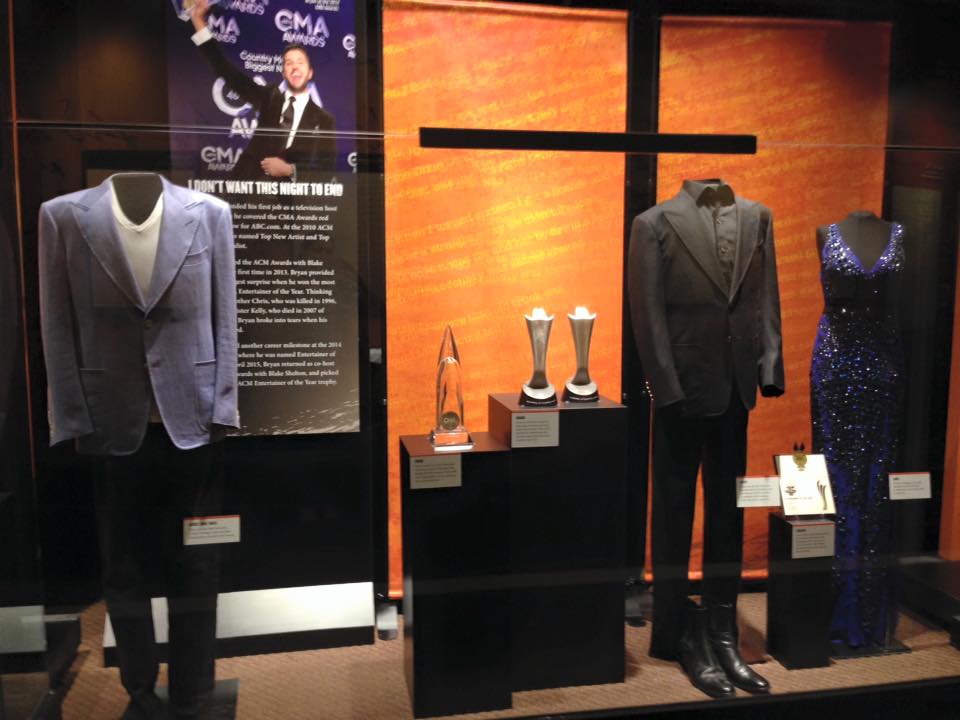
Listening to music helps calm me down in stressful situations. Luke Bryan’s music has been among my favorites for 2015. I LOVE his Kill the Lights cd. It was a lot of fun when I was in Nashville a few months ago to see some of his things in the Country Music Hall of Fame.
I had a great time seeing the Luke Bryan display in October…love, love, love his music.
For now, I’m setting up 2016 to be a great year in other ways.
Completing my final semester of my Master’s program in May.
Sending congratulations to all my friends when their new babies arrive. (Right now, it’s mostly first and third borns due).
Taking our daughter on her first summer vacation to Disneyland.
Finding 30 minutes a day 5-6 days a week for “me” time. I’ve dearly missed my exercise time.
Getting my watercolor tattoo in October.
Writing on a more consistent basis, hopefully once a week. Maybe no more than two week stretches.
Ok, so none of those are resolutions, just objectives to tackle. I don’t want to quite on my goals once we roll into February, like I do with resolutions. I’ll keep you all posted.
GI Bill® benefits are my topic of discussion today and more specifically, I wanted to talk you about my own benefits. My education benefits are a significant reason why I am successful today in my educational pursuits. I have accrued some student loan debt, which is (always) a personal choice. This post is NOT about recommending student loan debt to anyone as a means of affording a college education.
Debt (of any sort) has significant consequences. I went into default on one student loan during the timeframe of my first deployment. It was the only loan I did not get deferred prior to deploying. Instead, I asked my dad to pay my loans using my bank account information. While I was away, he had trouble accessing my account and no payments were made. As a direct result of my pre-deployment and deployment situation, my loan went into default. I was greeted with nasty collector phone calls upon my return stateside and a short while after returning home, the majority of my deployment savings were eaten up by the debt payoff. It took seven years to get this crappy stuff off my credit report.
Now, I still have some undergraduate student loans to pay and a modest amount taken out while I’m attending graduate school. There are–and always will be other options–to pay for non-tuition related expenses associated with school and life. My decisions to take out those loans (and any loan in my future) are specific to me and should never influence another person to decide taking out loans are right for them.
I went through Dave Ramsey’s Financial Peace University a few years ago and I am working towards a debt free life as best as possible. Will I “slip up” here and again? Yes. Trust me, if you were ever to see how crazy my grocery bills are at times, the answer is ‘yes.’ Will I also make the choice to take on some forms of debt? Yes. My decisions though will be better researched and more deliberate. Debt will be treated like a condiment rather than an entree in my life, if that helps make sense to anyone questioning my approach.
For my current state, my GI Bill® benefits help tremendously in my financial planning. After a yearlong unemployment in 2012 and the second bout of unemployment in 2013, my family’s finances looked scary. A significant turning point in our lives after gaining employment with Arizona State University was my decision to start a graduate program sooner than originally planned. I had 13 days of the Montgomery GI Bill® remaining and upon exhausting those benefits, my 12 months of the Post-9/11 GI Bill® could kick in to pay for my education.
This newest chapter of education benefits is pretty amazing. My tuition and fees are covered at 100%, I receive a housing allowance (when applicable), and I receive book stipend money. The tuition and book stipend money are great by themselves, but the housing allowance is that extra something that mattered greatly in reestablishing my family’s finances. My husband also receives a housing allowance through his use of the Post-9/11 GI Bill®. My housing allowance has become my family’s supplemental income. Currently, my husband not working full-time while he works on his undergraduate degree. This is a necessary arrangement for my family to avoid unnecessarily high before and after school care for our daughter. We will incur those expenses again starting in the fall once he starts his law degree (and is not permitted to work that first year).
For this semester, I used ASU’s tuition waiver. If my family was less dependent on the Post-9/11 GI Bill® housing allowance, I could have certified less credit hours each semester to 1) cover my tuition in full and 2) avoid being taxed for using the tuition waiver. Once again, my decisions are intentional and appropriate for my circumstances. I am not a financial advisor so what works for me, may not be appropriate for others to follow.
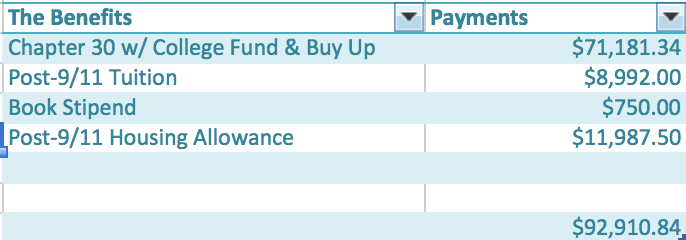
So, would you like to know how much I’ve benefitted from those GI Bill® benefits? The numbers might surprise you.
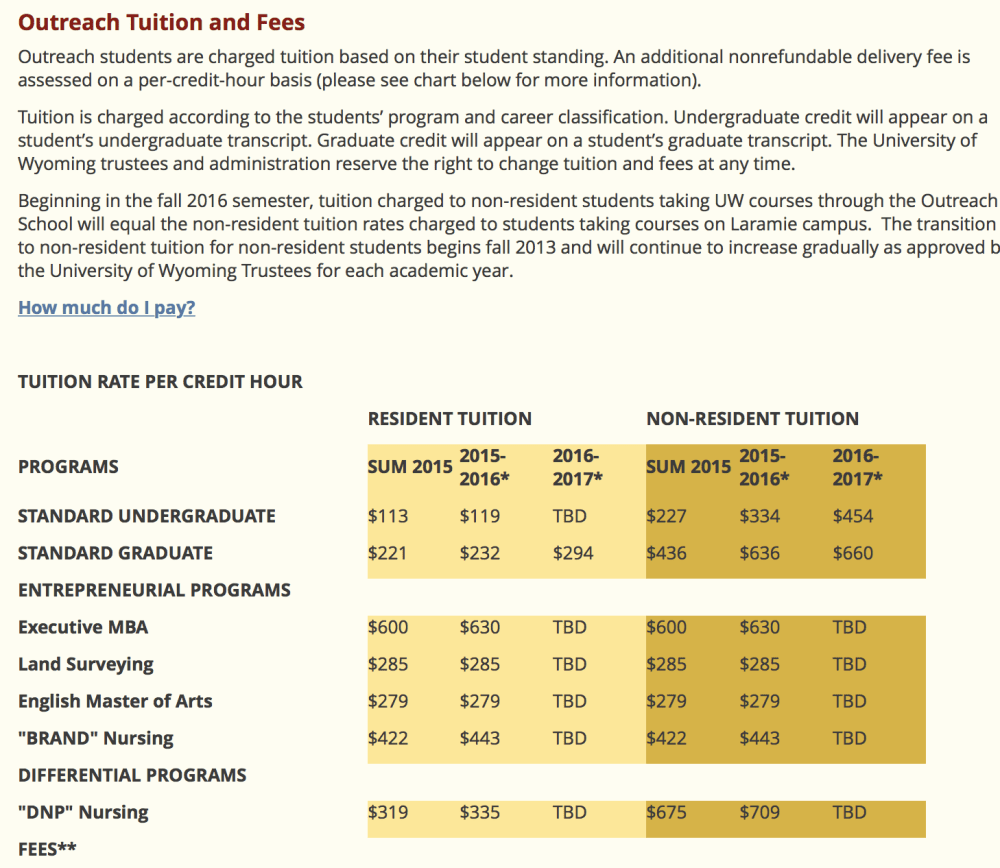
Below is an example of University of Wyoming’s costs for its Outreach Program. I am a little too lazy at this moment to sift through my bank account statements from 2009 to 2012 to tell you specifically what it costs me to get my two Bachelor’s degrees. This information is good enough for my illustrative purposes today. While I was attending University of Wyoming, I used my Montgomery GI Bill® benefits. This type of education benefit is paid flat rate based on training time to students and students, in turn, still pay their institutions for their semester expenses. I’m oversimplifying the process here, but current payment rates are available here if you’re interested in learning something new.
Don’t let the low numbers fool you. Multiple factors, especially outside tuition cost, are important when considering where to get an education!
I made a conscious decision after the Post-9/11 GI Bill® came into being that it wasn’t right for me at that time to relinquish my Montgomery GI Bill®. Given the lower cost of education (and housing allowance) in Wyoming and the fact my education benefit was supplemented by the Marine Corps College Fund and the $600 Buy Up Program, I would have lost money converting over to the newer benefit earlier in my education career.
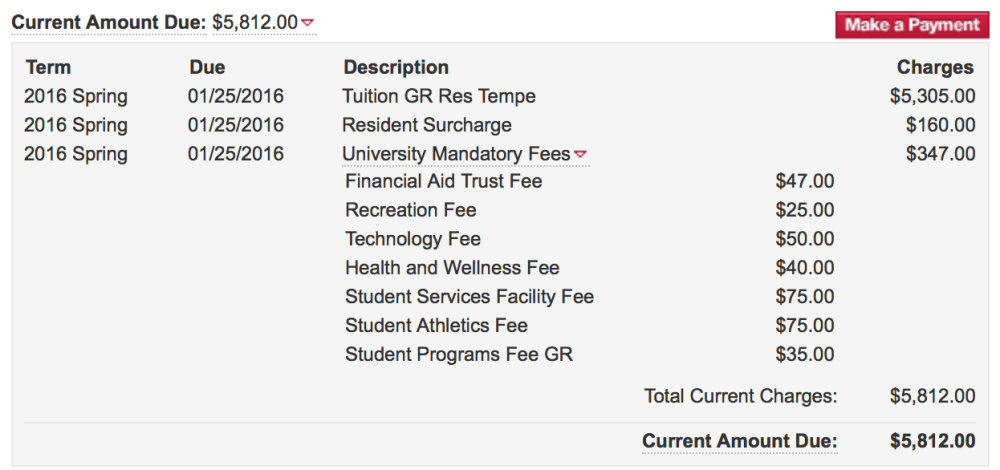
Instead, I had the financial freedom to earn two Bachelor’s degrees and pay 4 of the 5 semesters of my current Master’s degree with thePost-9/11 GI Bill®. The earlier numbers of my disbursements do not yet factor in spring’s tuition and fees (listed below for your convenience), my housing allowance payments, or the book stipend money. At the end of this program, I will still have roughly 1 month of Post-9/11 entitlement to spend on a future education program.
This spring the current balance you see plus a $75 third party billing fee will be covered in full by my Post-9/11 GI Bill benefits.
My graduate program might seem expensive to some, especially given those earlier numbers reported for the University of Wyoming Outreach Program.
I am privileged to work for Arizona State University, which played a role in looking at schools. More importantly, my particular graduate program is the only one of its kind in all of North America.
Each and every day I am thankful large sums of educational debt do not stand in the way of my current and future dreams. My GI Bill® benefits make this reality possible.
I owe gratitude to everyone who played a role in establishing (and maintaining) veterans’ education benefits, both past and present. I am thankful for the recruiter, SSgt Killough, who sat down with me and told me the College Fund was available as an enlistment incentive. I am thankful for my command at my first unit; along the way there, I learned the Buy-Up program was possible and I paid $600 to earn higher education payouts later. I am thankful to the teams of people who process my educational benefits.
My lifelong outcomes are greatly improved because these benefits exist. I am the first of my siblings to graduate college with undergraduate degrees and in spring, a graduate degree. Those strengths will shape and mold my daughter’s educational attainments and the lives of her friends and peers that enter our home. My family’s wellbeing is greatly improved in the short term while we are not fully a two-income family. Every additional dollar of my housing provides an additional dollar to pay for healthy groceries, pay for recreational activities, pay off debts earlier, etc. Society is better off as well as I return my educational investment back into the workforce in how I coach and support others in the community.
For anyone who is thinking of not using his or her education benefits, I’m curious. Why lose out on the money you’ve earned? Why deprive yourself of a self-improvement opportunity?
Keep learning about who you are and what you want out of life. Build an understanding of your GI Bill® benefits and use those benefits to propel you into the future vision you have for your life.
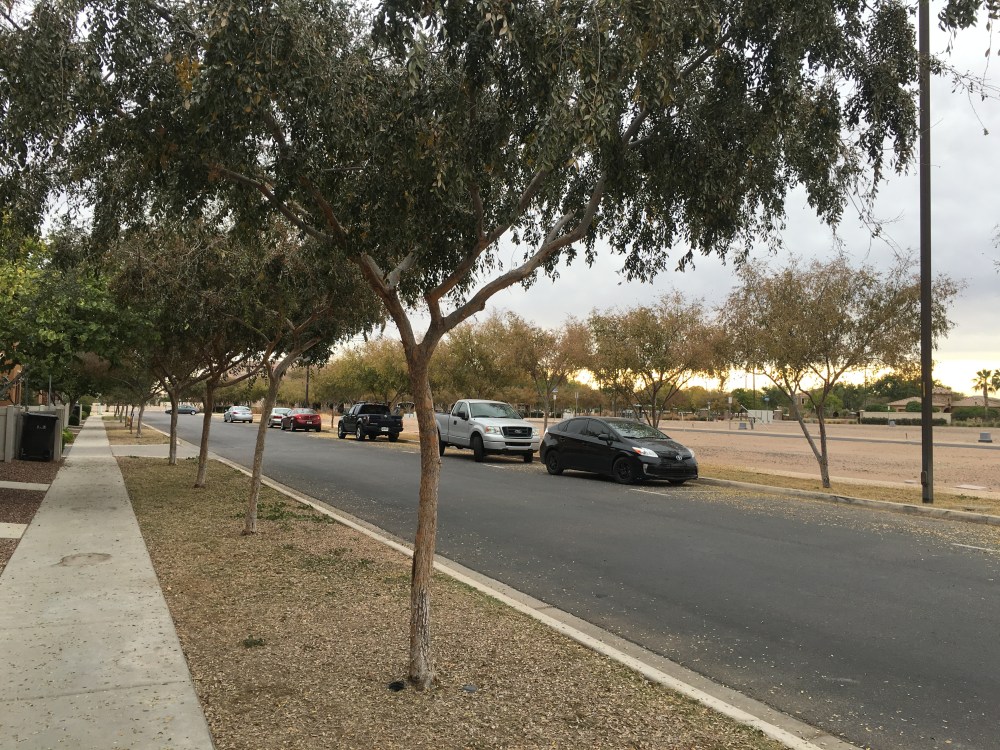
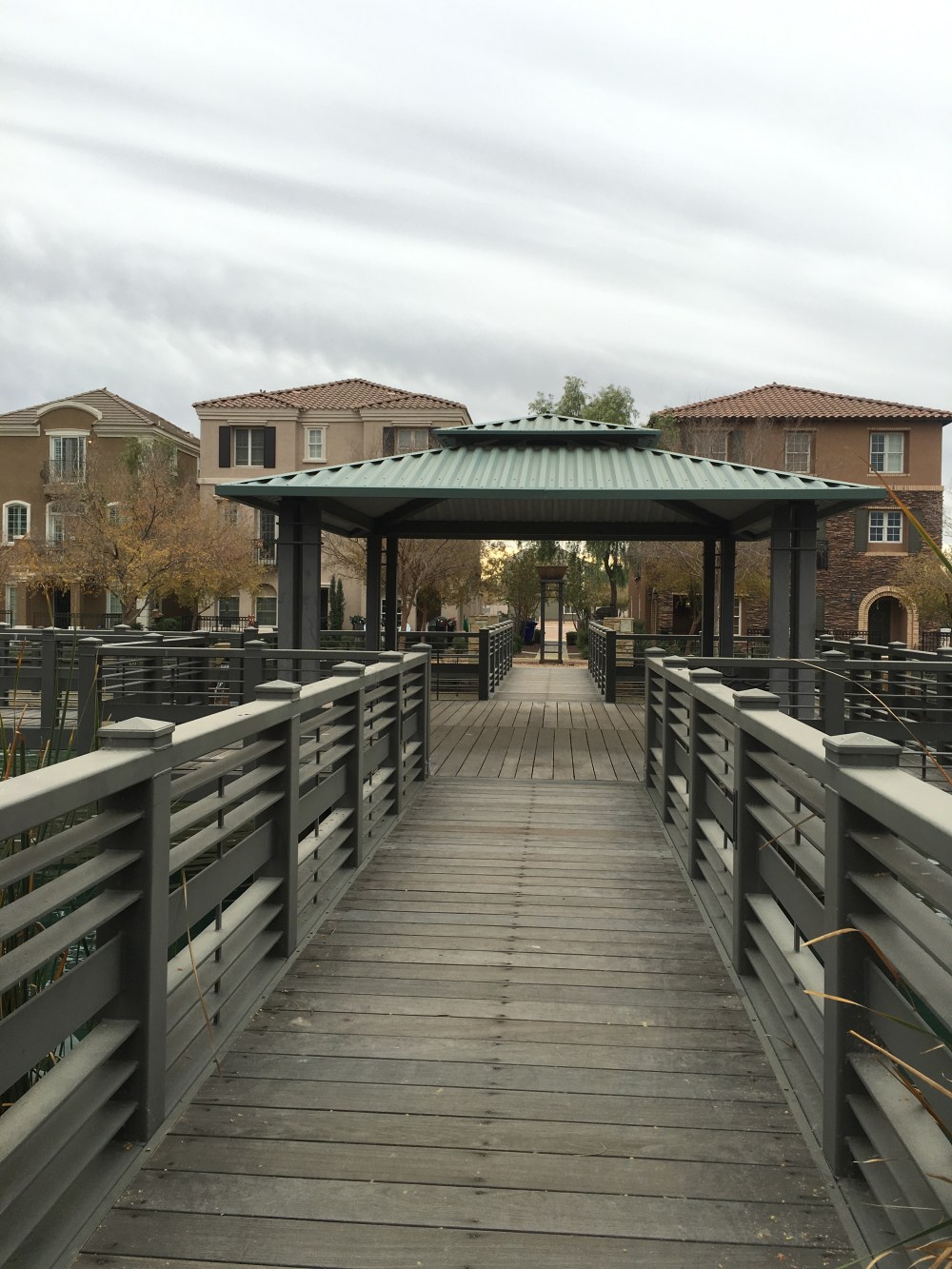
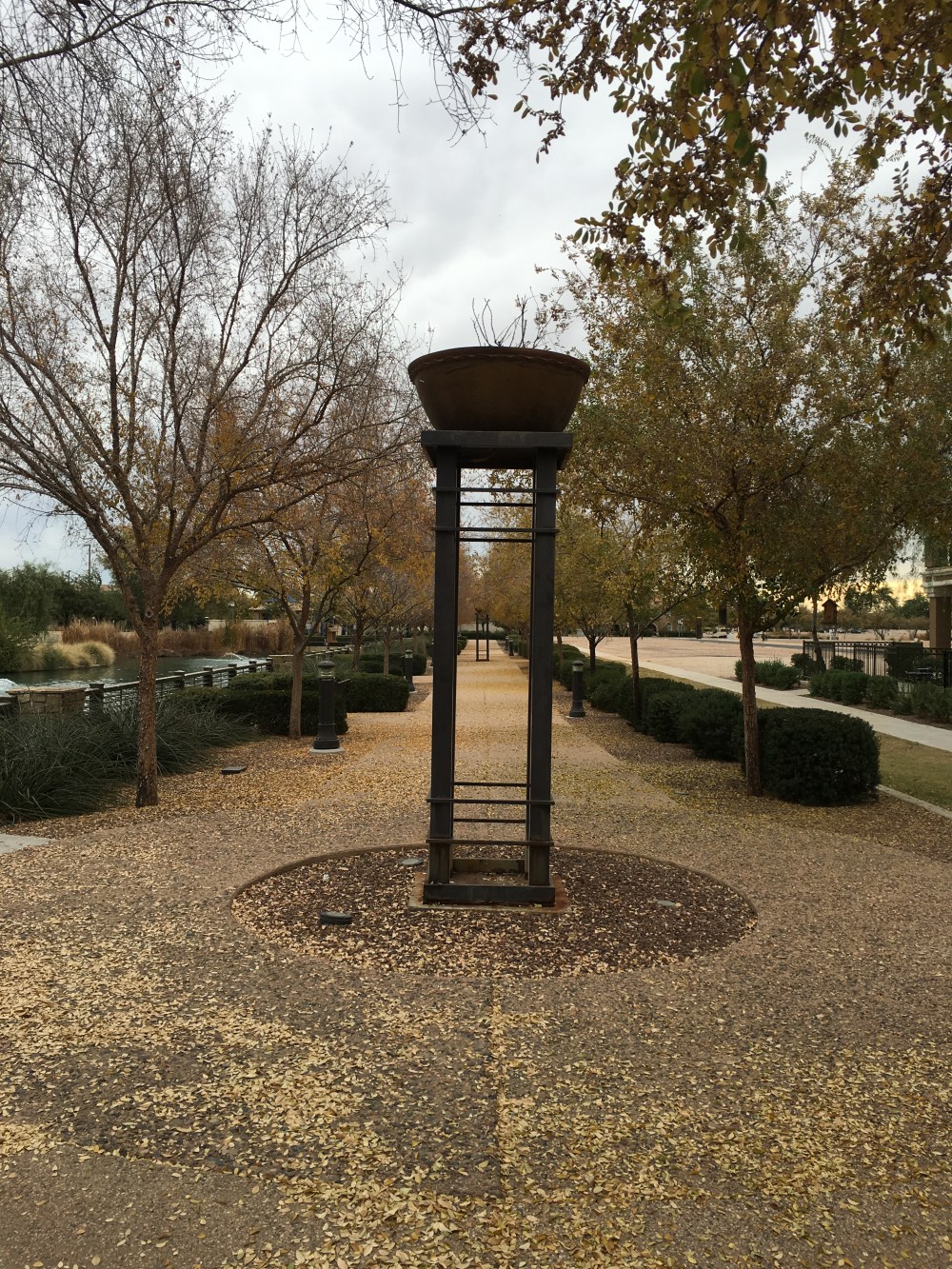
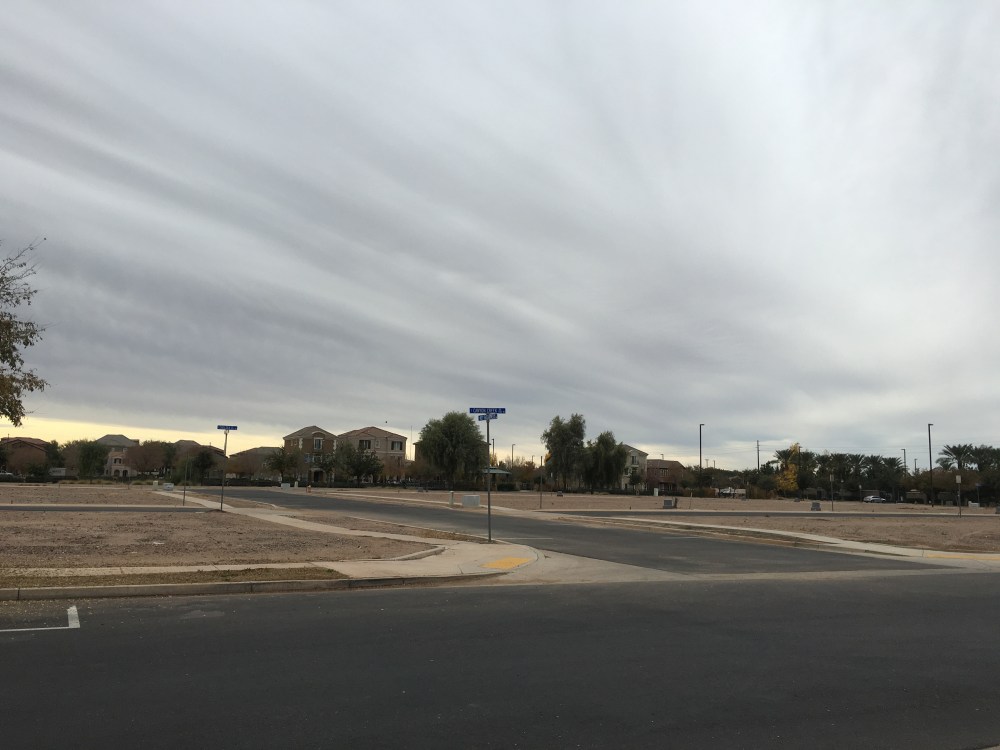
Yes, I am back to writing again (on here). You all know that I juggle many life responsibilities: full time job, caring for a 5 year old, and going to school part time. In the meager amount of “off time” that remains, my life is full of hobbies. One such hobby is walking through different neighborhoods, even unfinished ones. I was quite surprised recently to see Annecy, with its beautiful exteriors and gated entrances, to be a project lost in time. Without knowing anything of its origins, my guess is it went unfinished during Phoenix’s housing crisis and so far, no builder has the inspiration (and perhaps, money) to built it up again to the original vision.
What would you think if you lived in a partially finished community?So beautiful.This portion of the community reminds me of old romantic neighborhoods.There are large sections of the community left unfinished like this one.
During this semester especially I needed a break from chaos. My course work was more demanding and the day after Kiernan’s funeral, I was faced with the fact my dad suffered another heart attack. He is recovering well, I understand, but I had a few real rough weeks this term. This incomplete community, a mix of dreams and harsh reality, provided a great venue in which to just relax. I walked quietly with my spouse and we found ducks and geese waddling towards us for food by the lake. Sadly, without the promise of food, they ignored us quickly and went back to the water.
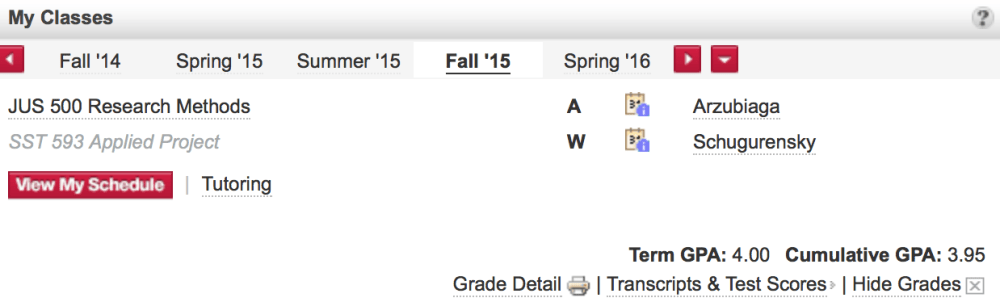
Today, I wanted to tackle a difficult subject few people probably think of sharing in their lives. My grades show off my academic skills and more importantly, my fixation on self-improvement. I brought my GPA up from last semester. However, as my earlier comments reveal, the challenges are not so readily apparent. One of the hardest things I’ve faced as a full time worker and part time graduate student is the burden of additional stress. For me, this stress associated with midterms and finals, manifests itself as nightmares. I’ve had one each semester since my program began. As well, I’ve never had nightmares of this sort before.
These nightmares, in their own weird ways, combine elements that bridge my military and veteran identities. In sharing one–the worst so far–with you all, please balance out your perception with the fact I’m succeeding in the classroom. The problems I deal with are not limited to our veteran community and as my successes illustrate, do not prevent me from being an active, invested individual in my community. I will never own the label “dysfunctional veteran” and I would not want anyone to read into my nightmare and feel disgusted with me as a person (and representative of the veteran community).
The nightmare I had occurred late this semester. After the most Paris terrorist attacks on November 13th, after Kiernan’s funeral, and after learning of my dad’s health issue, my brain concocted a completely horrific scene for me.
For some people, it may be painful to read about my nightmare, so use your own judgement before reading further.
It’s important to identify to you all I have not been the victim of improvised explosive attacks. This is however an element that appeared in the nightmare.
NOVEMBER 2015 NIGHTMARE
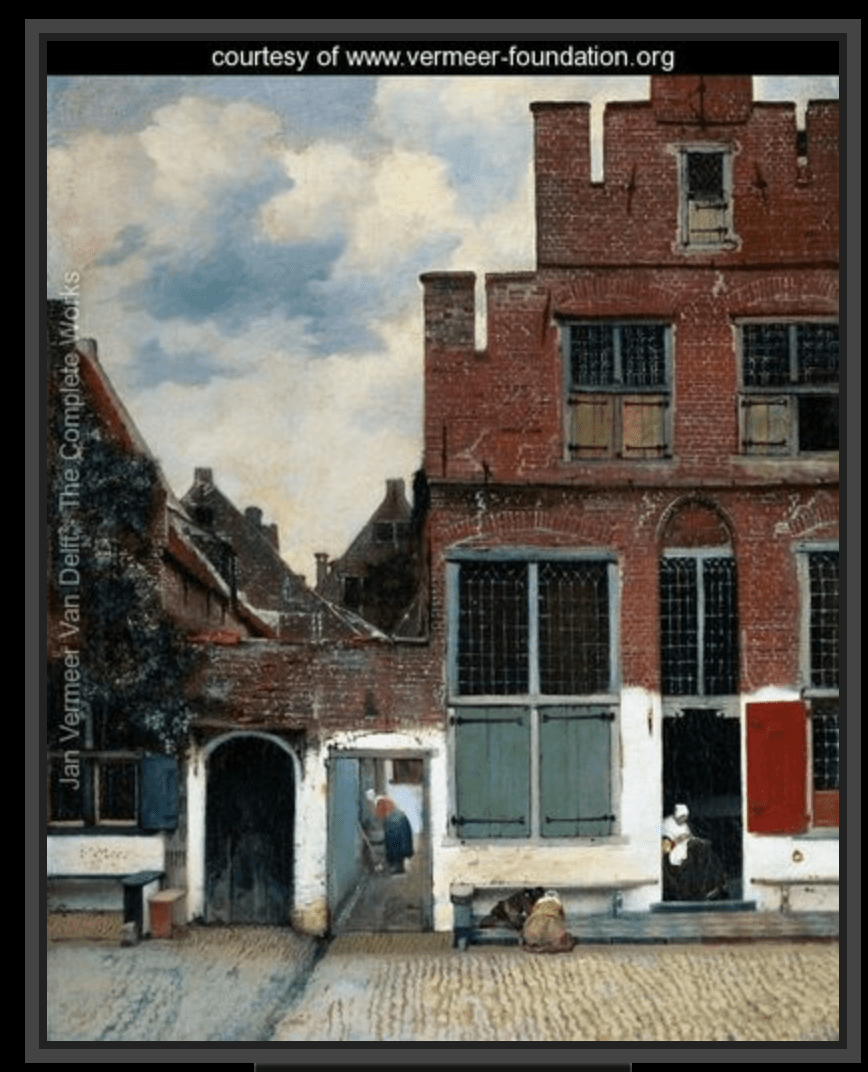
Unlike other nightmares where I may be solely in the company of strangers or a veteran friend, I was with my husband and daughter. We were part of a tourist group of sorts. We did not know those in our company but we were not fearful of our surroundings or the strangers. There was a general sense we got along at least in the typical pleasantries you share with strangers in public settings. We were in an outdoor venue. There was plenty of open space and older style buildings. It is clear to me however we are not in any part of America I’ve ever visited. The scenery does not give off the impression of well known modern areas in Europe nor is there Middle Eastern architecture. The landscape reminds me more of Johannes Vermeer’s paintings, perhaps because I love the style, more than anything I’d expect today in modern cultures. Below is an example of the Johannes Vermeer painting that most resembles the buildings in the nightmare. The buildings are of mixed heights and areas close to me are more dirt paths and open space more than anything else.
Some individuals who blended well in the scene approached clusters of us. The individuals who were approached were offered trinkets of some sort. They were palm sized and had bright colors. It was apparent the packages were meant to be opened. The strangers left after leaving these “gifts” and without an exchange of words, the group generally understood those trinkets were not to be opened. Although I previously did not hear conversations in the nightmare, a hush was identifiable by the odd situation of these adults holding these small things they knew not to open and also burdened by not knowing what to do with them.
Our bewilderment was broken by multiple sudden explosions and screams directly on the other side of buildings behind us. In the nightmare, our group is in the foreground, the buildings in the middle, and the victims on a street behind that I could not see. We all scatter in different directions to avoid shrapnel and I cannot identify exactly where either my husband or daughter are, but I move in the direction that seems best to avoid the impact of the explosion and the shrapnel.
As I move away though, the body parts are instantly visible. It is such a disgusting scene of heads and arms and bits of everything thrown out in multiple directions from those trinkets which turned out to be handheld improvised explosive devices. We are not privy to the violence on the street but we see the human debris rise over the buildings and towards us. Unlike other dreams, movement occurs in a realtime. In past ones, it’s been unrealistically slow or disjointed. In this one, the pieces that remain of those victims unfortunately pelt me as I fall down from the blasts. I feel (quite literally feel) the weight of blood and pieces of tissue fall down on my back.
And then nothing else happens.
————————————————————
I wake up from the worst dream I’ve ever had and for a little bit of time, it’s like I can feel the weight of those body parts, the blood and tissue, still on me.
————————————————————
Can I read a lot into this nightmare? Yes. This semester was a bit more brutal than others. I’ve had a lot of extra work on my plate. There were extra burdens in my personal life. The world witnessed the tragic loss of too many people in Paris and equally painful but less publicly recognized, Beirut’s November terrorist attack. I lost a friend of two years and was faced with the potential loss of my father. Let’s not forget either having the burden of those final assignments! My brain is exhausted right now.
For anyone who’s wondering about that “W” on my transcript, I dropped my applied project back in October. There was too much going on even back then.
For the time being, I am glad I made it successfully through the semester.
I anticipate only one nightmare awaits me sometime next semester.
If I’m lucky, once my Master’s is over and I’m not juggling the demands of student life and full time employment, maybe they’ll be gone completely.