Suicide Prevention Month: The Power of Observation & Reflection

http://www.veteranscrisisline.net/ThePowerof1.aspx

As I begin to touch on the sensitive subject of suicide prevention–and I am not limiting this conversation to our veteran community–please know I am grateful to you all each and every day for being part of my audience. Years ago, I was told not to “write a book” as I prepared for my first deployment.  This unfortunate statement haunted me for years.  It stymied my trust to share–outside my trusted circle of friends and family–what it’s like to serve because I would be subjected to potential trolls just waiting to pounce on my flaws, mistakes, and gender.  This fear creeps in as we draw closer to sharing my Veteran Vision Project photo.  Already I see nasty comments made to other recently shared photos on the Veteran Vision Project Facebook page.

Let’s remember for (hopefully) more than the few seconds it takes to comment that we’re looking at real people.  The individuals portrayed in these photographs are not actors and actresses portraying characters, but living through their own experiences, not ones scripted for them.  They are not models paid for their time but people who may want to send a message to others or people who want nothing more than a family photo that merges the past and present.  Both are perfectly acceptable reasons to participate in Devin’s project.  Devin Mitchell photographs these individuals because it is work he loves doing and yes, his book will sell: he deserves to profit from his work.  I hope it is successful long after we all pass from this earth.

He is uncovering the details of military service tucked in the margins of history: PTSD (Post Traumatic Stress Disorder), MST (military sexual trauma), suicide attempts, and issues of hate geared towards same sex couples and transgendered persons.  He also showcases individuals in their happiest moments: expecting children, their new careers, or donning collegiate graduation attire.  America needs someone like Devin to remind us the gap of understanding between civilians, service members, and veterans is due in part because we choose–quite often–to not see the full picture, to not inquire beyond our perceptions.

On this note, I share two different observations and reflections on the same situation: a Marine committed suicide outside my barracks on Camp Blue Diamond in 2004.  (I made some rash judgements in my initial journal entry and it’s important to share my failings as a person here, too.We all make mistakes, but we have the power to change, and should strive, for the better.)

(Saturday) 18 Sept. 2004  

Another day gone in Iraq.  On a day to day basis, it doesn’t even feel as though I’m in a combat zone and then I’m brought back down to Earth.  Earlier this week, maybe on Tuesday, we had a Marine commit suicide.  He shot himself with his own rifle in one of the portajohns outside my barracks, only nineteen years old, too.  It has been weighing on my mind and I’m disgusted and disappointed that he thought his life wasn’t worth living.  Besides the fact, he was only here two weeks and for the most part we see no action here at Camp Blue Diamond (Ramadi, Iraq).

I have started to shift my focus because I know there’s nothing [anyone] can do now and worrying is only hurting me.  I will never know why he thought his life was so shitty to die (kill) himself.  As Marines, we are just suppose to be better than that.

We also had two mortar impacts on base on separate days.  One day a Corpsman took minor shrapnel to the leg and walked himself to BAS [battalion aid station] and the other attack happened last night. I was on guard outside my work and I heard this loud boom, louder than the sound of thunder.  It impacted on base.  Usually when it’s off base it vibrates the buildings and the sound isn’t as loud.

No Marines got injured last night, which is good.  I do reports all day long and someone is always KIA [killed in action], WIA [wounded in action], and that includes enemies, too.

29 Sep 04

A Life Wasted is Still A Life Remembered

Today is Wednesday, but here in Iraq it is yet again another Monday.  All days are Mondays and typically called “Groundhog’s Day” as well by those that have seen the movie of reliving the same day, day after day.  I consider it Monday as Monday is that dreaded day of the week after a wonderfully nice, rested weekend (or any weekend for that reason) because that feeling is how I feel in Iraq.  Being stateside was the “weekend.”  I [had] so much time that I did not know what to do and most of it was wasted on being lazy, sleeping in, and waiting for the weekend to end.

Although my life was “wasting away” back there because I wasn’t actively involved in trying to better myself, by PT or classes, it wasn’t until here that I truly learned how someone could waste their life away.

Iraq makes you think in ways you may not have thought of before.  Each place is different and luckily I have been blessed here.  I enjoy a relatively safe camp I stay at equipped with solid living quarters [versus] the tent that other service members reside at in other camps, a chow hall where I only have to watch out for spoiled milk instead of consuming the usually, unpalatable MRE [meals ready to eat], and I have a meager gym where I can keep in shape.  These commodities are a rarity in some places and being that we are in the technological age, I also have access to phones and the internet, something unheard of in the days of Vietnam.  Yes I am blessed.  For all the good things in my life, I am still here in a “war” and have seen some of what it can do.

I am sheltered here, as a female, and do not go on patrols where our Marines can encounter any array of weaponry used against them to include IEDs [improvised explosive devices], rpgs [rocket propelled grenades]. mortars, and other such things.  Getting to my camp here, I still faced the possibility of seeing such things, but I lucked out.  No excitement, no casualties.  Sadly boredom has taken on a new role in my life.  It tells me that nothing is happening that can cause harm to Marines or myself.  I can say today that here, bored is what you want to be.

Boredom can cause you to think though and I work too much to do much of it.  The schedule is a twelve hour day, seven days a week, and on top of it all, I spend my mornings running and usually get various odd tasks accomplished at night.  For me, it’s the best way to pas[s] the time and not to think of the fact that I am in Iraq.  I still think of what happens to my Marines here and how some of them never quite will make it home to tell of what they’ve seen, but there will be a flag draped coffin where a Marine should be standing. [Please know, this last sentence is more haunting to me now; I made it months before my watch officer was killed on 2 February 2005.]

Their ages vary and their stories are never the same.  Back home wives and children, siblings, and parents, who have no answers that satisfy why their loved ones were lost, are left behind.  Posthumously honored medals, ribbons, and ranks cannot make up for the life that is lost.  Fellow Marines can piece together memories from Iraq for the family but they are bound to be hesitant as to share the often horrendous details that led to a fellow Marine’s death.

I haven’t yet encountered losing a Marine as KIA and I pray I never will, but here in Iraq we still lose Marines, and in this case, by this Marine’s own hands.  I have heard some people call his action selfish, sad, and others are almost indifferent as it is another death locked into the experience of being in a combat zone.  One could blame his actions on a lack of leadership attention, depression, boredom, hormone imbalance, but we will never know.  It’s what we do know that’s gruesome.

Only a few weeks ago, in the middle of the night this Marine went out by himself, weapon in hand, because our weapons follow us everyone.  This Marine holed himself up in a portajohn, about the only private place one could find here, and decided to end his life.  His age: nineteen years old.

After his rifle went off, Marines rushed out there, from what I was told, to discover a fellow Marine committed suicide.  In the mi[d]st of it all, accountability was being taken to see who it was as the Marine was quite unrecognizable.  I didn’t even know of this incident, which happened several feet outside my barracks, until the next morning.  I feel almost guilty because I slept peacefully through it all.  [Dear audience, please remember, I was pulling 12 hour shifts.]

Hearing about the suicide the next day was strange.  I found it too hard to believe because we had a good camp, tucked away from major violence, and then this happens.  I walked by that portajohn the next morning to find it duct taped up with a sign declaring it secured, a used up chem light still hung on the door, a dried blood trail on the bottom ledge, and a piece of combat camera equipment that was either a lamp or other gear that reflected light.

The details I still remember as two of my roommates are in combat camera, one of whom had to be on scene and took photos of the suicide victim.  She called him unrecognizable, appearing to be “Chinese”, although his ID photo showed he was not of an [Asian] background.  No one could tell at first who he was and the whole scene of it was shocking.  The image that I think of is of Pvt Pile from Full Metal Jacket, but I would never want to see those photos to see if I was correct or not.

I think of the fact that  this Marine that I know only as a “suicide victim” left behind so much in his life.  I would be wrong to say he’s selfish because I don’t know the inner turmoil he dealt with that caused him to take such drastic measures.  He didn’t know the resources he had available, nor the countless Marines that would have gladly taken out a pack [of] cards and played a game with him or smoked a cigarette with him if he smoked.  I don’t even know his name but I will remember someone who had so much to live for if he had only known.  Even if he goes unremembered by many here, I will never forget he was a person.  He was a Marine.

————————————————————————————————-

I don’t know why I went back and wrote further about the Marine’s death, but I’m glad I did.  I didn’t realize then how much power it could have today, eleven years later.  Suicide is still a prevalent problem with veterans (and service members).  Our civilian peers should also not be overlooked.  Their lives mirror many of the same struggles and personal tragedies (bullying, sexual trauma, etc.).  These communities can (and should) work together to prevent the loss of any one person from suicide.  Touching even one life is a monumental difference in this world.

Homecomings: Snapshots & Realities

Hmmm…so lots of good things went down last week, but the short work week was insanely busy.  I added more social events to my weekly plans than I would normally accommodate, which meant I’m recovering from sleep deprivation this week.

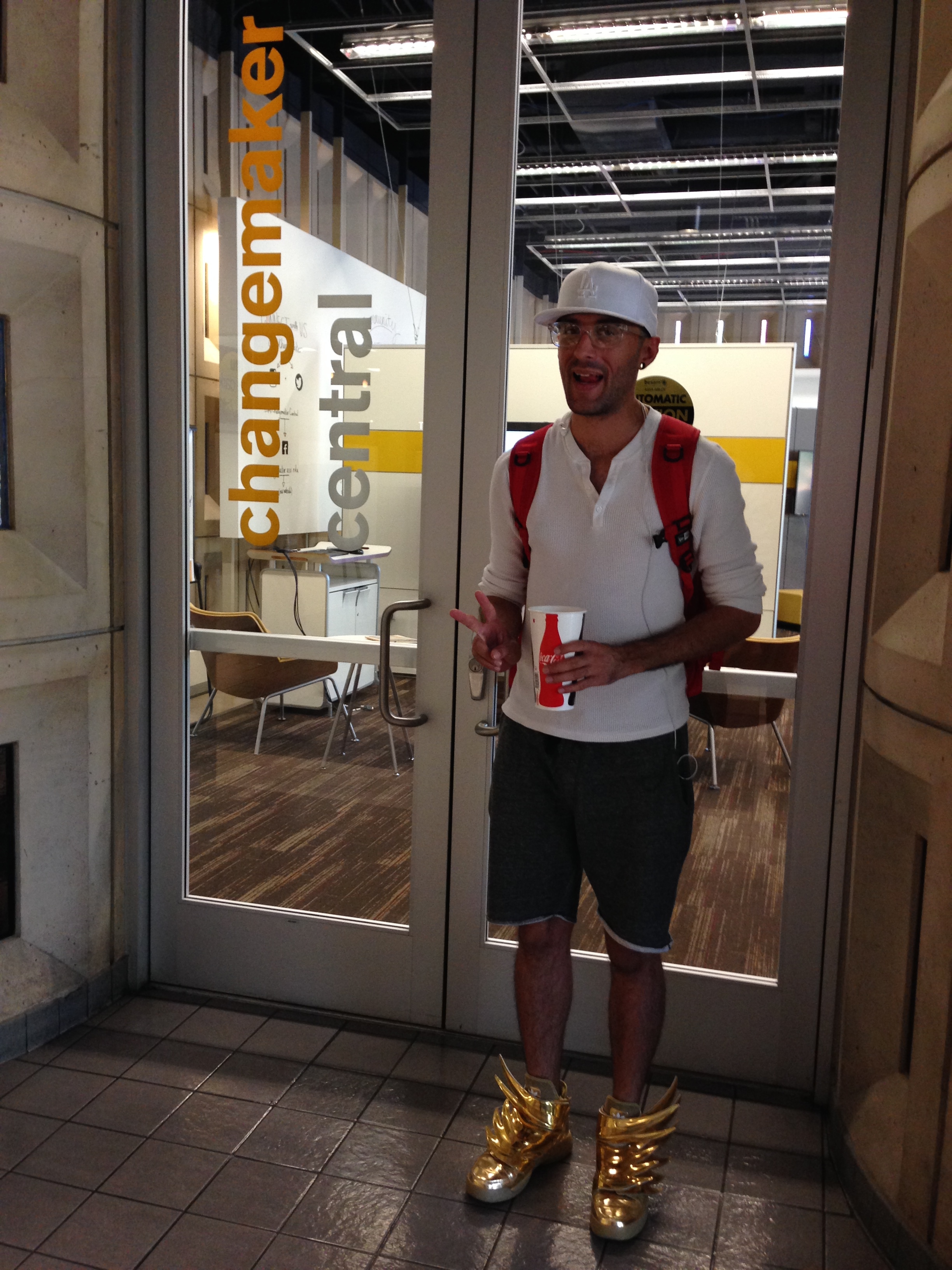
Devin Mitchell made himself at home when visiting Memorial Union--it was so great meeting him!
Devin Mitchell made himself at home when visiting Memorial Union–it was so great meeting him!

I had a great time meeting Devin Mitchell, photographer for Veteran Vision Project, for starters.  I promise once my photo is finished, I will share it with you all.

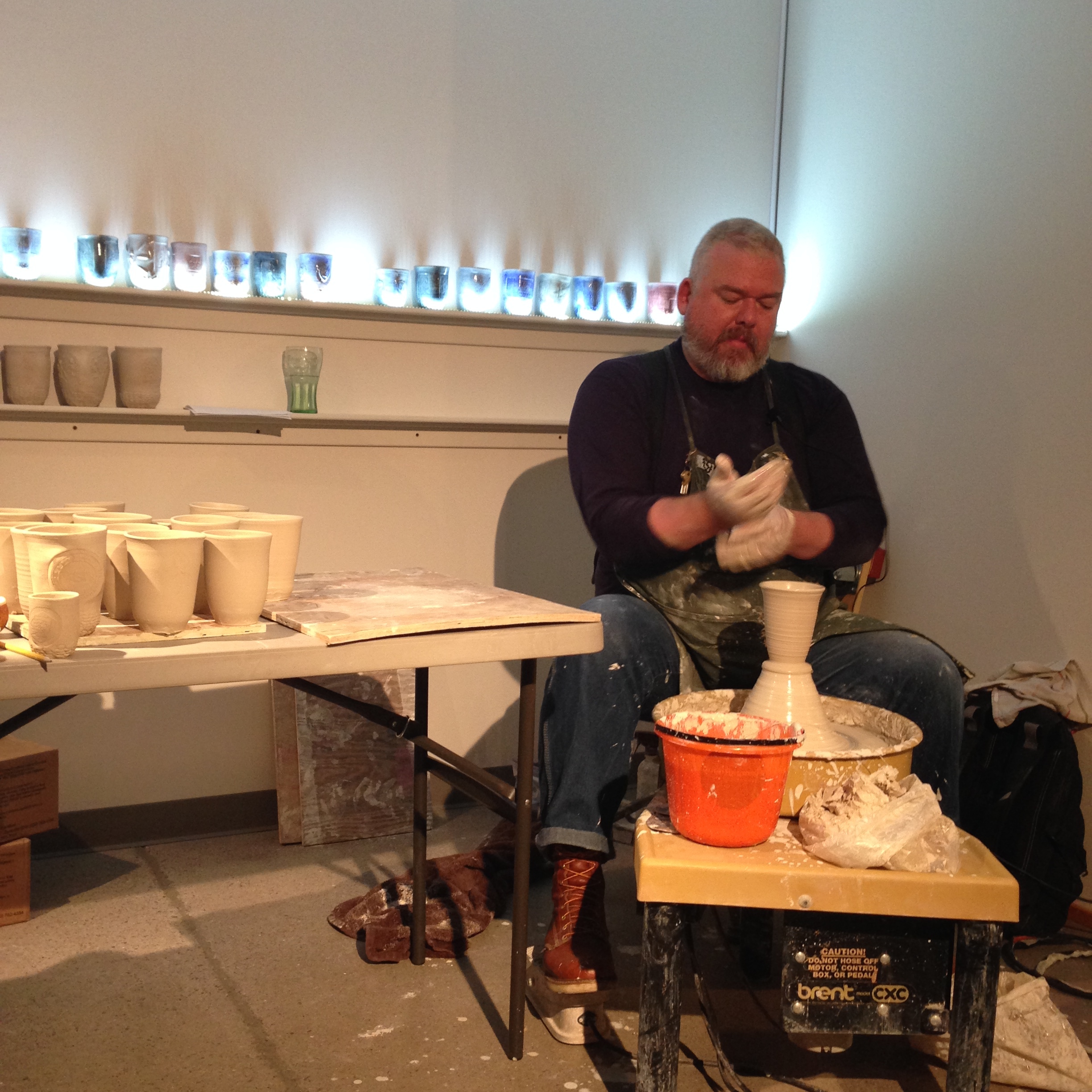
Ehren Tool treated us to a show--he made several cups on site out of a 25lb. block of clay!
Ehren Tool treated us to a show–he made several cups on site out of a 25lb. block of clay!

I also met Ehren Tool who came to ASU recently.  Please know I will devote a whole entry to him here soon–probably this weekend.  I checked out his gallery talk and there’s so much I want to digest before sharing my thoughts.

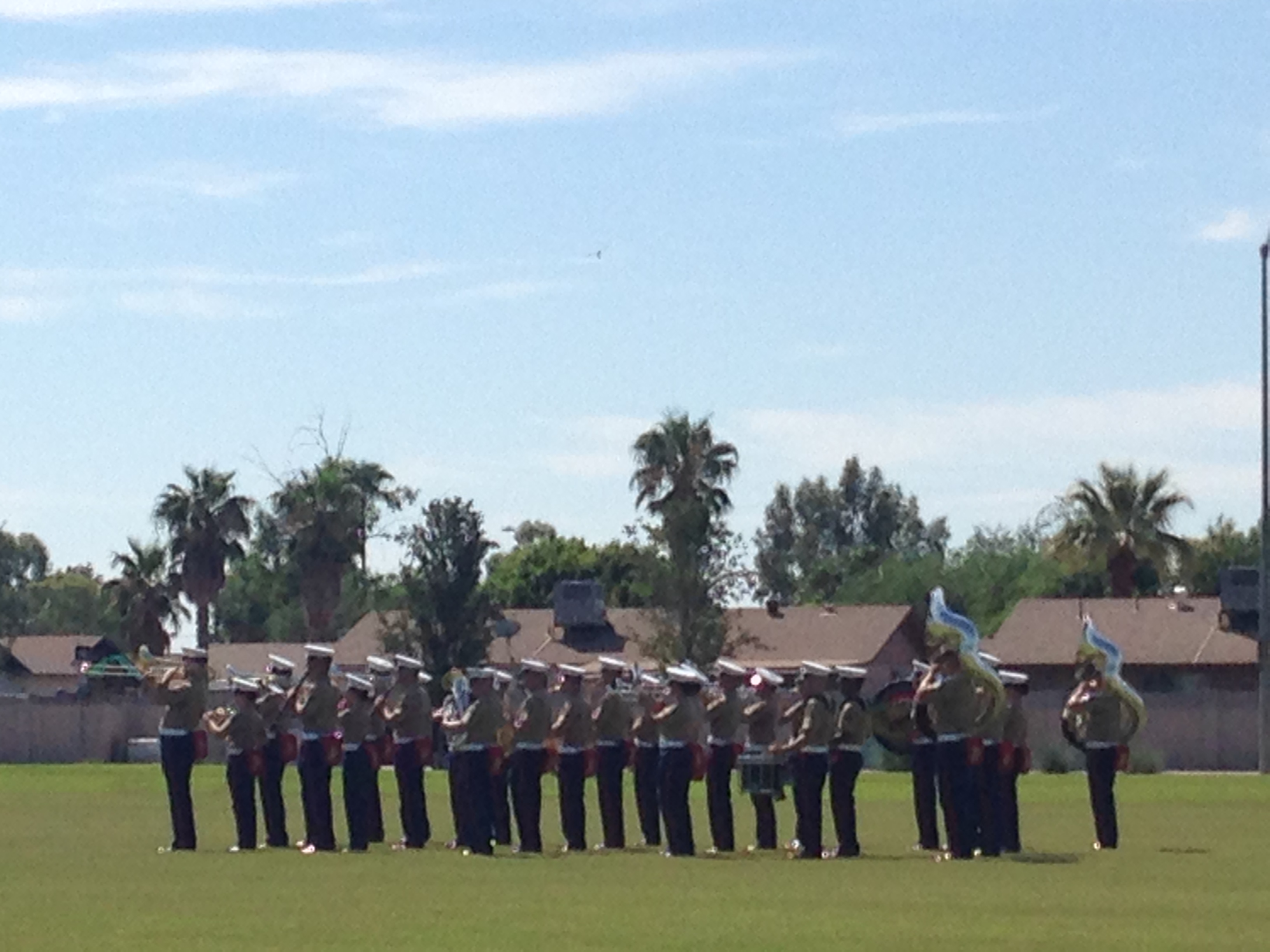
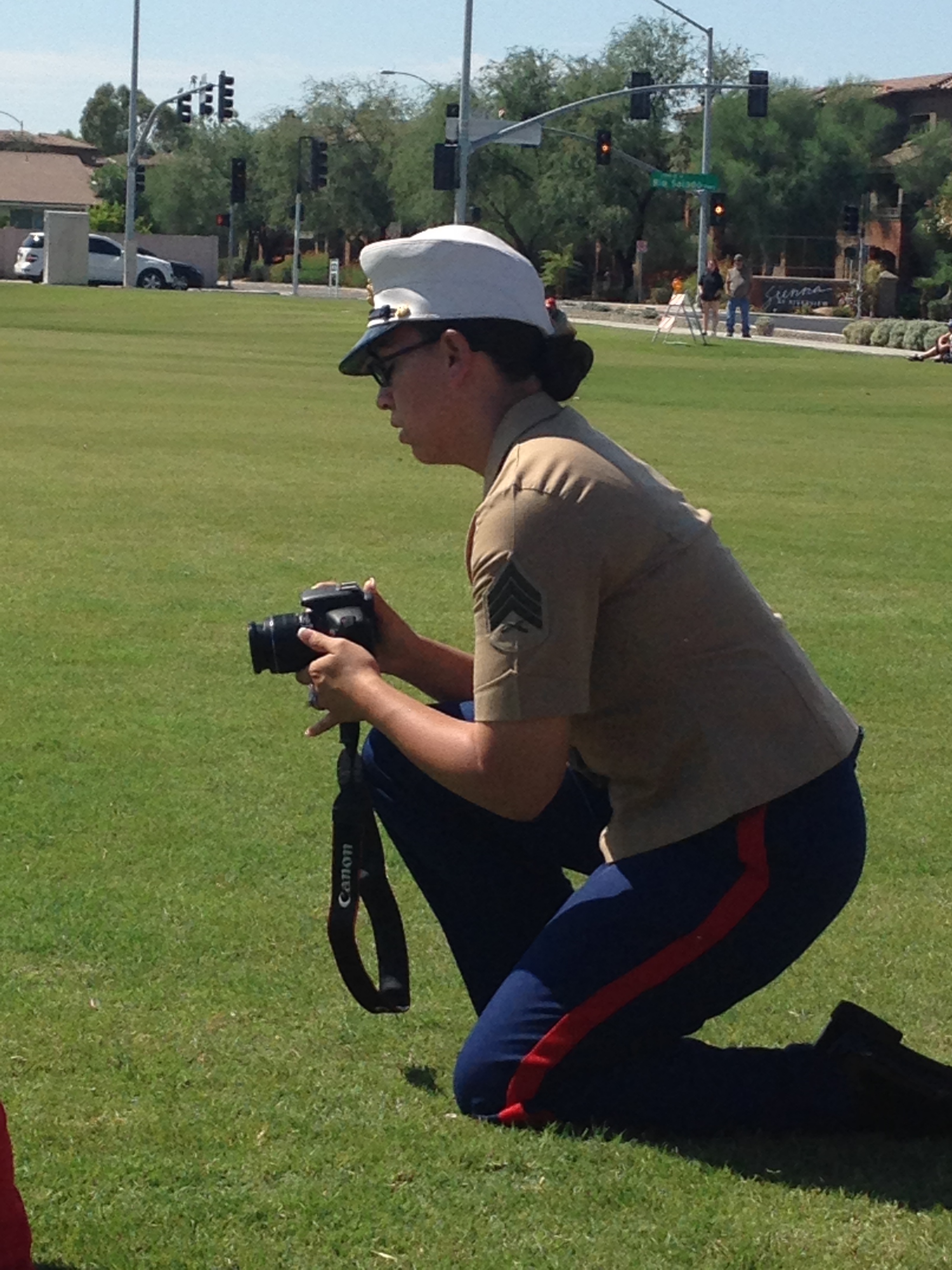
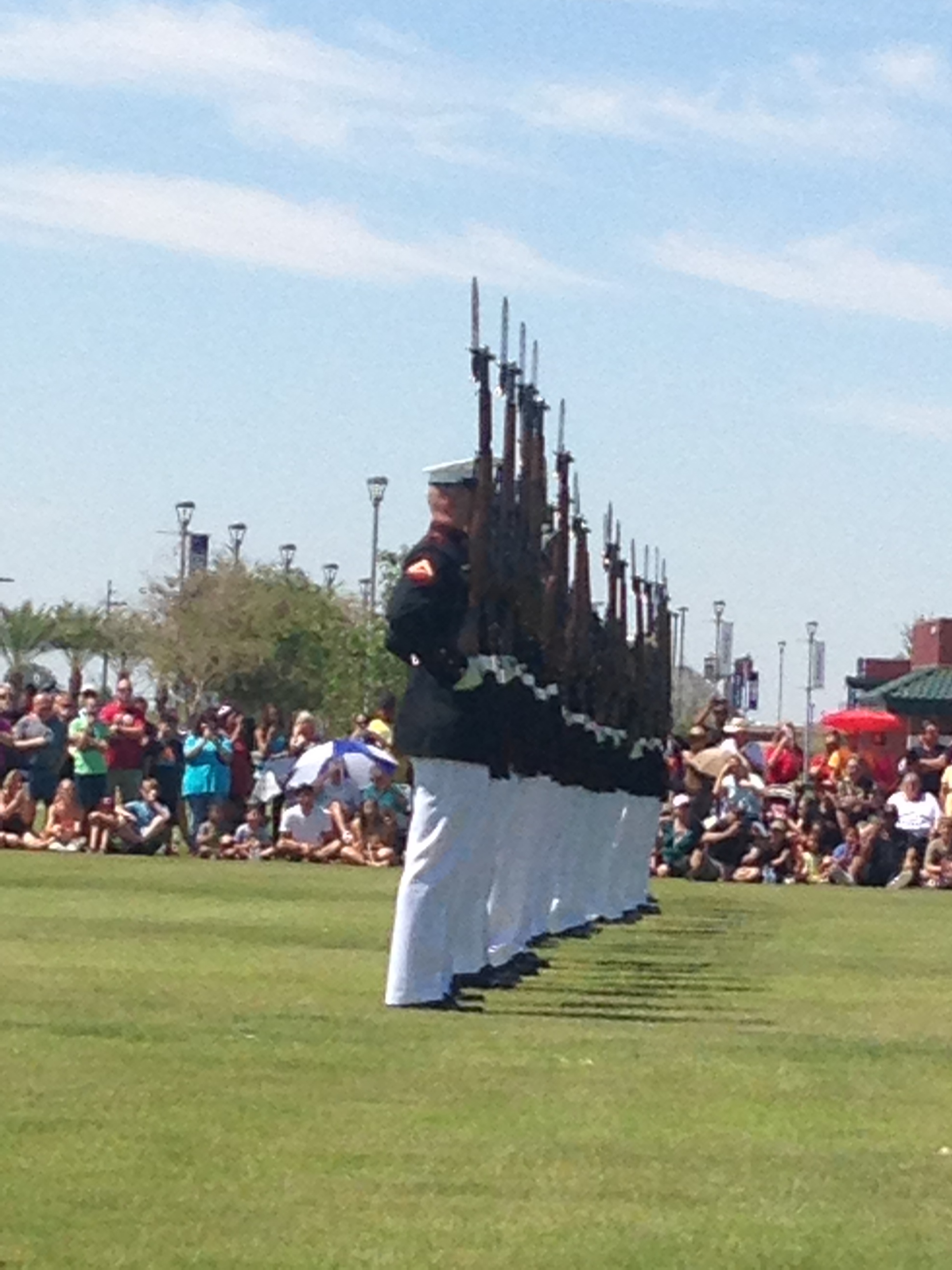
Last week was also Marine Week!!!  My family went to the exhibits at Mesa Riverview Park.  I am proud of all the Marines who worked the event–their efforts were flawless.  While I love all my Marines, I especially love seeing the Silent Drill Platoon perform.  However, the exhibits started at ten and by noon, my five-year old had enough of the heat.  She didn’t care the Marines performed without talking–that they tossed rifles in the air–she just wanted to leave.

IMG_7581 IMG_7582IMG_7592I mention my–happily–busy week because I enjoyed being a participant of each but also because they touch on different aspects of homecoming for me, in literal and figurative ways.

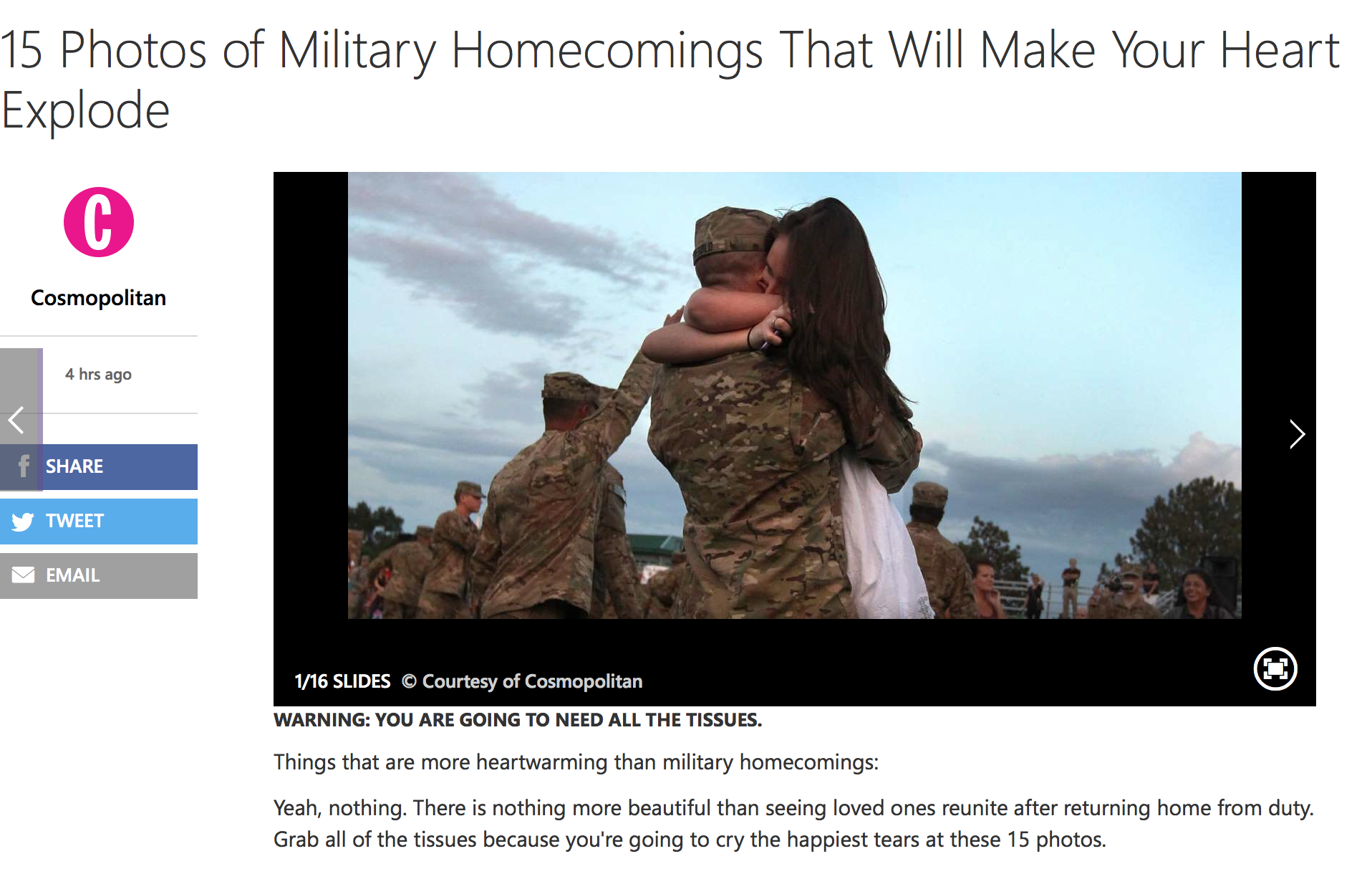
Today, I came across the image below (and many others) through MSN and it made me realize I’ve wanted to discuss the notion of ‘homecoming’ for awhile–scraping below the surface meaning of the word.

Screen Shot 2015-09-18 at 8.06.26 PM

In the simplest sense “returning home” is a neutral and somewhat vague concept.  It can apply to a person and/or group; it also doesn’t matter–in the context of the definition–where the individual (or group) had been but their destination–home–has social value.  Home can also encompass many different places, depending on the individual or group.  The definition is also a little less vague in the fact it limits homecoming to a singular event.  Lastly, and I want to hinge on this key point, homecoming is overwhelmingly used to describe the occasion in the positive.  The four insights I just gave you for ‘homecoming’ provide some talking points about why homecoming is a difficult term to associate with military service.

Home–as a destination–is what matters.

I love the concept of ‘home’ but it’s different once you leave, potentially good and bad.  The landscape will change over time, the people will change over time, the social setting will change over time.  Will ‘home’ still feel like home after weathering these changes? In my situation, home has a short lifespan of feeling comfortable.  I can weather home (Rhode Island) for about a week before feeling antsy for my normal routine.  My physical home is enjoyable when I’m not reminded of the slew of chores to maintain my residence.  I feel incredibly embarrassed to complain about having a roof over my head knowing that so many do not.  I should find more simple joy in what is, even when it does not live up to my standards.   I also think the current Syrian refugee crisis added a further layer to the conversation: what if you never get to go home?  It’s difficult to watch so many people treat these refugees (and refugees, in general) as less than human.  There is so much space in this world and so much potential for peace, prosperity, and creativity if people opened up their ‘home’ nations so that others may have a safe place to call ‘home.’

What is home?

Home can be a place/feeling/a person.  I often fail at captivating my audience about why Iraq will always feel like home to me.  I saw so little of it and yet, in my heart, I feel it is a beautiful nation undergoing years and years of great tragedy.  It is also home because of a love/respect/deep friendship that happened there.  The reality of my situation is I left ‘home’ then and returned to the States, a place that no longer felt like ‘home.’  When I describe home now, I typically use the word in two ways.  I describe Rhode Island as home; it’s where the majority of my family lives.  I describe my residence as home because that’s where I live.  Iraq is my past home and I’m bothered that terrorism is still rampant there.

Homecoming as a ‘singular’ event.

I’ve had many homecomings, usually in the sense of high school dances but also trips back east and returns to the States, once after a trip to Cape Verde and twice from deployment.  Homecoming in the military sense would describe my arrival back at Camp Pendleton after the first deployment and my arrival in Sheridan, Wyoming after the second deployment.  Those happenings were less positive (see focus on this issue below) than portrayed say in the images above.  Homecoming–for me–has been a process and not a single event here and there.  In October, I can add another lenses to the notion of homecoming when I attend training in Nashville, Tennessee.  More to follow on that issue later.

Homecoming-facing the past, present, and ‘pain points’

I mentioned earlier homecomings are thought of as positive events, but what about when they aren’t?  Your story–pain and all–is marginalized in history.  Not too long ago I watched Fort Bliss per one of my professors’ recommendation.  There are tough moments in the film, which I will discuss one day, but this story provides a truer glimpse that homecomings are not always beautiful singular events.  Not everyone is greeted by their families; in familial units torn by divorce, as depicted in the film, who knows is your child will embrace you or be present when you step off the bus?  I didn’t have my family waiting for me when I came home from the first deployment, but my unit was there–they were my family–but even my social network there was incomplete.  Returning from the second deployment, I was embraced by my husband and his family, but once again, my family wasn’t there.  Sometimes, it’s very difficult being the adventurer in the family.  Everyone stays in their comfort zone in Rhode Island.  I journey home time and time again, bearing the financial burden and emotional toll of not seeing my actions reciprocated.  In the last few years, especially as I recovered financially from unemployment, I haven’t made the journey home.  I don’t want to cough up $2,000 or more for flights, hotel rooms, meals, and so on because I know it’s a huge dent to my savings and I have zero desire to put those expenses on a credit card, unless it was an emergency.

I know I’ve given you more to digest today than I normally do and in odd fashion, started on a positive note and ended on more serious thoughts.  There is always a happy thought in my day, despite my seriousness.  To prove it though, please enjoy the cute Prickly Pear image. below.  I use these stickers all the time on Facebook; Prickly Pear stickers are my stickers of choice for Facebook messenger.  They always put a smile on my face.

~C

Screen Shot 2015-09-18 at 10.46.04 PM

Veteran Vision Project: Sentiments of a “Model”

My Little One and I
My Little One and I

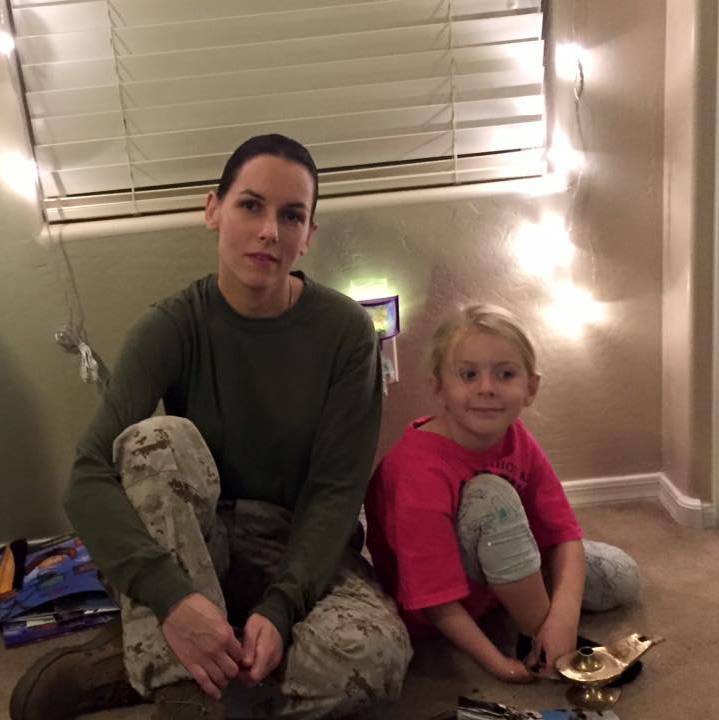
Yesterday’s photo shoot with Devin Mitchell (Veteran Vision Project photographer) went so well, I wanted to share my feelings about it. I won’t divulge exactly how the photo was laid out, although I did discuss it with my local peer group (perks for those who work with me and for whom I work for) because this is such a big deal for us. Devin did a fantastic job putting the finishing touches on my general concept. The photo above is an after shot my husband took of our daughter and I.

In encouraging others to participate as models, let me say, Devin does not direct how something should look or feel. His interest and his heart are for allowing your message [whatever it may be] to shine. I indicated what room we would be photographed in, the items I was interested in having in the shot, and I picked my uniform, my civilian dress, and my daughter’s clothes. Devin managed the logistics for us, because he has the eyes as the photographer on where things (and us) had to be moved to make best use of our space. He listens and he notices. He found a better arrangement for our artifacts I had not considered as I was looking through the situation as the subject and how controlled I see my everyday life.

In sharing details of my life and what I want both stories to say, Devin figured out what I could not see.

As well, I want to touch on Devin’s professionalism. He has done a great job tackling multiple assignments and when the one before mine was running over time, he called me right away to discuss his scheduling conflict. He also asked my permission to bring over two of my ASU colleagues, which we didn’t originally plan for the photo shoot. My anxiety crept in a little because ASU has lots of employees–trust me I do not know them all–and I wasn’t sure what the vibe would be like meeting them on the spot for something so personal. Taking to heart the notion of Semper Gumby (Always Flexible), I once again trusted Devin and opened my home as well to my fellow ASU peers. It turns out I already knew one, Kevin, and I met Ben. Both were respectful and had a good time hanging out with my husband and daughter while I changed over from my civilian dress into my desert camouflage uniform and pulled my hair up so it was up and off the bottom edge of my collar per regulations.

Trust me…it sounds like it should be easy to change over, but not when shoulder length, layered fine hair is involved. On top of those issues, I had spent probably 45 minutes or so curling my hair, spritzing it with product, and re curling the sections that fell flat as I curled other sections. I expressed decided against a sock bun although that was the way I wore my hair when I was in, except for the time period where I cut my hair short. That time period was post my first deployment and I donated the hair to Locks of Love. Although I had a period of instruction in boot camp on how to do either the sock bun or a French braid, I never mastered a braid until after having my daughter. (Thus far, I’ve learned to do a French braid, Dutch braid, waterfall braid–barely–and a fishtail braid, although it’s difficult for me to do on my own hair.) I asked Devin to not photograph the back of my hair…there were some wispy pieces, which have always been a problem for me. I was constantly critiqued for my hair at boot camp.

Putting on my full uniform (minus a cover, what civilians call a hat…not on duty, not wearing a cover) again was an experience. I last tossed on boots and uts [utilities] for a camping trip awhile back. It’s been 8 years since I wore my uniform as I would wear it for work. My utility bottoms felt huge; I had to look at the size tag to ensure I didn’t have my husband’s trousers. I was 108lbs. when I left the Marine Corps. I now weigh 112lbs. and there was still plenty of room for a second one of me in those trousers! The full experience of getting dressed “for work” again was striking. I measured the proper placement for my brand new chevrons on Monday–no room for error. Thank you to Sgt. Grit for getting my items to me on time. I ordered the chevrons, an extra gray martial arts belt–which surprisingly now has velcro on the inside–and boot bands. The martial arts belt ended up being unnecessary as my husband located my old one. No problem with an extra belt though…it will always come in handy on camping trips!

I felt like a completely different woman again coming downstairs in my uniform. My daughter has never seen me dressed that way. As well, I also wiped a full face of makeup off I had on specifically for the civilian photo–primer; two kinds of concealer; three different kinds of mascara; gel eyeliner; and a lip stain. For everyone who knows the daily me, I do not invest 45 plus minutes of doing my hair or don this much makeup in my every day life, with the exception of special occasions. Yesterday was about making a statement on so many levels, even if not all messages will be recognized by all audience members. Photographing myself as ‘flawlessly beautiful’ versus my ‘barely there make up beautiful’ was an important message for me to convey based on my feelings about society and makeup.

I will save my discussions about the context of my photo for when it becomes available. Now that the nerves have (mostly) gone away, I will report I am happy I took this leap. I put myself out there to make my statements, all important in different ways. More so, I am happy to support Devin who is doing great things with the Veteran Vision Project. Once he gets his book is published, I am definitely purchasing a copy!!! I can’t wait to have his time capsule of history as a treasure in my home.

Semper Fidelis, everyone.

~Cheryl

Veteran Vision Project Photo Shoot Planning

The Day Before
The Day Before

It’s almost time to don my combat boots again! Devin Mitchell, creator of the Veteran Vision Project and fellow Arizona State University student, is coming to my home tomorrow to create a one-of-a-kind image blending my past and my present life.

The stories I wish to share are not fully set into stone.  I’m torn between a couple concepts (all of which are important in their own ways) but I’m trying to see my messages from the audience’s perspectives.  Everyone exposed to this image will be affected in some way and there is no way to gauge how the combined story will be interpreted by strangers and my own family (parents, aunts and uncles, and dearest friends). There are valuable lessons to pass on and statements to be made.  All of Devin’s photographs, I’m realizing, are memoirs in themselves, with or without the entanglement of words.  I’m stepping out of my comfort zone here to be part of that time capsule Devin is creating of our nation’s veterans (and active service members).

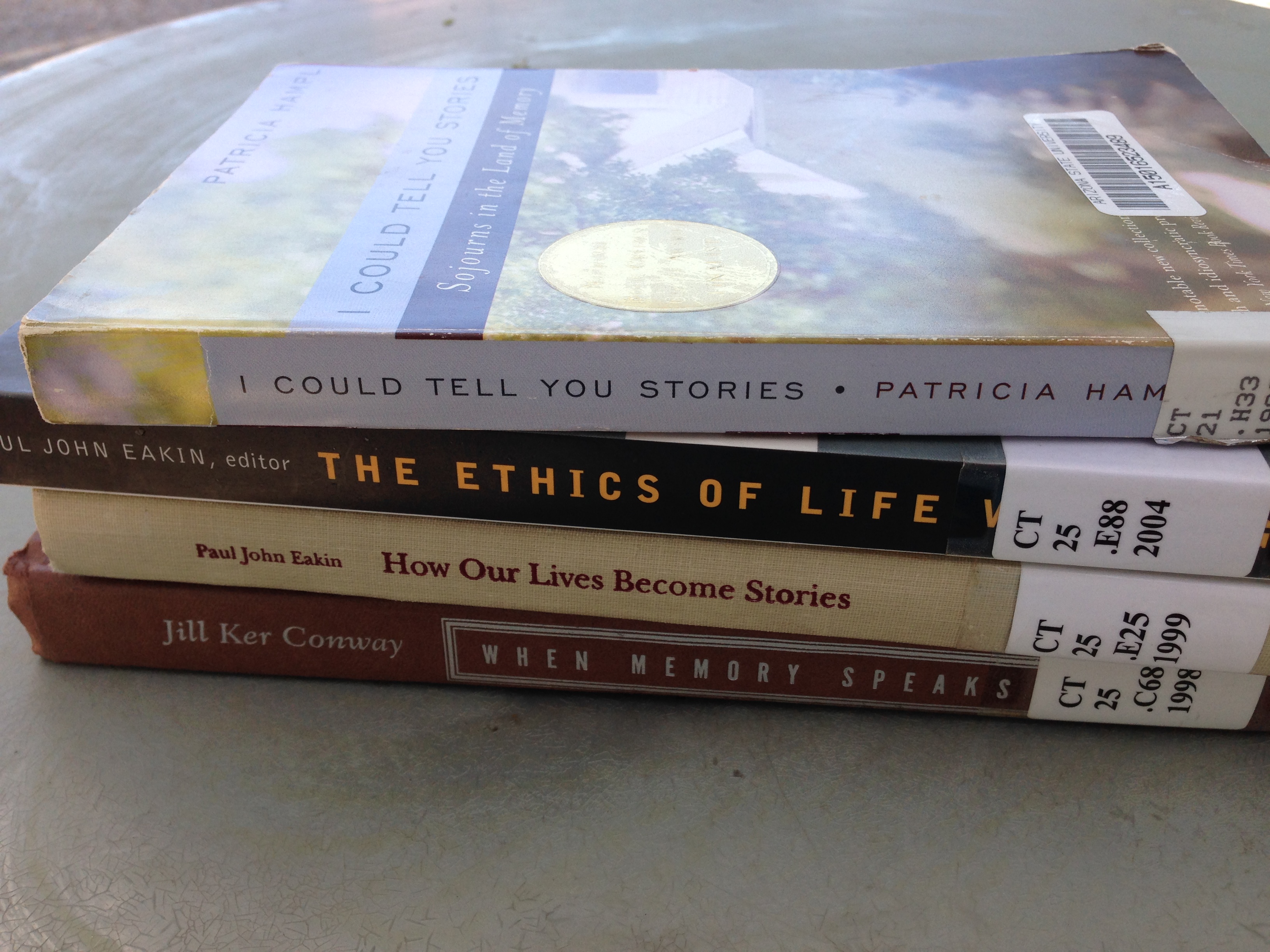
Yesterday I finished reading Patricia Hampl’s I Could Tell Your Stories: Sojourns in the Land of Memory and I was struck by the author’s acknowledgement memoirs give us the space to unburden ourselves but also–at times–invades the privacy of others, most importantly those that sometimes do not want their secrets shared.

As humans, it’s impossible to share our stories without also in some way sharing details about the people in our lives–loved ones, enemies, and so forth.  It’s not my place to say I have the authority to share some secrets, but there are some stories I don’t want to be lost in history, particularly my family history and the collective history of the Marine Corps, which means publicly acknowledging others who do not know me.  The message will be blatant to those people and their privacy may be interrupted but I cannot say with 100% this interruption will occur.

In an age of many things “going viral” I am ok with the fact if the photograph Devin takes becomes popular.  He does spectacular work to unfold and redevelop the conversation as it pertains to our nation’s veterans.  His work presents the veteran (and active duty) community and their family members in a more theatrical/realistic/justice promoting light than what mainstream media typically is willing to invest of their time and effort.  I am barely touching the surface of what Devin is able to do based on the rapport he develops with his participants, but he is nothing short of amazing.  What I don’t wish to see (and hope does not occur) is media badgering of someone I wish to reach out to using this photograph (and by extension, other persons closely associated with this individual).

Please know I am making plenty of intentional choices in what’s photographed (and excluded) from my photo shoot.  Not all the decisions will be mine as well.  Devin is the photographer and understands things I don’t when it comes to how everything will come together.  I fully trust his judgement and skill set; he has done well in the past to honor our veterans so I trust him with my story.  Another important distinction for the audience is my husband’s expressed decision to not be photographed.  This is his choice and no statement must be made regarding his personal preference.  Lastly, my artifacts are very personal.  If anyone hears nasty comments about what I’ve chosen to share or others’ perceptions of me, please do not share these sentiments with me.  I know well enough not everyone in this world likes me as an individual or that they will like how I present my experiences.

Veteran Vision Project is Coming to ASU

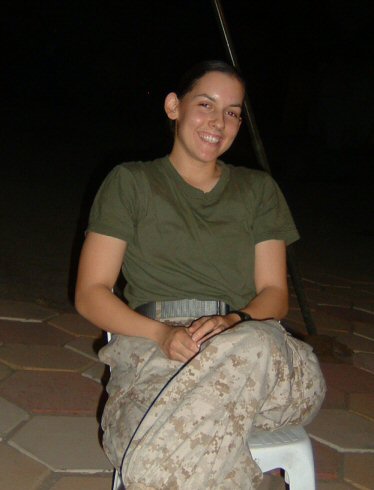
cheryl_night01

We are inching closer to Devin Mitchell’s visit to Arizona.  He will photograph Arizona State University staff, faculty, and students to celebrate their statuses as veterans,  photos that will later be shared publicly as part of our Salute to Service events.

Am I excited?!  Yes!!!

Devin has done a fantastic job photographing veterans across the country and I am delighted he was interested in photographing veterans from the institution he attends. Nancy Dallett, from the Office of Veteran and Military Academic Engagement, has partnered with many wonderful ASU personnel–too many new names for me to mention at this time–who are also equally interested in seeing Devin’s vision elevated further.  I am happy for my tiny link in this whole process.

I registered on the Veteran Vision Project website and am waiting confirmation on whether I’ll be photographed. This time has given me the opportunity to reflect on how I wish to be portrayed as a civilian.

I think this objective is probably the hardest thing to focus on; I can have potentially one snapshot–a singular message–to share with the world. Do I present it to veterans? Do I present it to civilians? Do I code it as a private message to those I love? Is it possible to make it something just for me although it’s public? I haven’t made a decision on my civilian outfit yet, but I’ve already decided that my desert camouflage uniform is what I’m most comfortable wearing for my military photograph because I identify more with my war service than my garrison service.

My military identity is simple, compared to my civilian identity.   There are rules on how to wear a military uniform and certain expected behaviors when wearing a uniform. There is a proper placement for my rank. There is a proper way to wear my MCMAP (Marine Corps Martial Arts Program) belt, gray by the way. I didn’t devote too much time to martial arts during my four years. My boots are still laced left over right and a single dog tag still hangs off the laces, but I tuck it in under the eyelet holes. (I can’t recall when I stopped wearing my medical alert dog tag; I’m allergic to amoxicillin but the medical dog tag is larger than my regular identification tags and uncomfortable to wear in my boots.) I’ll wear my dog tags, like I do every day. (New readers will probably be amused I took up wearing my dog tags–one of my signs of military service– again late last year to gauge how much people recognize me as a veteran, to spark a conversation.) I won’t wear my cover, if photographed, because I will be indoors and I’m not on duty.

For now though, thank you for following this journey.  I am always astonished by the number of opportunities that are presented to me as a result of serving this country and I appreciate the platform to share my story.

Sincerely,

C

Are You Even a Veteran?!

The question in the subject line was honestly asked of me today:

Are you even a veteran?!

It is inappropriate to give the entire context of the conversation, but a fellow veteran made this statement–asked this question of me–quite condescendingly.  At the tail end of an insanely busy week, it was the last question I expected/wanted to hear in my day.  I understand it was a rhetorical question and he didn’t quite expect me to answer in fact that I am. (The anger/frustration/hurt in my voice was not concealed.  At what point did our society give up on teaching and reinforcing good manners?!  When did insolent behavior become so commonplace?!  And is anyone else paying attention to how eager people are to act this way over the internet and on the phone?!)

I do not know this person well enough to understand how much his comments were part male privilege and/or veteran entitlement.  Let’s give this person the “benefit” of the doubt and take male privilege off the table for a moment–let us assume he wasn’t making two digs at me, but just the one:

His veteran status is more important (in his eyes/mind) than my personhood, my assumed non-veteran status.

This issue infuriates me greatly.  While I may crack jokes about Marines being better than Airmen, for example, I leave many of these comments in-house, with fellow veterans whose camaraderie I enjoy.  Some will playfully chide in return that Marines are crazy, just look at the crap we put up with compared with our sister service branches.  We do earn each other’s respect.  I don’t put down my peers who did not deploy; the more I learn about my peer group the more I understand how luck/leadership/health/various other factors contributed to my ability to deploy and their inability to deploy.  My infantry peers also respect me and don’t derogatorily called me a POG (person other than grunt).

Years ago, I made the natural assumption almost everyone who was in the military during my 4 years of active duty would equally deploy.  This notion made sense to me.  We were (and are) in a post-9/11 where terrorism occurs in expected and unexpected places.  I expected everyone who served after 9/11 would serve overseas in places like Afghanistan and Iraq and it was a matter of ‘when’ not ‘if’ they would deploy.  I am learning more now–as a veteran–military life and service experiences are more diverse than my naive expectations.

Veteran entitlement though is an issue that eats our veteran community from the inside out and ruins our collective relationship with our civilian communities and other veterans.  I didn’t expect to come across this attitude. It runs counter to another veteran type I see–veterans who are placed in the most dangerous environments, who do the best with their resources, and care highly for their teams.  Most veterans will fall along the spectrum from highly entitled to highly altruistic, just like their non civilian counterparts.  Today was just my encounter with a highly entitled person who thought it was appropriate to bring me down and there are many more like him in the world.

This attitude is not how veterans should behave.  I’m sorry for anyone who experiences this person on a daily basis or in a casual encounter like I did.  No one should behave this way as part of their daily interactions.  Veterans are trained to be our nation’s best and some, unfortunately, never (or rarely) take that message to heart.

My goal is to not act like this veteran namely because I know better.  I am a Post-9/11 veteran.  I am a Marine veteran.  I am an Operation Iraqi Freedom veteran.  I earned my veteran status but I did not forget my status still comes with expectations.  I am a representative of my service branch and I have an equal burden and responsibility to behave appropriately in public.

Operation Iraqi Freedom 2-2
Operation 5-7
Operation 5-7

Life Insurance: A Real Necessity

We’re all going to die some day.  It’s not something we enjoy talking about–or planning for–but it will happen.  Some of us have short times here on earth and others live well into their 100’s.  Planning for the inevitable falls on us–or for those of us too young or indigent–someone else must plan and set aside funding for burial expenses.

Normally, I would not write about such a topic.  People don’t really like being reminded that they are going to die or that their loved ones will eventually die.  I am with you all in this regard and more so because of how often death has touched my life starting with my mother’s passing in 2000.  Death, though, has not stopped there.

On my first deployment, my family tried to spare me this burden and delay notifying me my Uncle Duke passed away.  On this same deployment, my dad’s (stepfather, legally) father passed away.  My work also suffered the burden of losing one of our own, Captain Brock.  I didn’t think about what difficulties my family members may have undergone if sufficient life insurance was not in place, because it’s not something we (and certainly, many families) discuss or want to discuss.

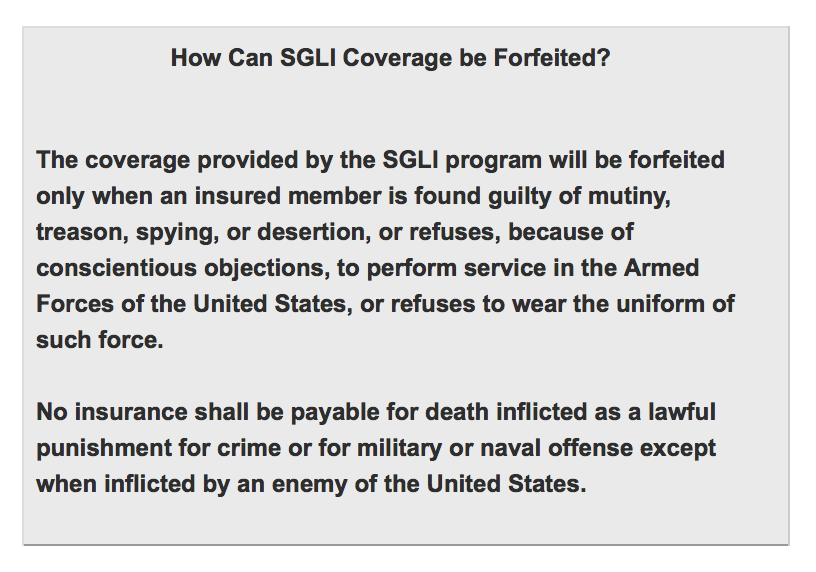
I didn’t think of what arrangements Captain Brock’s wife made for him; thinking back, I’m assuming he had the maximum Servicemember’s Group Life Insurance, which is $400,000 and he may also have been covered under the $100,000 Family Servicesmembers’ Group Life Insurance.  My husband and I had this spousal coverage on each other while we were both active duty.

As active duty service members we each had $400,000 worth of SGLI, although when Bart was killed in 2002, his mom told me his SGLI had been $250,000 and unfortunately, from her, I learned his parents were not listed as beneficiaries which meant paying for his burial costs without this financial support.  I don’t know about all life insurance plans, but ours recommends reviewing the beneficiaries at least one a year.  Based on my conversation with Bart’s mom, I made sure my parents were listed as my beneficiaries when I was single or dating because they would bear the costs of my burial.  I didn’t update this information again until I was married.  It was updated yet again when we had my daughter.  Should we later adopt, I would update my plan again.

When individuals get out of the service, they can get Veterans Group Life Insurance up to the maximum amount of SGLI they had while serving.

Screen Shot 2015-08-16 at 7.59.33 PM

I imagine someone on the outside would assume these numbers are unnecessarily high, but life insurance can help with more than just the bare necessities of funeral planning and for many people, life insurance that just covers burial costs is not enough.  Inadequate life insurance and no life insurance at all can be devastating for people who lost their family’s sole (or higher) source or income.  The Granite Mountain Hotshots’ lawsuit settlement is just one example of why life insurance planning is an absolute necessary.

However, this conversation is not limited to just replacing an adult’s income.  When I worked for Pinal County, I had the privilege to learn a little, informally, about the handling of birth and death certificates.  A peer there told me about the life insurance policies she has for her children.  I also carry a policy for my daughter, so we would not be financially crippled should the worst happen and we are faced with her burial costs.

The reason I decided to write on this subject today is because I learned via Facebook a 2003 graduate from my high school recently passed away.  I do not know the circumstances of his death, but his family is struggling to pay his funeral expenses.  Given his age–thirty years old–I wonder why he didn’t have life insurance.  Did he think it wasn’t necessary?  Was he barely scrapping by?  A donations request was sent out and donations are coming in to help reduce the burden on his family, but I wonder if it will be enough.

Depending on what options a family explores, burial expenses can be overwhelming (funeral, travel, flowers, etc.).  I took a personal finance class with the University of Wyoming and the following from Garman and Forgue’s Personal Finance (9th ed.) is a useful needs-based assessment:

-Final expenses

-Income-replacement needs

-Readjustment-period needs

-Debt-repayment needs

-College-expense needs

-Other special needs

*Add all these totals together and subtract government benefits and current life insurance assets to get the total life insurance needed.

And while I don’t feel like tackling the whole life insurance and term life insurance debate, I will say I purchase term life insurance.  It’s just appropriate for my life right now.  My premiums are not ungodly which is great since my paycheck is smaller than what I made while on active duty.  My last premium, in fact, was due the day I learned this former student had passed away–if this new is not an incentive to get life insurance (or to make a timely payment), I don’t know what would be.

When I die, I know I want a simple service and I want to be cremated.  I think it’s such a waste (for me anyways) to have an elaborate casket and flower arrangements.  Cremation is less costly and I’m not a big fan of flower arrangements.  After my mother’s death, our house was littered with so many flower arrangements.  These beautiful things competed with each other–in small bunches, they smell beautiful but the combination of them makes an odd urine type smell.  The only flowers that really stuck out in my mind as beautiful were the ones sent by my mother’s former employers from when we lived in California.

As an early warning, when I do die, people are welcome to leave letters on my grave and tuck them in the earth. I will greatly appreciate it if people donate their money to a charity instead of spending that money on flowers.  After two deployments, I can also say I don’t want my family to waste my life insurance money on remembering me.  It’s money for them to maintain their dreams and to keep their basic needs met so they are not burdened unnecessarily whenever it is my time to go.

Writing for the Love and Joy of Storytelling

I write because I cannot remember everything.  I write because I want to remember special moments. I write because I want to remember people, good and bad.  I write because history changes so quickly.  Not everything I write is important to share publicly and many things that occurred privately have not been discussed in an open forum.  I write because I want–need–some peace in my life.  Writing is my escape from people, places, things I cannot change.

When I was younger, I struggled to cope with the loss of my mother and Bart’s murder.  Their absence from my life completely changed my life trajectory.  I chose to leave Rhode Island and then I made a life changing decision to become a Marine.  This decision had more than a temporary effect on my life, one that persists today.

I catch myself being caught off guard by my emotions as I start writing small stories to share in my planned book.  My interpretation of certain events is just that, mine.  For this reason, I am intentionally seeking people’s permission to share my view of our shared life experiences.  So many things/people/experiences will be intentionally excluded which lends a certain perspective to my story as does the inclusion of other details.  My emotional responses then and now as I construct these drafts remind me I love and enjoy storytelling.

I’m on guard–for the most part–in my public life.  I have certain responsibilities and obligations in my daily life to fulfill that require a certain demeanor.  My temper must be subdued.  I can’t call people out for their inappropriate behavior, even when they act like petulant children.  When I’m comfortable in the presence of guys, this ease–as my Marine Corps experiences have taught me–is often misinterpreted.  Our mainstream American culture, and its notions of heterosexual relations, sees closeness between men and women as heavily influenced by sexual intimacy and not always trust, personality compatibility, and interested in shared goals.

A huge area of concern for me, in my writing, is the fact I have so few examples of female leadership.  My spring studies taught me this is not inconvenient data, using some verbiage from my instructor, Dr. Weitz.  Unfortunately, I don’t enjoy talking about some of the women I’ve met in my life.  So often, I’ve felt awkward in the company of women.  Some are either too feminine, some are my competitors, and others are there asking for someone else to take care of them for their lifetimes.  Hence my struggle to adequately discuss women when I have such a biased opinion against people of my own gender.

I wish I could write about women as easily as I could (and can) write about the men in my life.

Taking on some serious homework to learn about the ethics of memory writing, per the advice from my professor.

Tennessee Shooting Update: Critical Witnessing

Unfortunately, one of the wounded from Thursday’s shooting in Tennessee has succumbed to his injuries.  The sailor, Petty Officer Randall Smith, passed away on Saturday.  As a frequent Facebook user, my timeline has many black ribbons from military supporters as well as articles about armed civilians protecting recruiting centers.  The sentiments are honorable, even if their effectiveness might be simply measured in a sporadic newline or as a ‘trending’ subject for some time before being unearthed again next year.  As time effectively softens the edges of this tragedy, the evaluative process will unfold with less emotion, harsher criticism, and the typical subjects will be covered: how have the individuals affected “moved on/moved forward,” how have politics changed/remained the same, and how will/does the community remember our fallen Marines and Sailor (or is the community still interested in honoring their time here on Earth)?

There will be public pain displayed in various ways for some time and then the public gaze will shift elsewhere.  I do not say these things to bring further hurt among those who lost their loved ones.  I make this statement because the spread of mass violence is becoming more common.  As consumers, perhaps as a result of social media in its overabundance, it’s more common to share stories of grief.  Certainly, there are positive and negative consequences of such actions–we find greater strength to face our own battles and hopefully, act as good audience members to those sharing their grief so publicly.

This spring, I had the great opportunity to read Elizabeth Dutro’s Writing Wounded.  This article was presented to two peers and I as a trio of literary pieces, but this one spoke to my heart the most.  For many reasons, highly traumatic events have marked time in my life.  I vividly remember the pain of certain experiences, some, in particular, I still haven’t shared with family members or friends.  I don’t enjoy being vulnerable; my mom specifically spoke to this characteristic in her journal to me.  I was a 15 year old kid crying in the bathroom away from my family when I learned of her cancer diagnosis.  I also hid away from the world when my first Iraq homecoming became my biggest frustration.  (I am working on sharing this process currently, but this story can be shared another time.)

As our society learns to embrace our storytellers, like the families of Tennessee’s fallen service members, I also implore you to politely remember others who perished late last week.  My stance will not necessarily be popular, but I make this statement today as one of America’s Iraq veterans.  ISIS killed 120 Iraqis, wounded 140 more in an exceptionally brutal attack last Friday.  Unfortunately, acts of Muslim terrorism taint the perception of Muslims everywhere.  In our battle to not let ISIS win, I ask of you all today to think of the pain for those families who lost loved ones in Iraq last Friday.  Their pain mimics our own.  They need our prayers and support in their time of crisis, just like we’ve extended our hearts to our nation’s service members who died in Tennessee.

Thanks.

Cheryl

Tennessee Shooting Reflections

I am not an acquaintance of the Marines killed yesterday but as a Marine veteran, their deaths are personal.  There are memes that joke about the Marine Corps being a cult but what people can misunderstand is our feeling of Esprit de Corps.  We pride ourselves on becoming Marines while other service branches offer more cash, rank, duty station or military occupational specialty options.  I do not make these comments today to look down upon the sister service branches, but to reinforce to my audience, the title of ‘Marine’ is quite literally a selling point for recruiters.

Yesterday’s shooter took away the potential of my brothers.  It doesn’t matter that I did not know my brothers personally; Marines are Marines.  We protect each other, like we protect this nation.  Calling yesterday’s shooting a misfortune is an understatement.  It’s a complete disgrace.  Establishing “weapons free zones” does not deter criminals from breaking the law.  It reigns in the behavior of law-abiding citizens.

My husband and I encountered the same situation when he was on recruiting duty from 2009 to 2012.  We both served overseas in different capacities and have previously discussed how ineffective it is to establish weapons free zones.  His recruiting days were frustrating more than anything; my most common concern for his safety was the ridiculous long hours he worked and the substantial distance he’d drive.  Nothing really scared me other than one bad car accident and him almost hitting a black bear while driving at night.

We have a friend right now who is on recruiting duty and I think of his wife and the stress yesterday’s shooting has on their young family.  As Marines, we go through combat deployments and yet, sometimes the scariest place to be is in our own nation.  Terrorism, currently manifested as the radial Islamic variety, is a serious problem.  Unfortunately, it hurts the perception of Muslims who do not ascribe to such behaviors and it has devastating consequences at individual, local community, and societal levels.

I do not feel for the attacker who was killed yesterday by police.  I feel for our deceased Marines who lost their futures and those wounded in yesterday’s attack, whose lives are forever changed.  Putting one’s life on the life as first responders and as service members is not an easy choice to make.  I feel for loved ones who received the worst news ever yesterday and for whom, there are only final goodbyes and memories to cherish.  I feel for civilians who witnessed this display of violence, forever shattering their notion of a fairly easygoing lifestyle.

Ironically enough, my morning started yesterday with some comments to my work studies about personal safety and when I came home last night, I received this awful news.  What I thought had been an awful day for me (an overwhelming amount of routine tasks) was nothing compared to this tragedy.  My heart  goes out to the families who lost their loved ones and to our Marine family, who lost some great war fighters.