Good morning! While I normally would already be at work I have a follow up today related to my years’ long struggle with chest pains so rather than waste this time I thought I would write. In the past, my journal entries might have touched on this health issue once or twice but in the past two month the increased frequency of these pains has meant breaking down and seeking medical advice and attention. Something veterans, like me, do not always do well. I have had the biggest chip on my shoulder about again bringing this issue up to the Department of Veterans Affairs for consideration that they are–in fact–service connected. I do not enjoy being “under the microscope” so to speak and I can tell you people do look at me funny when I mention I’ve dealt with this on and off again issue for eleven years now. Currently, I am working with civilian doctors on my case and have thus far done an EKG and a stress echo….there are times I am REALLY grateful I have female providers because these tests are very personal. When I went to complete the stress echo I was quite mortified to see I had a male technician but after speaking with him about my comfort level I had two female staff members replace him: one placed (and removed afterwards) the sensors and the other read the ultrasounds before and after the treadmill test. My follow up with the cardiologist will be in September so I don’t have too much longer to wait for those results.
I do realize I have yet to provide a 2006 to 2016 comparison so while I am a day off, please have some patience with me. I am also still unpacking a house of stuff to make it a home. I am very grateful for my living arrangements but with coming home at six pm (and an ideal bedtime of nine pm) I don’t have copious hours of time during the week to accomplish all I wish to do.
Thanks again as always for your patience as I unpack my experiences (and my house!) and shed light on thoughts of other things (as they occur) going on related to our military and veteran community.
Good morning, everyone! It is just after six a.m. here but it is fairly normal for my family and I to be up before 7 a.m. on the weekend. During the week I wake up for work at 5:30 a.m. and today was just the same, without the alarm clock. Since I’m up and motivated I thought I would share with you an inspirational story one of my coworkers recently shared via Facebook. The story of Sergeant Elizabeth Marks is one that I did not know before and like retired Marine Sergeant Kirstie Ennis, Sergeant Marks also continues a physical fitness intensive regime in spite of her injuries. I am impressed and motivated by the determination of both these women in the face of such great odds and in the past few weeks have worked on incorporating fitness back in my life. I let that aspect of my wellbeing suffer greatly while I was working full-time and also working on my graduate degree.
I think one of the most powerful messages shared was her choice to wear the 22Kill ring in honor of her friend who committed suicide. While suicide victims are not just limited to individuals who serve (or served in the military) this profession, like other high stress employment fields, has a higher percentage of suicides compared to the civilian population and this percentage is higher for both men and women who serve(d). Even Marks’ physically small but powerful gesture represents a continuing effort to bring awareness to suicide prevention. Other organizations such as the American Foundation for Suicide Prevention are also ensuring work continues to help save lives.
Another message I wanted to share with you today was about the careful construction of Sergeant Marks’ leg tattoo. I thought it was beautiful the ESPN article discussed at length her choices for the design and the meaning behind those symbols. I have many peers who have service-related tattoos and the ones that commemorate fallen peers and pride of service are among the ones that catch my eye the most. Finding the right tattoo artist to craft those messages is something that I think many veterans can relate to and is worth the effort (and money).
I don’t believe I’ve spoken before about the tattoo piece I will have done later this year that commemorates my time at Camp Blue Diamond. I made the appointment for this tattoo about a year ago. Justin Nordine, who owns The Raw Canvas in Grand Junction, Colorado, is who I chose based on his watercolor work. The more I thought about his style the more I realized there wasn’t another single American tattoo artist whose work I came across that made me feel he or she was capable enough of conveying the complex emotions associated with my deployment. When I was explaining to one of our work studies how I am trying to find a balance between not only light and dark, but also feminine and masculine perception I thought more about the challenge this desire creates for the tattoo artist. I think the only thing I am hesitant to include is the color red because red is powerful in many ways that other colors are not especially for its representation of blood. The photographs below (copied from his website) are a small representation of his amazing skill set however I highly encourage you all to check out his Instagram page if you are on Instagram.
What a month! It’s not over yet but it has been busier and more stressful, complete with more opportunities and challenges. My nervousness over how fireworks would make me feel morphed into a bigger stress response than I imagined. As a result, I have logged my chest pains to keep track of them for an upcoming appointment with a cardiologist. Looking back, the 14 days of chest pains just gets exhausting. Thankfully, they are not all day long but once I do have an episode I do worry if I’ll have another attack during that day. While I have been extremely reluctant to seek medical assistance/further diagnosis about my chest pains the reality is after eleven years of suffering through them, sometimes I cannot manage them effectively on my own. I do find it difficult to carve out sufficient exercise time which keeps them in check. Separately, the sensation of these pains has changed over the years and I know that issue alone is pretty significant to go back to seek medical advice and assistance.
During the Fourth of July, I found it possible to avoid most of the fireworks. My husband and I went to the Keg for a late dinner and walked over to the movie theater in the San Tan mall. Unfortunately, some very overzealous individuals started shooting off fireworks before it was even 9 o’clock. I had some high hopes we could miss the fireworks that night in its entirety but not so much. Although I will be flattening the conversation significantly, being around fireworks does not upset me so much because it reminds me of the constant danger I was in while serving in Iraq. That sucks but it wasn’t the worst thing. It is a struggle because it is a reminder of the worst mortar attack we had which killed my officer. The sound of that attack is something that is seared in my memory more than any other one event. It is a struggle because I know I survived that attack and while so many of us knew Captain Brock we couldn’t save him. The Quick Response Force couldn’t save him. The Medevac crew couldn’t save him. We all–his Marine family–were powerless against an indirect weapon and the rest of us came home.
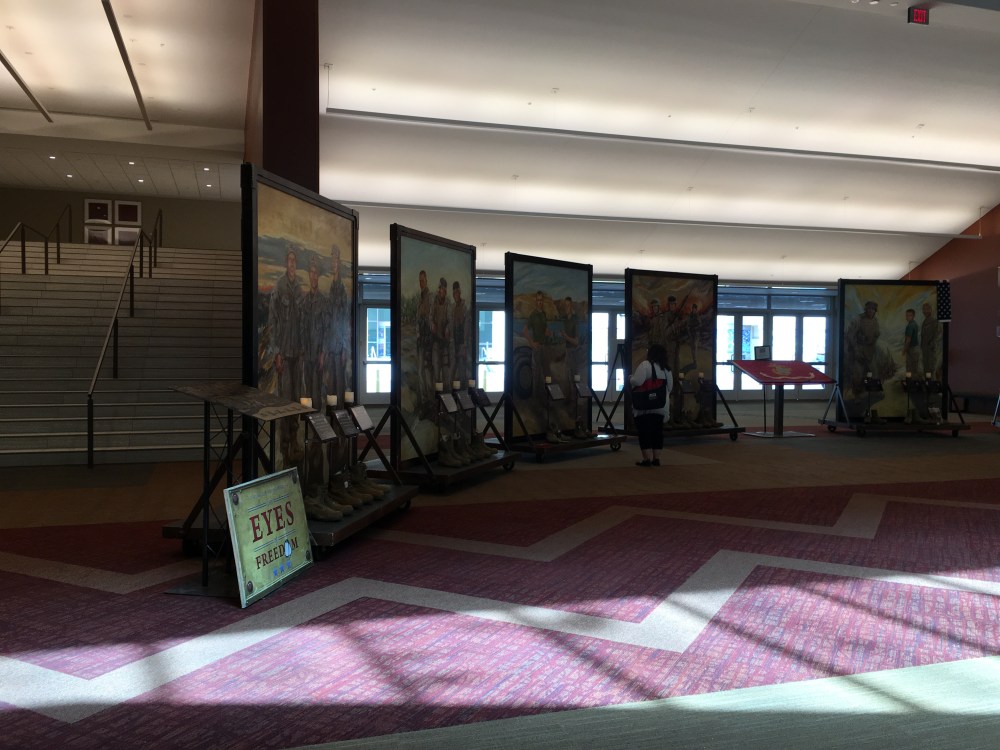
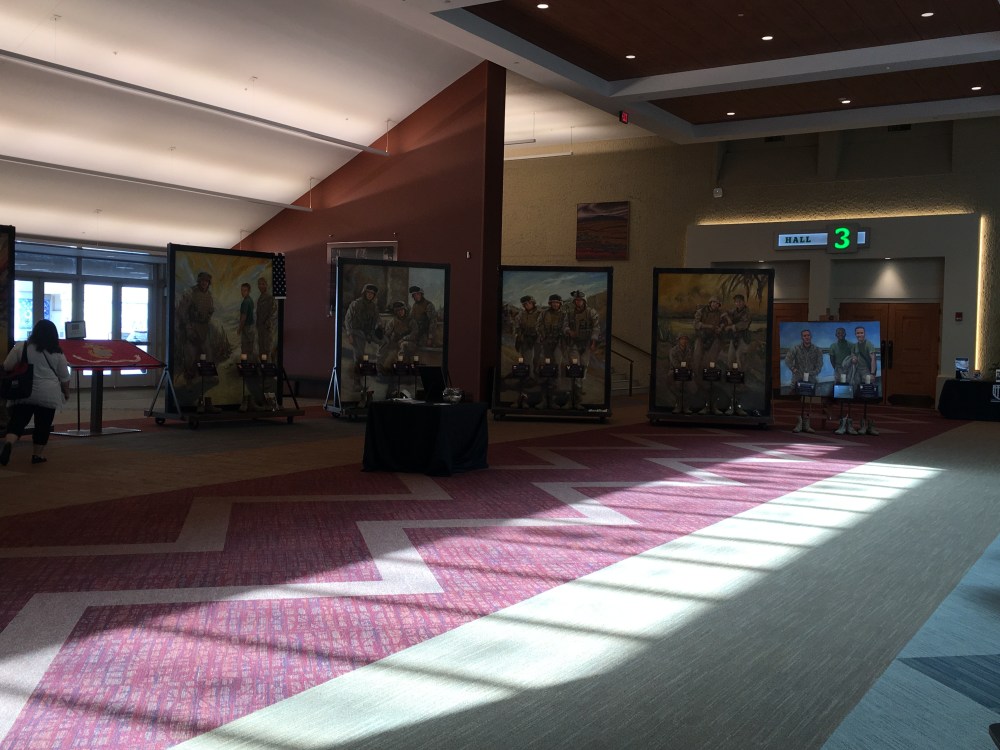
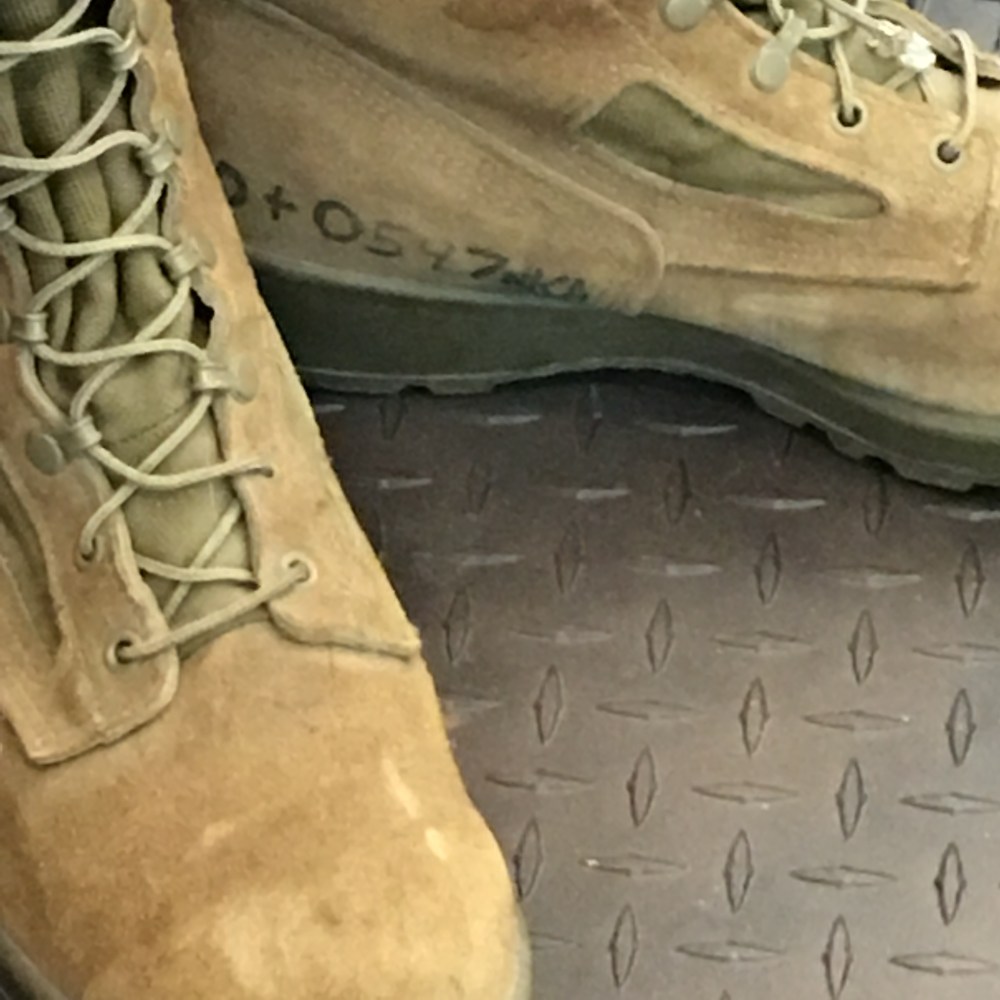
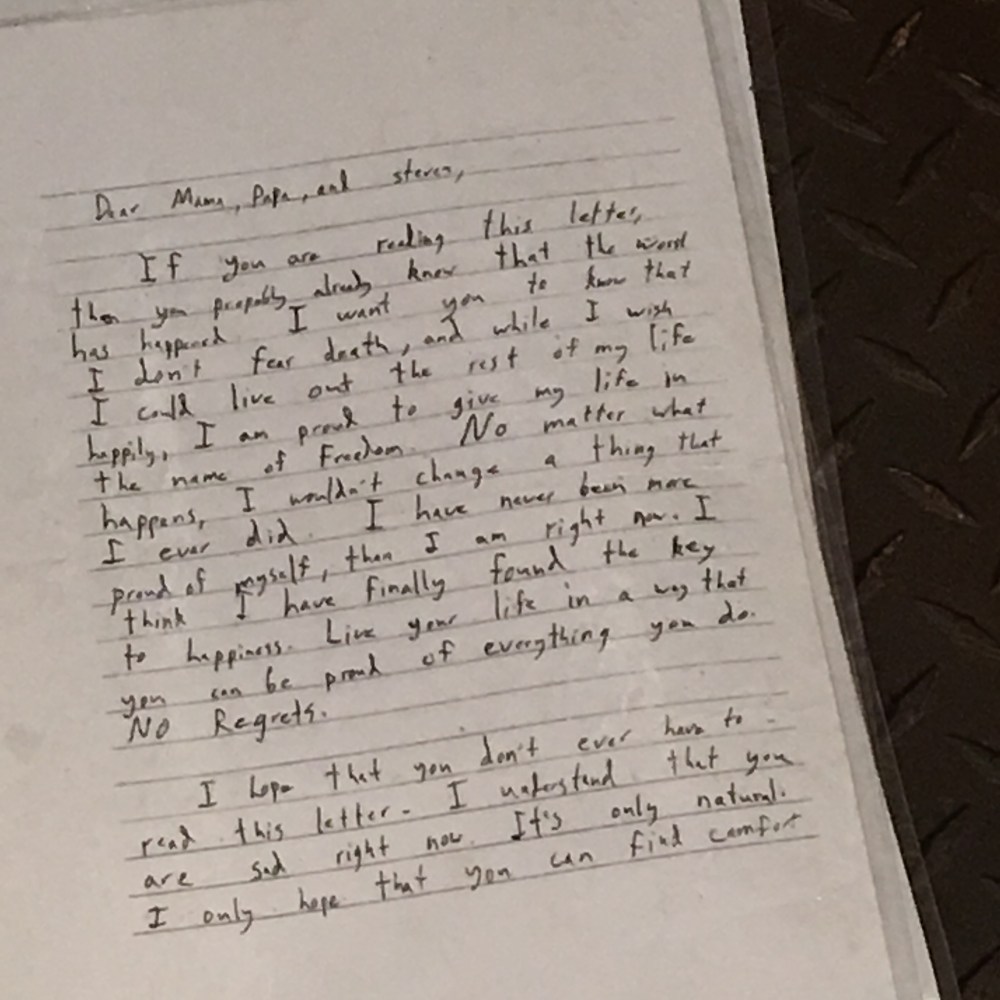
My daughter asked me recently why I didn’t die in Iraq. She asked this question of me after seeing the Eyes of Freedom memorial while I attended the WAVES conference (Western Association of Veterans Education Specialists) in Albuquerque, New Mexico. I had no answer for her other than that I was fortunate. Even then, it’s not a full answer. I was moved to the night shift in December of 2004. As such, I was at my barracks the day Captain Brock was hit outside our work. That day, it could have been almost anyone who worked in that building or it could have been no one. I was at my home talking to my grandmother on the phone and the blast was something that was easily felt from my location. It made the most terrifying sound of all the mortar impacts we took.
I know other war veterans understand why carrying survivors’ guilt is hard. We have the rest of our lives to carry the burden of those who didn’t make it home. Our existence, our homecoming, is tinged with the reminder we were granted years deprived of our peers. We will think of the accomplishments they didn’t get to enjoy; we will think of the children they didn’t have; and we will think of the fact their families will never be the same.
Please don’t take my extended absence from writing as a sign that I am not interested in continuing my veteran (and more specifically, female veteran) awareness efforts. During my recent absence I have attended to moving into my recently purchased home. You can read about that journey–should you be interested–at my other blog, Builder Grade and Reclaimed. The other large factor contributing to my absence has been my concern over the increasing violence in Fallujah and knowing that while I served in Iraq and Fallujah was in our area of operations there is nothing I can truly say as an American that speaks fully to the horror Iraqi citizens currently face on a daily basis. It is also hard not to feel a bit ashamed that I am quite privileged–enjoying the fruits and discussing the frustrations of homeownership for the first time–in the midst of such chaos, particularly when I see the large number of affected children.
In doing what I can given my current status as an amateur writer I wish to speak to you all about the fact June is PTSD Awareness Month. In the most recent couple of months I’ve begun to notice more articles that discuss the mental toll war takes on refugees and their disjointed access to support services. As a veteran, I cannot help but notice the focus on PTSD as it relates to war veterans and the stigma associated with treatment. Furthermore, the more recent shooting at Pulse in Orlando adds another layer to how violence plants the seeds for lifelong hurt in the community. I was stunned when I read about how first responders were dealing with the constant ringing of cellphones as they conducted their work at the crime scene and I realized I,too, need to broaden my perception of who is affected by violence locally (city, state), regionally, nationally, and globally. We do not always know the victims firsthand but we may know friends or family members of the victim or feel our shared identity allows us to empathize with their situation, perhaps it even brings up the hardships in our own past.
The older I get the more I realize it’s ok to talk about my own struggles with anxiety as it relates to fireworks and veteran deaths. The two issues are markedly similar to my first deployment experiences of frequent mortar fire and daily deaths of service members. I can tell you daily life is not always a challenge for me the way it is for other survivors (war, sexual assault, weather-related catastrophe, domestic violence, mass shootings, and so forth). The research I invested earlier this year crafting my applied project took a significant emotional toll on me but it’s coming close to that time of year where the celebratory use of fireworks by others makes me cringe.
After experiencing fireworks last year in my old Gilbert neighborhood on the 4th of July and then again for New Year’s the trepidation for the upcoming Fourth of July has been building and for that reason I decided to open up about my issues. I don’t know what my new neighbors are like and if they will shoot off fireworks from our shared driveway the way the former neighbors did. I don’t know if individuals in this neighborhood and the neighborhoods surrounding us will subject me to a marathon four-hour ‘celebration’ on New Years that will bring on a series of chest pains and hours of anguish. I cannot imagine what the Fourth looks like but I am nervous already about potentially losing a whole night’s sleep and still needing to go into work the next day.
I am exceptionally aware of the fireworks season when it crops up: local vendors set up stands on their vehicles on the side of local roadways and local stores clean floorspace for variety packs of fireworks for nearly every budget. While others plan fun for themselves, I’m counting down the days until I suffer through a particular hell I never imagined I’d be back in. In war after a mortar attack, I had a purpose and so I trudged through my tasks because my work helped keep people alive. A daily mortar attack here and there became normal and I adopted a casual brush off of this experience. So long as we looked around and everyone was ‘ok’ things were normal.
Looking back on my past, I am now rather grateful fireworks were–and are–such a rare exposure. I lived in the barracks for most of my Marine Corps career and so I did not encounter fireworks there. When I moved off base–residing in Oceanside–fireworks weren’t a concern either. From the alley of our home in Cody, Wyoming I could see the large public fireworks display off in the distance which I find enjoyable but none of my neighbors lit fireworks down the street. (To be honest, I also don’t know if it was permitted either but I am grateful my exposure was limited.) During the time I lived with my in-laws in Mesa and later in ASU’s family housing I also did not contend with fireworks.
So please know for the duration of June 24th to July 6th–the time period in which the use of fireworks is permitted here–I will be more on edge as I wait to see with what frequency my neighbors use fireworks.
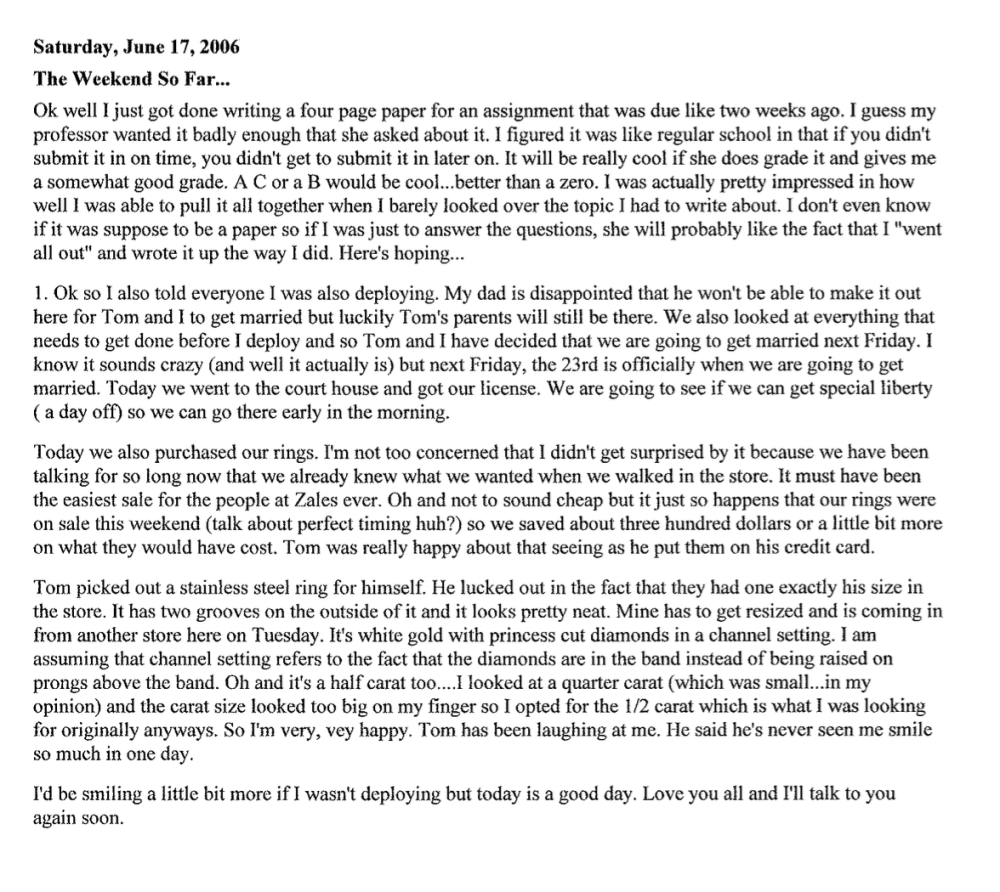
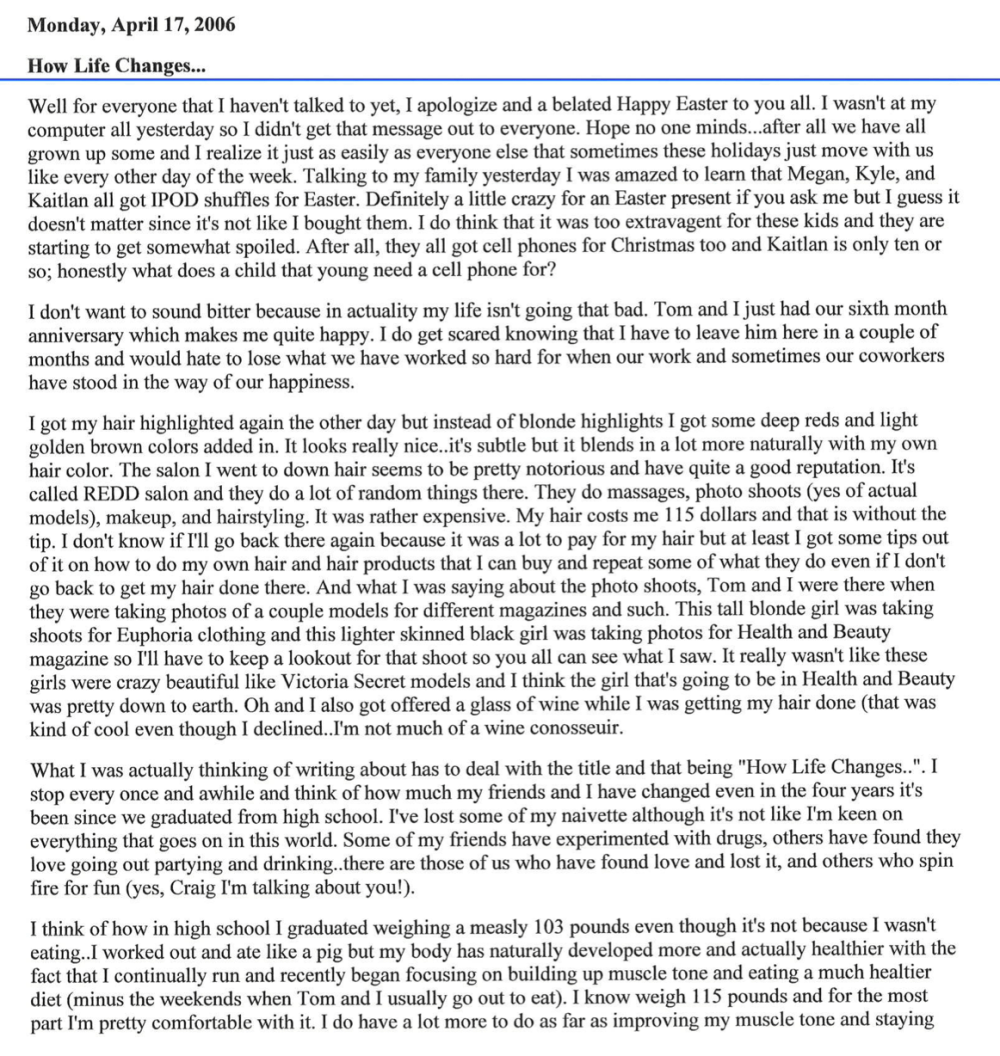
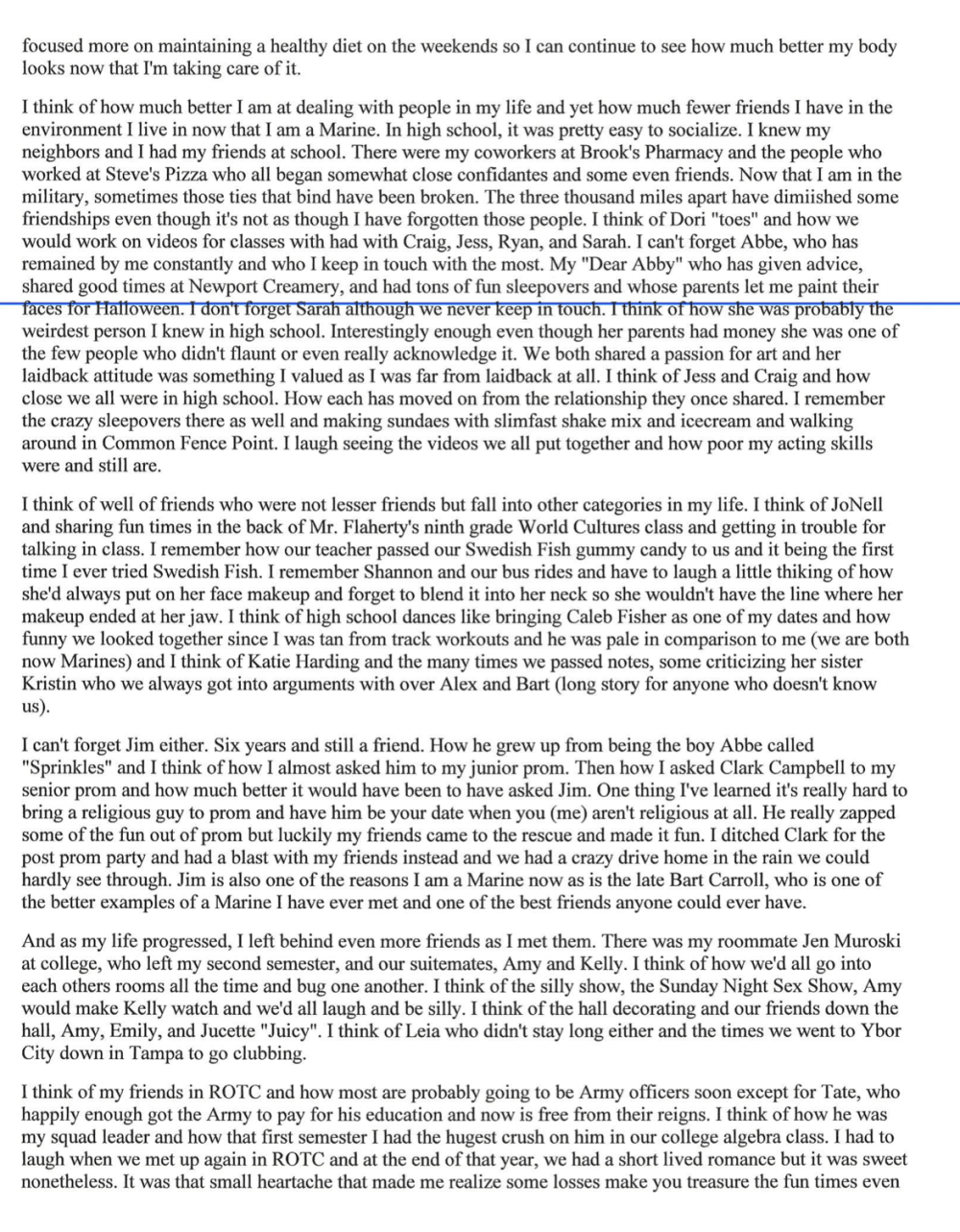
In also addressing the 2006 versus 2016 comparison I’ve promised you, below is one of my previous entries from 2006. I know I am off a day but I didn’t write as much in 2006 as I thought I did. However, this time period of entries is a good one because it gets close to when I left for my second deployment with 3rd MAW, serving on the deployment under MAG-16.
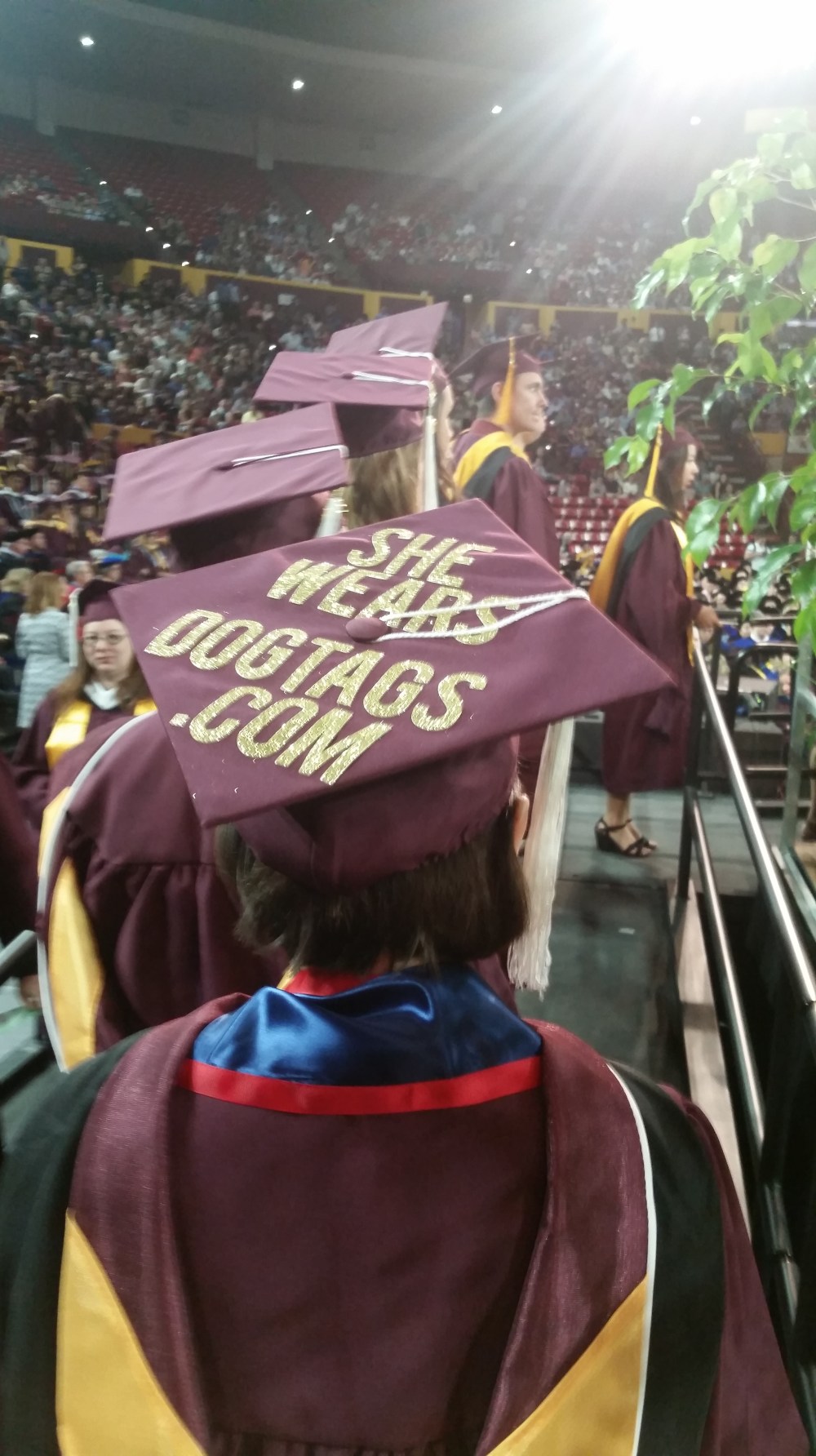
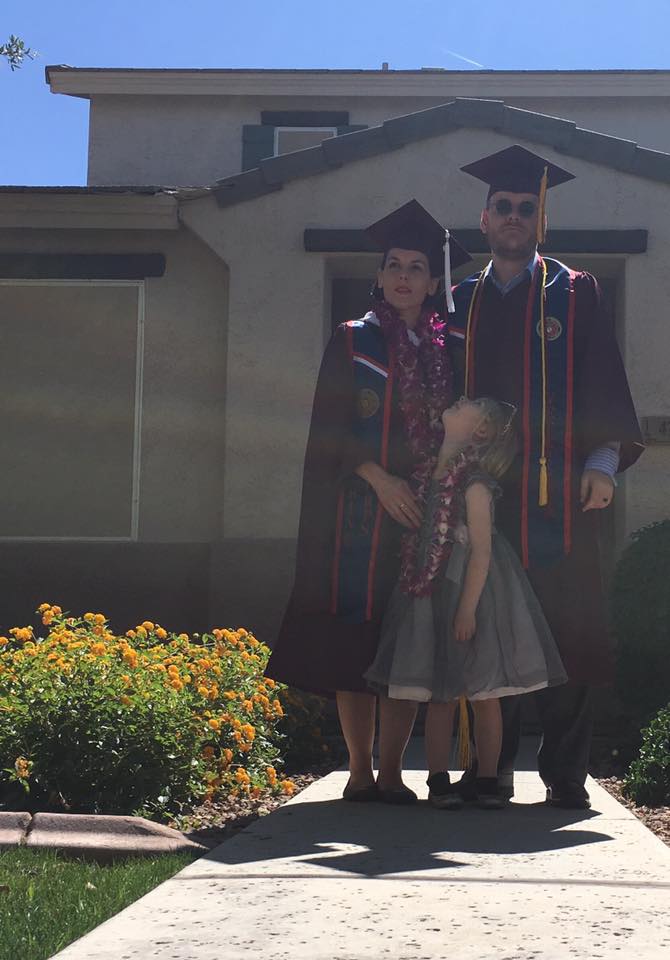
Good morning everyone! I am bummed to write this post so far removed from my graduation on May 9th but I encountered some technical difficulties when building my draft and deleted the entire thing a week after graduation. I am horribly mortified and sincerely disappointed to lose the fresh elation of graduation in my writing. Walking for graduation was a beautiful experience and I am sorry I cannot now do full justice to this celebration.
I did not walk for my undergraduate ceremony at University of Wyoming since Laramie, Wyoming (where the University is located) is just over 5 and a half hours from where we previously lived in Cody, Wyoming. Thankfully, I didn’t have such a large distance in the way for my graduate ceremony. Tempe is only about 40-45 minutes from where we live and I already make this commute for my daily work. I took the whole day off work to celebrate, which was really nice as well. This semester has been rather hectic and I am thankful I could escape from work to celebrate with my family.
I was also joined by my writing partner, Pieter Turley, and our professor, Dr. Beth Blue Swadener, for the actual ceremony. Pieter and I were partners in Dr. Swadener’s writing seminar class this semester and she also served on our respective applied project defenses. Pieter and I took different approaches in discussing war for our projects: he spoke on the different ways France is culpable but has not fully taken responsibility for its role in the Rwandan Genocide and I spoke about the human death toll of Operation Iraqi Freedom (from August 2004 to February 2005 to coincide with my first deployment) and the visibility of persons who do not fill infantry roles but are war participants nonetheless. For new blog followers, my applied project is available my entry titled The Final Reveal: An Alternative View of Operation Iraqi Freedom.
Photo Credit: Beth Blue Swadener
Photo Credit: Beth Blue Swadener
Photo Credit: Beth Blue Swadener
I am very grateful Dr. Swadener offered prior to graduation to take photographs of Pieter and I during graduation. My parents and siblings were not in attendance as they live out-of-state and my husband, daughter, and in-laws were up pretty high in the bleachers so I couldn’t even find them during the ceremony. I am even more grateful for her photographs as the professional graduation photograph proofs came in the mail recently and I look angry in two of the three images; Beth did an exceptional job capturing the joy of this occasion. And if you want to learn more about commencement traditions, I implore you to check out ASUNow’s May 6th article, The History and the Meaning Behind the Regalia of ASU’s Commencement.
Graduation 2016
My husband also graduated with his Bachelor’s degree this semester and will start law school in the fall. Pardon me for not saying much of his achievements. He is a very reserved person whereas I am an introvert with social tendencies in the right environments. I do my best to respect his privacy and therefore do not speak publicly about his military service, his social connections, or his academic achievements except in those incidents where the overlap with my identity is important for providing the full context of a situation. He has many adventures ahead of him and my daughter and I have a lot to learn about how to support his needs as a future law student.
Again, thank you for your patience for this blog entry. My forays with technology teach me daily to find peace with the process.
I would also like to remind you to please remember Memorial Day is about honoring our fallen. The commodification of this day (as with many of our holidays) provides an open door for purchases that are needed (or not) with reduced financial strain but the meaning behind our holidays–and this holiday in particular–should not be forgotten. I will not pester you to not purchase anything this weekend. In fact, I will be purchasing paint tomorrow morning for my daughter’s new bedroom. While I already had plans to paint her room, the savings on this purchase means I can likely afford to paint two rooms at this time versus just one. However, I would like to ask anyone, like me, who will make a purchase or two this weekend also provide a donation (time, money, or in-kind) to an organization that provides direct support to the families of fallen service members, such as housing services, educational scholarships, or counseling services. Your contributions, wherever they may go, make this world a better place for the families whose loved ones made the ultimate sacrifice.
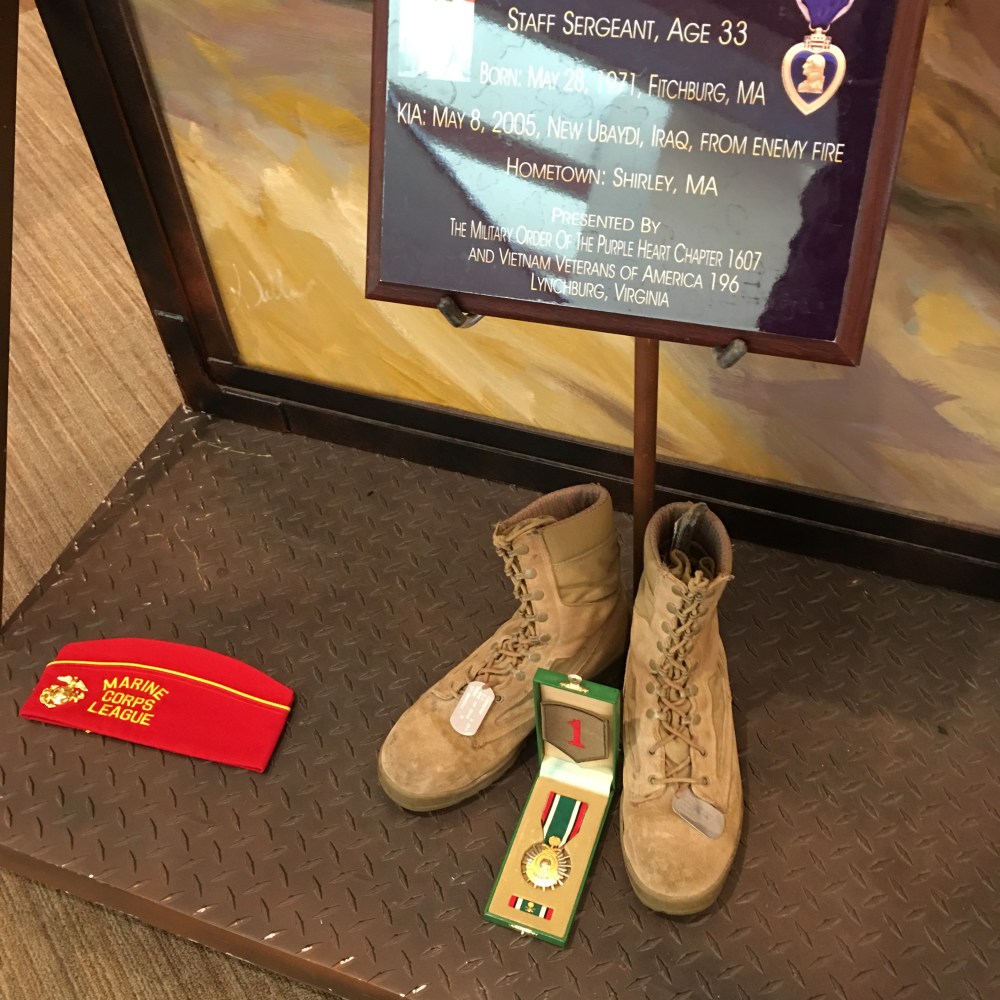
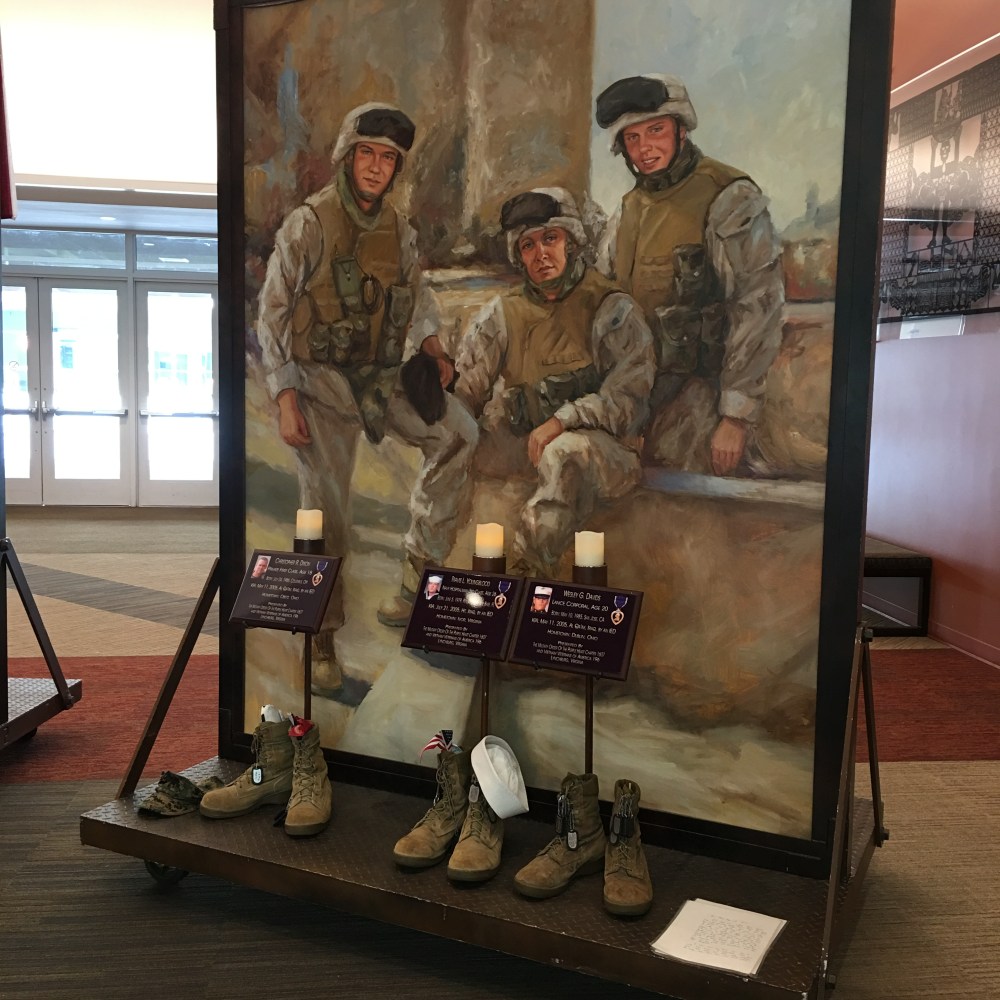
I am very proud to say my applied project is complete. Revisiting the American casualty information, the most painful part of the research process, took nearly the whole semester. I cannot begin to tell you how many times I had to step back from the process. Before building this applied project, I never spent a substantial amount of time looking at the narratives of my fallen comrades. Given my past work on activity reports for our area of operation, I spent 12 hours a day, 7 days a week viewing data on killed and wounded personnel (friendly forces, civilian, and enemy). While I’ve previously talked to you all about Captain Brock I forced myself to sort through the data for the total 553 American military personnel killed from August 13, 2004 to February 25, 2005. The images below are courtesy of MilitaryTimes Honor the Fallen. One of the hardest stories to learn, when I investigated the issue further was the death of Corporal Paul Holter because he died by the thoughtless actions of a fellow Marine.
This slideshow requires JavaScript.
I intentionally looked for information on individuals who died specifically within the Al Anbar Province; units would have sent us this casualty data along with the number of wounded persons in the same incident. For this reason, the American service member casualties represents the most accurate reality of the deployment because I could sort through each narrative to find the right dates and province. Eight individuals who were wounded in the Al Anbar province died outside this area (one passed away in Baghdad, 2 passed away in Germany, and 5 passed away stateside) and so were not included in my applied project. There are a number of deaths that read as potential suicides although the cause of death is not stated as such. While I do not mean to come across as insensitive to the families, there is such a struggle maintaining intra- and intercultural conversations regarding suicide and each time we hide the circumstances surrounding our loved ones’ passing, we further exacerbate the social stigma. For the most part I did not label any service member’s death by circumstance in my presentation because many simply state ‘enemy action’ as the cause of death, particularly for the Marine Corps, whereas more of the Army narratives list a specific weapon type. I do not know how to make any useful connection (or know if there is one) about this difference.
It was equally as important to look for information on wounded American service members. While I don’t know what types of injuries qualified for record purposes, I did not make an analysis about that lacking data in my applied project write up. Once again, in providing the human toll of war, my purpose was to align the numbers that might represent what we would have “seen” coming across our desks. For this reason, the data is incomplete for my purposes but provides greater context because it is not limited by day or province. However, I reigned the numbers back in by only showing Army and Marine Corps data since these branches made up the majority of our area of responsibility. iCasualties.org provided the necessary data for this segment of the applied project. Unlike the American deaths, it was not a struggle to collect this information.
The more I moved away from American data and my experiences, the easier it was to review the hard data. Iraqbodycount.org provided the second most substantial amount of data and also the second most accurate representation of that deployment reality. However, I have more work to do in understanding the individuals who made such a site possible. We all carry our own biases and while I may question who is listed as a civilian, their assessment–from the construction of the site and language utilized–lends itself more to who do we count as our enemy? From this site, I gathered information that was only specific by month and year. For this reason, my applied project included more data than I had planned for but I could not break it down into daily numbers as was available for the MilitaryTimes casualty information. I wasn’t able to find Iraqi civilians wounded from the same time period through Iraqbodycount.org. I think it’s very important that Iraqbodycount.org acknowledges why this issue is complex. A 2003 article on their site, Adding Indifference to Injuries, is just one such online article that addresses this problem. Outside of my research for this project, I do know there are many others trying to undo this marginalization, like the Costs of War Project.
The gaps in piecing together the data cannot be overlooked but they can be explained. None of the numbers alone on any side though reflects accurately on the war. The connections between social systems, the breakdown of such systems, and learning another culture’s values on the fly shape our perceptions of war and incidents of all scales and frequency happen out of emotional responses and intentionality. (I would say this statement is true of all matters not just war.) These are not the only intersecting factors, but as narratives become known, these issues are more visible. I would highly recommend the HBO mini-series Generation Kill as a good representation of pulling these issues together. There are not a lot of war genre shows or movies that I can tolerate about Iraq; however, this one shows aspects of Marine Corps culture that I appreciate. Additionally, I appreciate how concern for Iraqi civilians is represented and how those individuals who do not express concern for Iraqi civilians is also represented. We must be willing to acknowledge that both types of individuals exist not only in our military but also in our nation.
It is also important to mention I am not pro-War or anti-War. I think to say something as controversial as war is 100% right or wrong in all situations is not an educated statement. While it is not my place to tell others what opinions to have, I will work to respect both sides of the spectrum so long as individuals throughout the spectrum understand a difference of opinion is a difference of opinion. Opinions are neither right or wrong.
One of the last pieces of information which was the most difficult to find was that for insurgent forces killed and wounded. Again, like the data for American wounded, Iraqi civilians killed and wounded, I am confronted with the reality none of this data is transparent enough for me to correlate it with my deployment. For this reason, it is impossible to say I’ve truly given my audience the knowledge they need to understand the enormity of the situations specific to the deployment. Instead, I’ve given the next available answers. From a 2007 USAToday article, I found this last piece of the deployment puzzle. A 2007 Stars and Stripes article shows this information broken down more clearly. I would recommend checking out the latter article as I’ve had trouble on numerous occasions with getting the USAToday article to display properly.
My journal entries which are significant to understanding the deployment are embedded throughout the applied project. I do apologize for the fact the ones at the latter part of the presentation might seem exceedingly long. I was concerned the longer entries might be hard to read if they were shown for a shorter period of time but several individuals mentioned they could read faster than the pace of the presentation. While I won’t make every entry I’ve ever written public, there are strong conversations from my past that will always be worth remembering. The journal entries I shared were carefully chosen for what they mention about the violence in Iraq with respect to my work and the indirect fire we experienced on base; my positive and negative responses to the dangers; and my feelings about my friends, family, and my place in the Marine Corps.
As this blog progresses further, I will continue to provide you all with comparisons between 2006 and 2016 and 2007 and 2017 to show how my life has changed as my Marine Corps career ended and my current life looks now. I cannot promise a lot other than a continued interest exploring and discussing today’s military culture, especially as the role of women changes. I am equally interesting in conducting more research about the broader implications of Operation Iraqi Freedom and sharing my finds with you all. Lastly, because my schedule has opened up significantly, I am looking to read more academic articles and popular books about our military.
I want to thank you all for following along on this journey so far and I look forward to sharing more again soon. If you are interested in looking at some of the articles I used for toward the applied project, they are listed below. All were accessed through ASU’s libraries using JSTOR.
Tina Mai Chen’s (2004) Introduction: Thinking Through Embeddedness: Globalization, Culture, and the Popular
My apologies for being one of the worst blog authors you’ve probably put up with in a while. Over the course of the last few weeks, I dug deep into my applied project write-up and mulled over what to include/exclude from my applied project itself, which will be a 20-25 minute iMovie. Upon completion of my project presentation, my goal is to return to video to this site for public consumption. It is–and is intended to be–an alternative American war narrative, so be prepared for the fact it neither feeds into the normally messaging seen in American war genre films nor is it fully on the other spectrum home to anti-war sentiments.
Earlier this year though I promised you I would also do a 2006 versus 2016, especially as it relates to giving you what I essentially feel is the other half of my military service. Life at 3rd Marine Aircraft Wing (MAW) and my second Iraq deployment with Marine Aircraft Group (MAG) 16 represented a significant culture shift from ground side Marine Corps life. Therefore, today, I am upholding my promise to you. Today I will start my 2006 to 2016 comparisons; while not complete, these entries that follow intermittently for the rest of the year will allow you to see the different voice I took with my writing and also contribute to a better understanding of how that time further honed my desire to leave the Corps and assimilate back into civilian life.
Please enjoy the older journal entry below, previously posted on MySpace. (I know I’m dating myself and as I’m learning in class, I am still dating myself with my reliance on Facebook, too. )
~Cheryl
p.s. I have to chuckle at my old self, too. I totally love (some types of) white wine now and I’m a big Tennessee whiskey and Kentucky bourbon fan. I will probably equal disappoint a lot of people when I mention that the only sweet red wine I like I found at Trader Joe’s.
I do see some bitterness placed (unduly) on my senior prom date and this is why situating an event in context matters, which I failed to do in the journal entry below. He was sick when he took me to prom and unfortunately, as one of the not-so-cool kids, I was in the unfortunate position of nearly every popular girl in my class coming over to talk to my date, who was older than all of us. He, being the nice person that he was and likely still is, apologized for the state of our evening but obviously the person I was back in 2006 was still a bit hurt my senior prom did not live up to expectations.
Me, on the left, deciding to show off my athletic physique for senior prom.
I found a wonderfully inspirational story to share with you all this weekend. Through my Facebook feed, I came across the story of Kirstie Ennis who survived a helo crash in Afghanistan in 2012. She’s since dealt with a below the knee amputation and more recently lost more of her leg, but her perseverance to be an athlete continues.
As I’m working on my applied project and discovering how difficult it is to compile information for the wounded from my OIF II-II deployment, the courage of her storytelling reminded me to persevere in my own efforts. I may not have the capability to tell all the aspects of my deployment as I desire but adding my voice to the narratives out there is worthwhile in opening the discourse on deployment roles and the experiences of women in combat zones.
I implore you all to read Kirstie’s story as shared at Glam 4 Good. Kirstie also has a Facebook page you can follow.
Take care and whatever your struggles are today, keeping looking forward. You’ve made it past everything else so far. Keep your chin up and dream big.
For each of us, in different ways, there are those moments that stop us. The good day stops. It just does. My day was penetrated with bad news shortly after work began. One of my dearest friends and her family is struggling with the health of one of her family members. I am intentionally vague to protect their privacy, but I just felt so lost. I couldn’t help. My love and appreciation for her is akin to family. She knows some of my biggest secrets and pains I’ve experienced in the last year. I wish I could be there for her more than I can right now.
My day began more stressful when I was given the news we’ve lost another veteran student to suicide. Trying to concentrate all day in light of this news was challenging. The loss of this veteran brought the pain of losing Kiernan back to the surface, more than his memory already seeps into my day at Tempe. This person left behind a family and friends who will forever be changed by their loss.
I tried listening to music today to focus on my work but there are little things from time to time about my work that bring up the worst of my deployment. Being confronted with the death of a student is the worst, as it would naturally be for anyone in my office and for all of our ASU community. But for me, it’s returning to my first deployment and being confronting with nothing by the deaths and injuries accumulating over twelve hour shifts and in the same moment, I must step out of that mode to deal with other student concerns. And now, it’s that knife that digs at the fresh wound of losing Kiernan back in November. I cannot fully express what it’s like other than really sad.
While I wouldn’t say I was happy to leave work this evening, I was very relieved when my work day was over. Shortly before leaving, I tried listening to music to find some peace but one of the lines in Halsey’s “Colors” ruined my peace seeking:
I hope you make it to the day you’re 28 years old
I wish more people realized they do not need to carry their pain alone.
No one wants to lose a loved one to suicide. To those loved ones, I am truly sorry for your loss and unfortunately, I equally understand your pain.
We are nearing the midterms part of the semester and I am already falling a bit behind on those objectives I set out with you all in January. I do not make time for the gym as much as I should and looking at my last post, which was 18 days ago, I am not keeping up on this site as much either. Today, I’m tackling both. I knocked out 40 minutes on our indoor bike and as I close out my day, I write to speak with you all about my applied project.
Writing about my history has not been an easy task. This focus opens up a number of issues which I have not fully shared previously with my family, for one, and second, I am always burdened with how to share the experiences of others. For my situation, this matter is complicated because those individuals died many years ago. Like many other veterans, I do acknowledge survivors’ guilt for what it is in my life. I simply lived through numerous occasions where our base was mortared (on the first deployment). I also safely traveled through our area of operations without being ambushed; hit by an improvised explosive device (IED), a vehicle born IED, or rocket propelled grenade; nor did I encounter snipers along the way. There is no way to describe the moments of safety in my deployment as anything other than sheer luck. For my readers of faith, please understand why I do not say that it is by God’s grace because I feel, in small part, to say so also implies that God does not love his other children who perished.
The other reason this task presents some difficulty on my part is I have not revisited this information fully in years. For the duration of my first deployment, I spent twelve hours a day receiving word that people died or were injured. In some cases, we received updated information that our wounded later died as a result of their injuries. The best news I ever received came from our Lieutenant Colonel who informed my team our work prevented a unit from being ambushed. This incident represents one of my greatest achievements and I greatly appreciate everyone’s efforts to do their jobs that day. I am fairly certain I never recorded in my journal about the matter out of concern for operational security, as I consciously chose to do for many such occasions, with some exceptions such as Captain Brock’s death. I was very honored though as a Lance Corporal to have a Lieutenant Colonel come over to let us know our work was so valuable.
As I open up the pages of my past hopefully my audience understands what it takes to share those experiences. My research is heavily reliant on data available to me through MilitaryTimes, Iraqbodycount.org, and other resources such as BBC.com. It will likely not encompass all the lives lost, on all sides, but is the closest possibility of this needed transparency. I make this statement not as a fault of my research, but to remind everyone the limitations I work through. Being reliant on the system keeping of others has given me some insights into the values of different organizations and additionally, witness through reporting sources the grief of families. I am also seeing names, faces, ages, and backstories through the associated press articles on Military Times. These new details are painful reminders of the past and also inspirations for the future.
Social media sites are a great way to express new meanings attributed to veterans, our storytelling, and in today’s time, our lived experiences in war. I am also very hopeful that perhaps such honesty will invoke others to adopt a more liberal attitude towards many disadvantaged groups, especially war refugees. I made the choice to serve in a war and I also knew I had the freedom to leave that region at the end of my tour, both times. More importantly, I was fortunate to make it home alive. Again, both times.
Around the world, in so many places, individuals of all ages struggle because they live in war torn regions. I cannot attest to their experiences but I can use my lens as a war veteran to share my story. Perhaps in doing so, I can encourage others in my community, locally and globally, to understand why we should be listening to more of the narratives that come out of war than how organizations present those matters. Organizations are not affected by war the same way people are. Organizations “see” and “shape” the crisis, but people live (or do not live) through those experiences. Their stories matter.












 She Wears Dogtags