Kentucky Hugs & Loving Kentucky Back

Kentucky has been something of a “maybe” state for me; I’ve never been someone with firm plans to visit all 50 states. I planned to visit here years ago and then things changed, keeping the state off my radar. The bit I thought I knew about the state, painted somewhat in an unflattering light, from others—including various news sources—served as enough information about the area to keep it low on my list of places to visit. Then my friends shared more about their experiences living or visiting the state. A plethora of nature photos showcasing the natural beauty of the area helped me to cast off my doubts about visiting. 

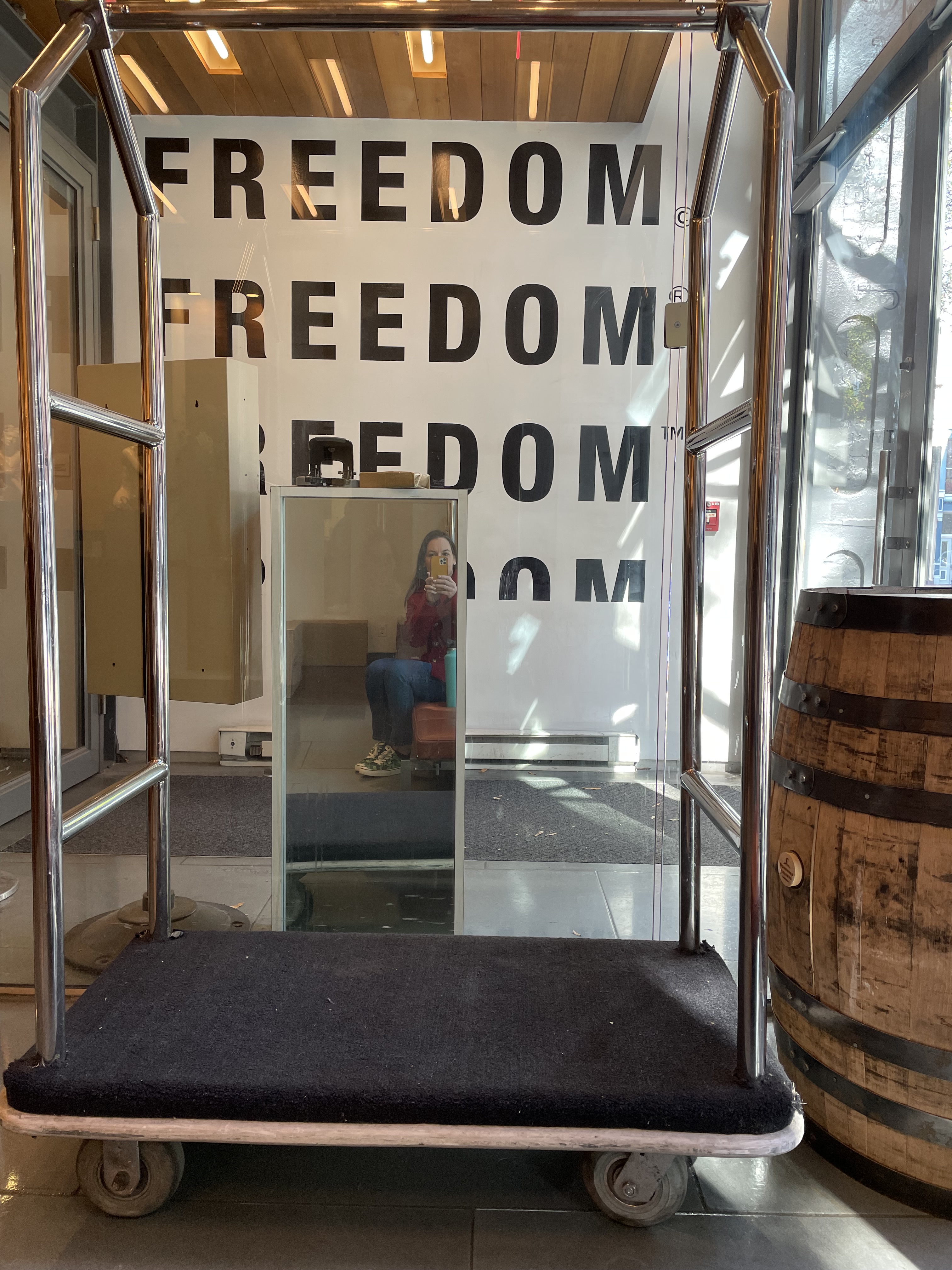
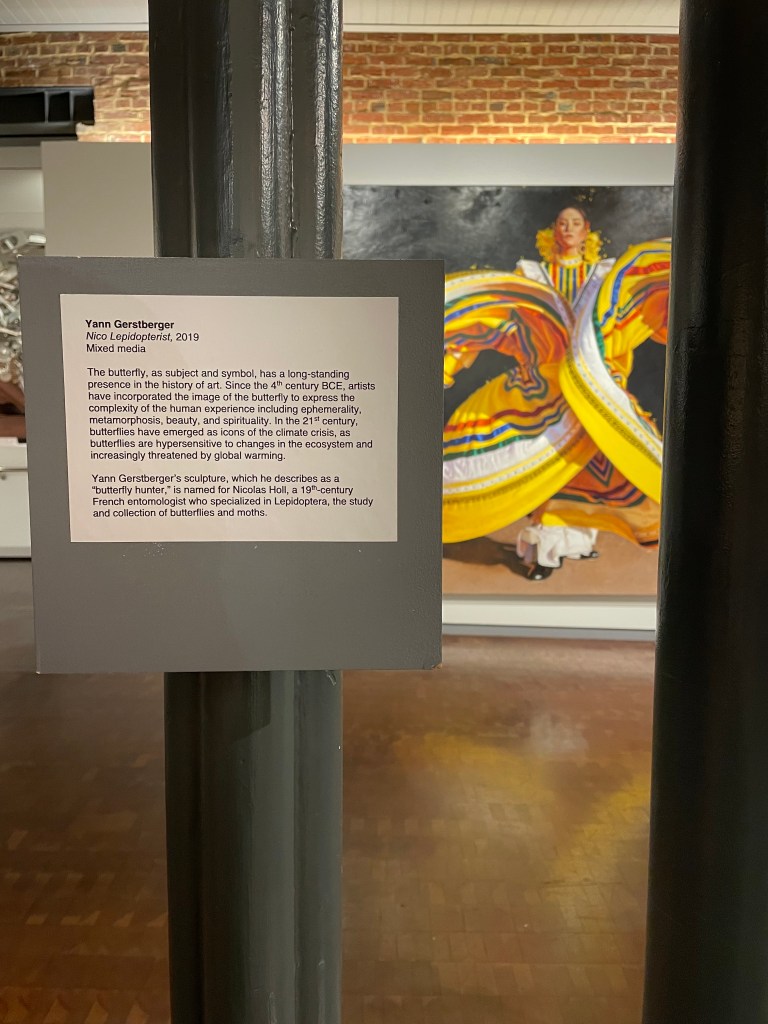
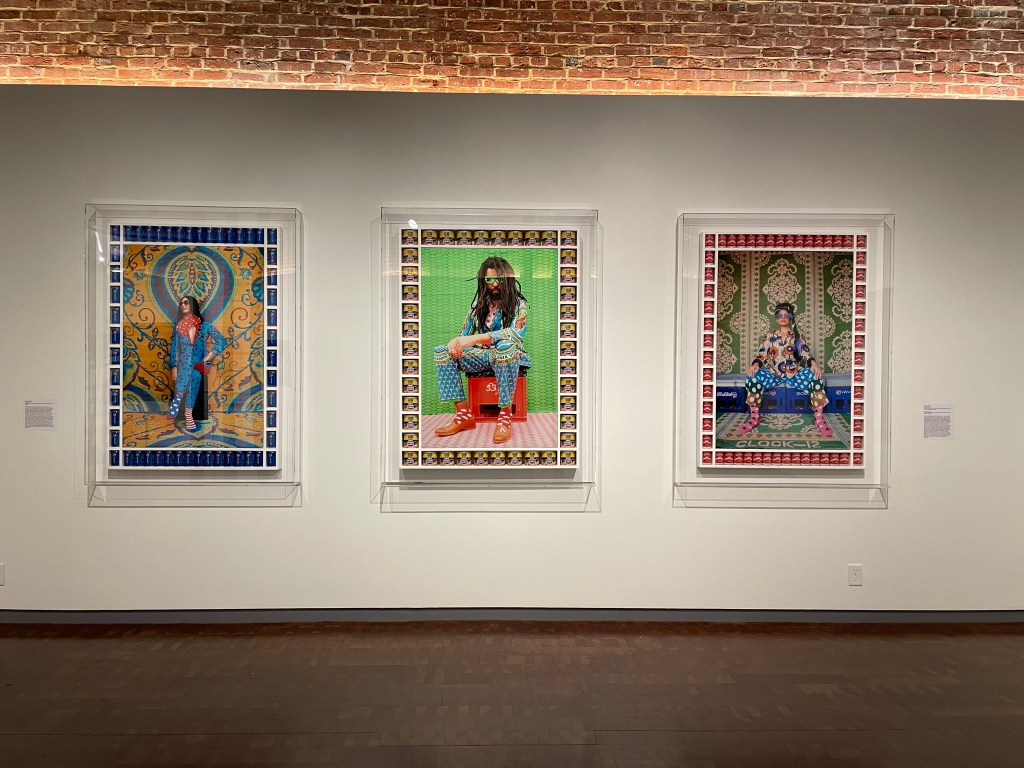
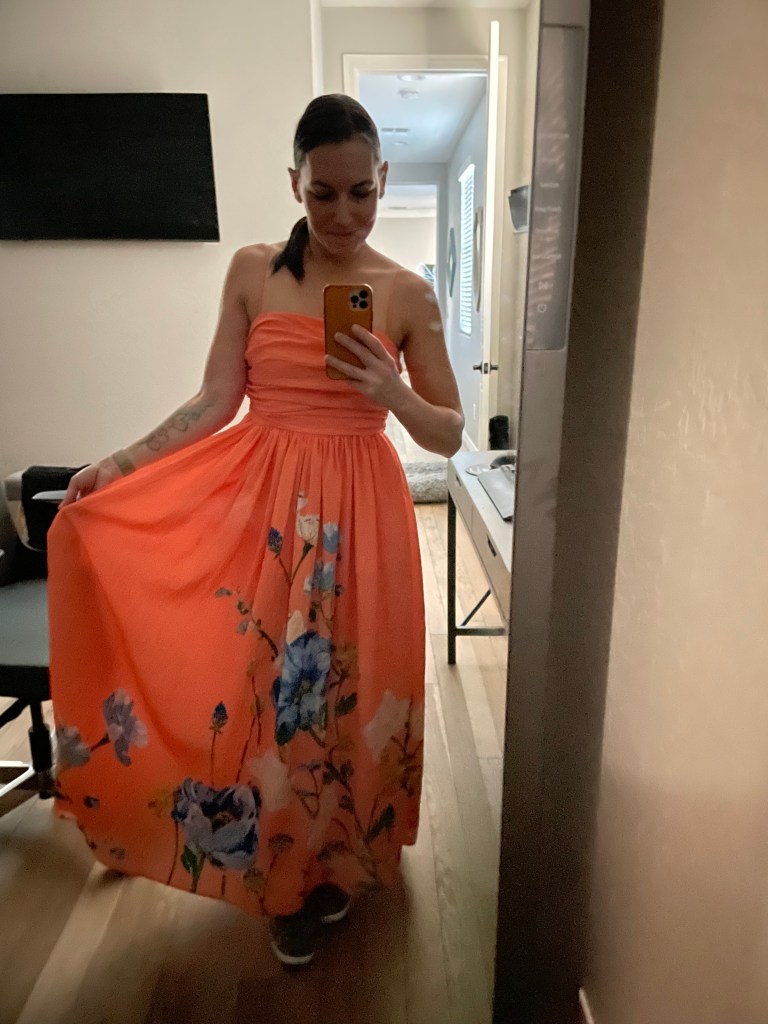
Self Portrait at 21C Museum Hotel Louisville

This trip is the longest family trip my small family has taken—ever. Traveling was off-limits for a while as we navigated career shifts and funneled our income and time towards the accrual of higher education.  Hawaii was our intended goal in 2020 for a weeklong vacation, then the pandemic hit. A few attempts here and there to reignite Hawaii plans were undone as COVID restrictions create barriers towards our goal. Maybe we’ll get there one day, but we were done holding off on a vacation longer than an extended weekend. 

The artwork statement does not apply to the painting behind it, but I love that the movement of the dancer’s skirt are reminiscent of the flapping of a butterfly’s wings.

Picking Louisville simply came down to wanting to visit a longtime friend, his wife, and their daughter. Flying into Louisville was more expensive than traveling through Nashville, so we bookmarked a sliver of travel time and accommodations there. There is so much to see in Louisville, a city much larger than our own; we sit around 280,000 people and here, it’s about 621,000. Part of traveling is always assessing what is worth checking out and being ok with saying no to other experiences others might really love (but you do not or might not like as much). 

Juggling activities with friends and our respective family time wasn’t hard to figure out. Our first day in Louisville, we visited our friends’ home, losing out on some time together due to inclement weather and an unexpected travel delay—originally listed as throwing us two hours behind schedule, but it ended up being roughly an hour. The casual gathering introduced us to a lot of our friends’ friends, a mix of adults and kids so no one felt left out as can happen back in Arizona where we are often the only persons that show up with a child in tow. Our daughter sandwiched herself nicely at the dinner table entertaining adults and their kids until her and the other girls her age became infatuated making glow stick handcuffs, linking themselves all together. Our late first night bonding over dinner, cake, and bourbon (for the adults) encouraged us to get up later here and go to bed later so we are roughly using the three hour time difference to get up around 5ish Arizona time and tucking ourselves into bed around our typical AZ bedtime of 8-9. 

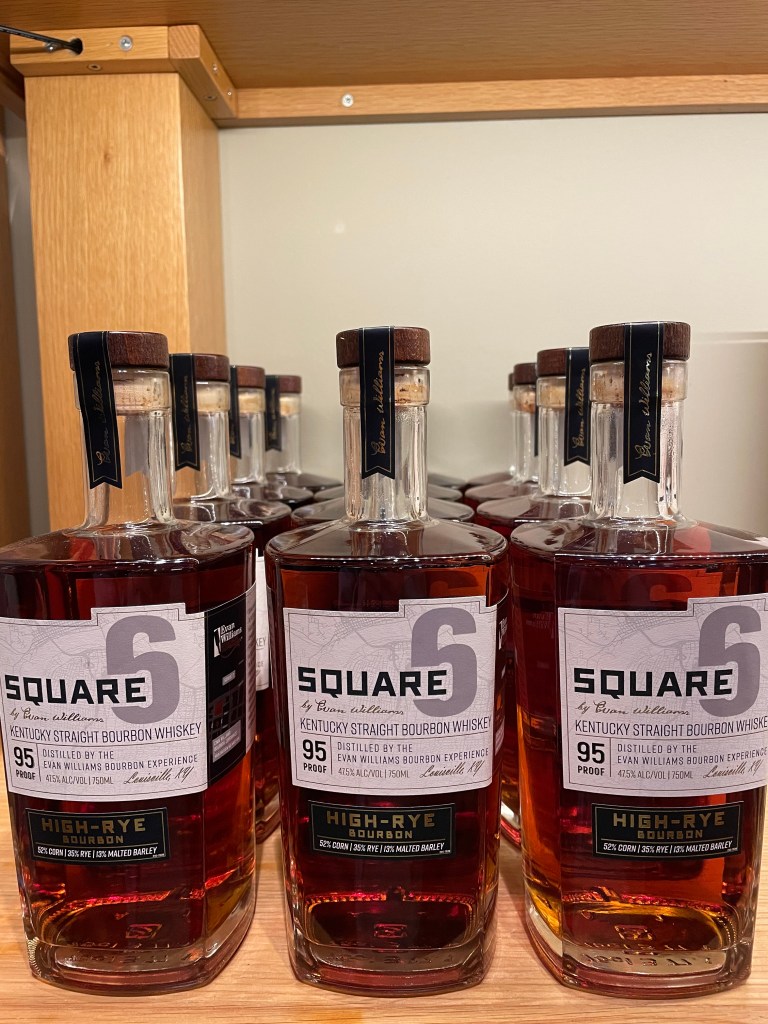
Monday, we kept to our little trio, walking along the Louisville Riverwalk after a warming indulgent southern breakfast at 21C Museum hotel and drinks from Blackbeard Espresso and when the bracing cold got to us, took in a tour at the Evan Williams Bourbon Experience (not originally on our list of sites since we already planned two distillery tours). We were warmly greeted by Diane, who took photos of our daughter and I by their storefront display, and Rita, our tour guide. We were treated to a series of short mocumentaties and a brief visual display of the bourbon making process. Navigating our way past windows showcasing the distillery process, we also learned how barrels aged in the highest point of the rickhouse lose more product, dubbed the Angel’s share. (Something we learned from the Neatdocumentary I’m sure, but a fun reminder nonetheless.) Our tasting took place upstairs in an old-fashioned (no pun intended) bar. From our tasting, my favorite was the Square Six High Rye bourbon: think cornbread. (We don’t have this rye available back home, so we picked up a bottle.)

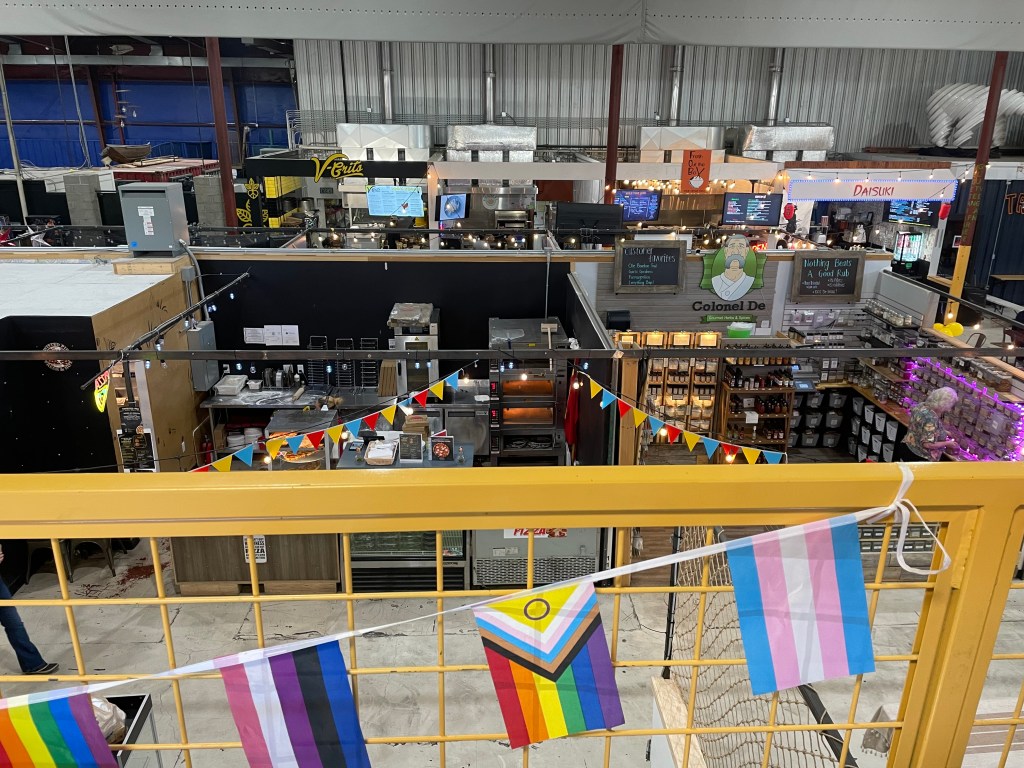
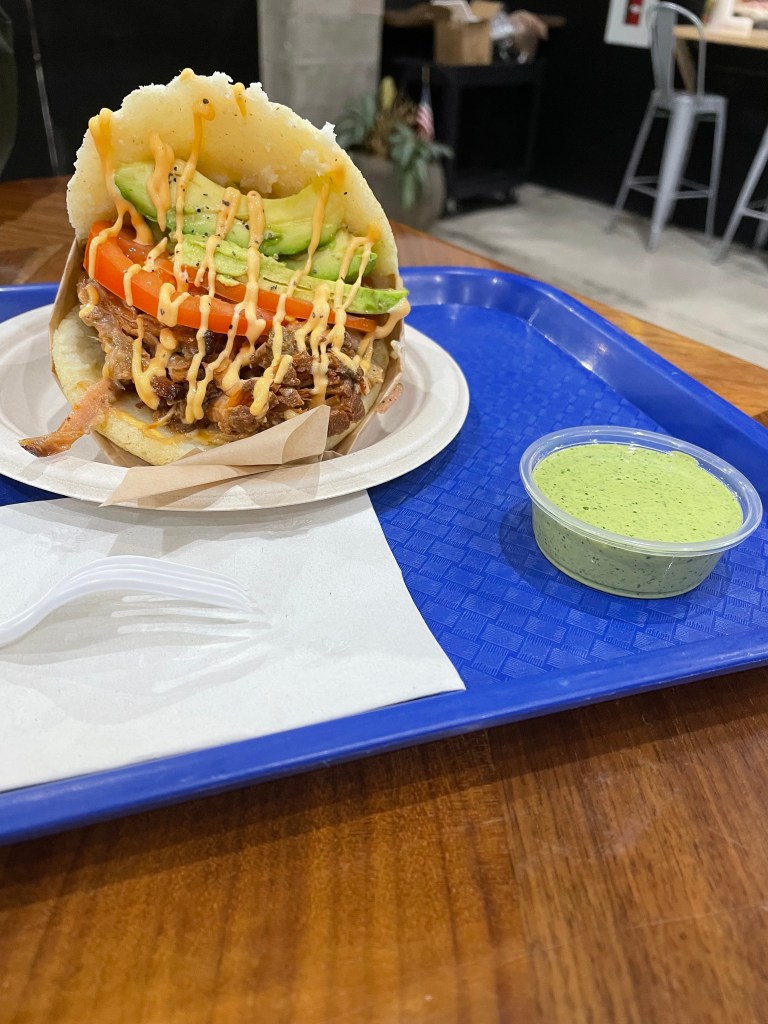
Tuesday, we balanced our day between personal family time and meeting up with our friends. Our morning started with an hourlong visit to Purrfect Day cafe so our daughter could play with adoptable kittens. (We weren’t interested in adopting any, just wanted her to enjoy time with animals. She loves all creatures, save for mosquitoes and maybe flies.) I wanted to hit up V-Grits (100% vegan, by the way) for their “Cosmic Bird  faultry” chicken sandwiches. Our lunch visit proved their fries and mac and cheese are amazing; their chicken sandwiches don’t compare—in the slightest—to the high-quality seitan based vegan hot chicken sandwiches from Monroe’s Hot Chicken in Phoenix, AZ, but I have faith the brand will continue to improve their offerings. (Maybe they were just having an off-day, too, because the patty was a bit dense, like it got smushed in the freezer.) If vegan is not your thing, Full Arepa KY—the stall right next to V-Grits, definitely has great options. My husband had the arepa pernil (pork) and loved it. I opted not to try it to avoid needing a lactase tablet, selectively saving my medication for indulgent meals and snacks I didn’t want to miss out on. 

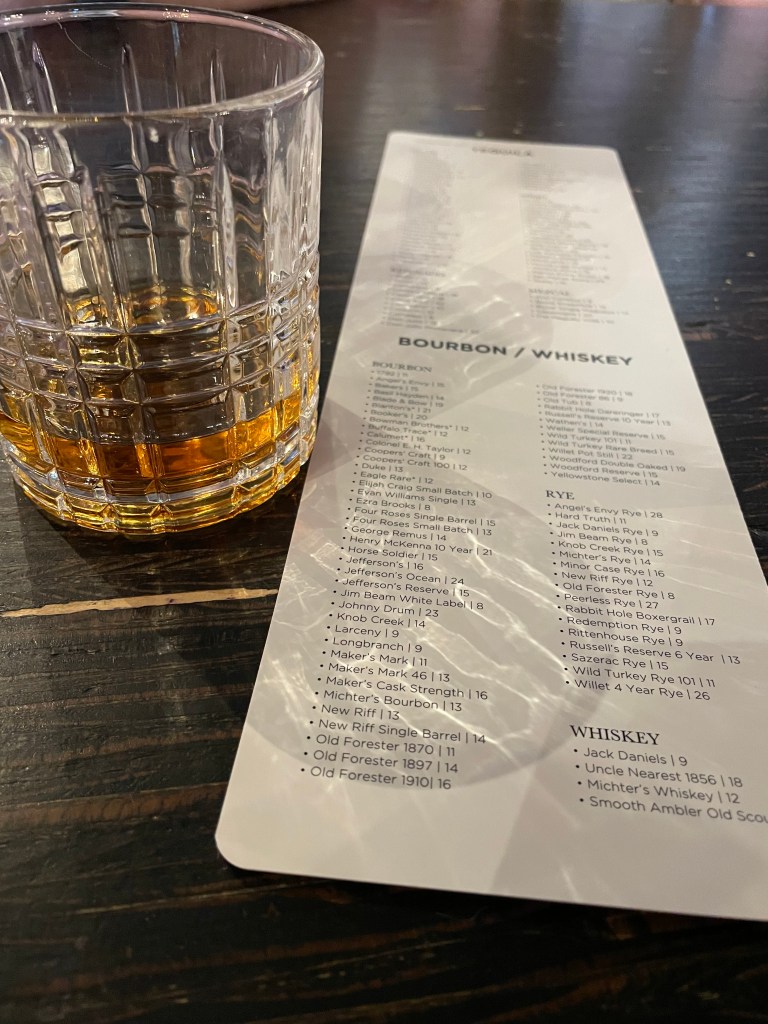
Our Tuesday afternoon was spent with friends visiting Rabbit Hole distillery (their first time, too!) and Old Forester. Now is an important time to mention while the tours all tell the same important details of what separates bourbon from whiskey, each lends a different slant to the storytelling of distilling based on the distiller’s place in history. Similarly, it should not be undercut that they all offer different finished product products. There are more distilleries to explore, but we didn’t want to overbook ourselves this trip and I’m sure my liver likes a break here and there from alcohol consumption. This trip involved more bourbon than I typically enjoy in a week.

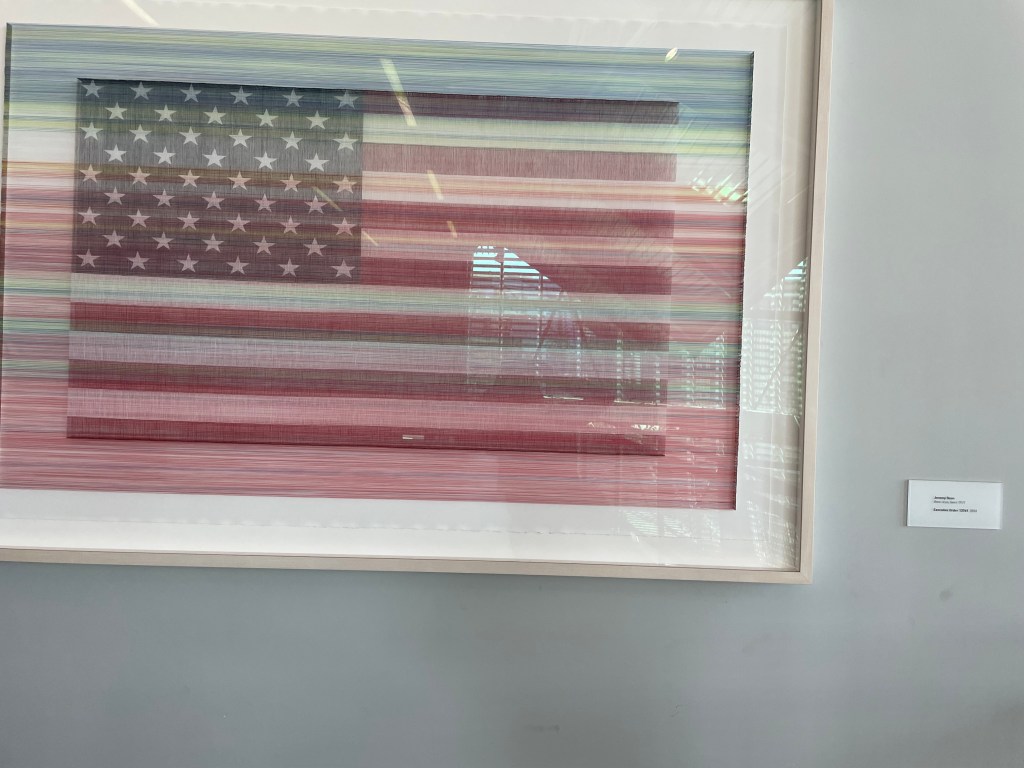
Rabbit Hole is the distillery I am most familiar with, I previously tried all four products on their website before the tour: Cavehill, Heigold, Dareringer, and Boxergrail, a rye whiskey, my favorite. They surprised by also throwing their bespoke gin—London dry gin finished in Kentucky rye barrels—on the tasting tour; it reminded me of a lemon cookie. Aside from the gin, I was equally surprised to learn the founder of Rabbit Hole, Kaveh Zamanian, came to the United States from Iran decades ago. If you don’t pay attention, you may miss out on the fine details associated with the American flag on the wall ahead of where you walk to enter the tasting room. The art piece, entitled Executive Order 13769, weaves together flags from the nations where immigrants were banned from certain predominantly Muslim countries entering the United States under Trump’s presidency with the American flag in a way that shows our personal histories are interwoven.   Ahead of the tour I was nosing around Rabbit Hole’s website and was drawn to the fact there was an art collection section. (The bulk of our distillery purchases came from here, including one souvenir t-shirt.)

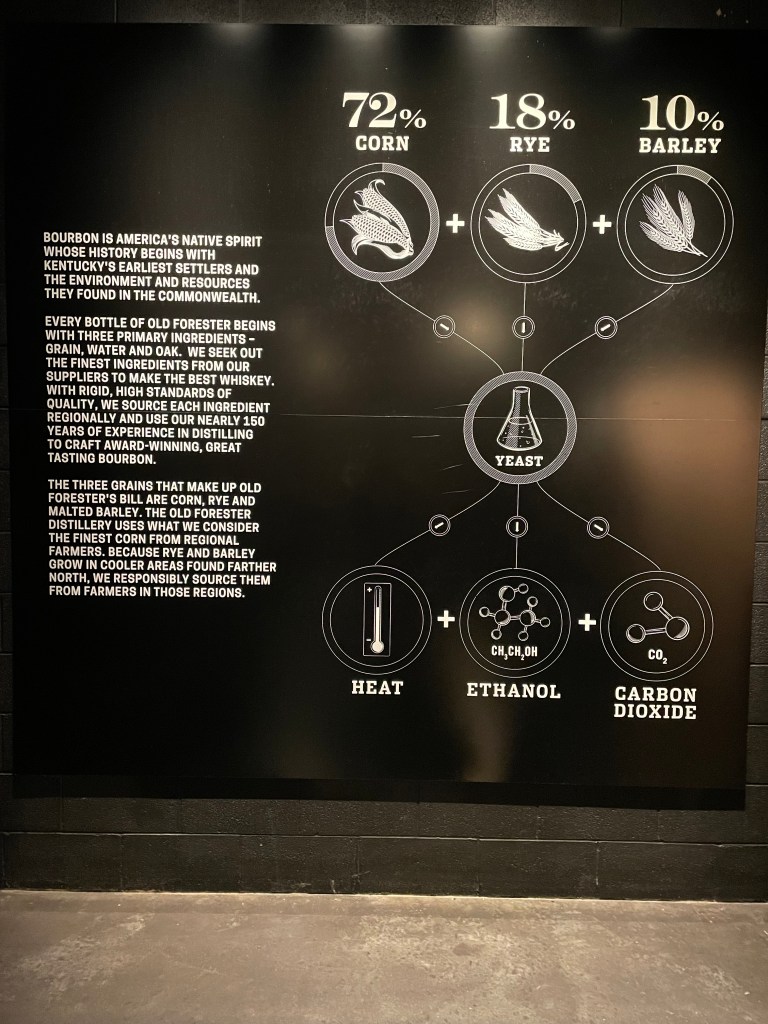
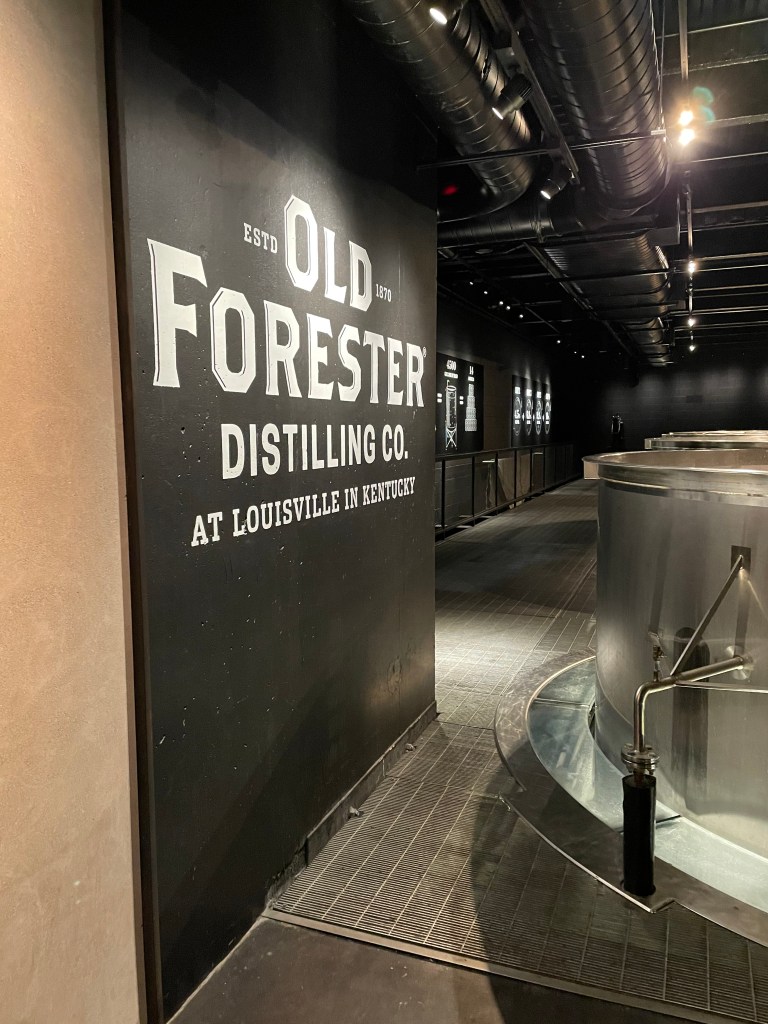
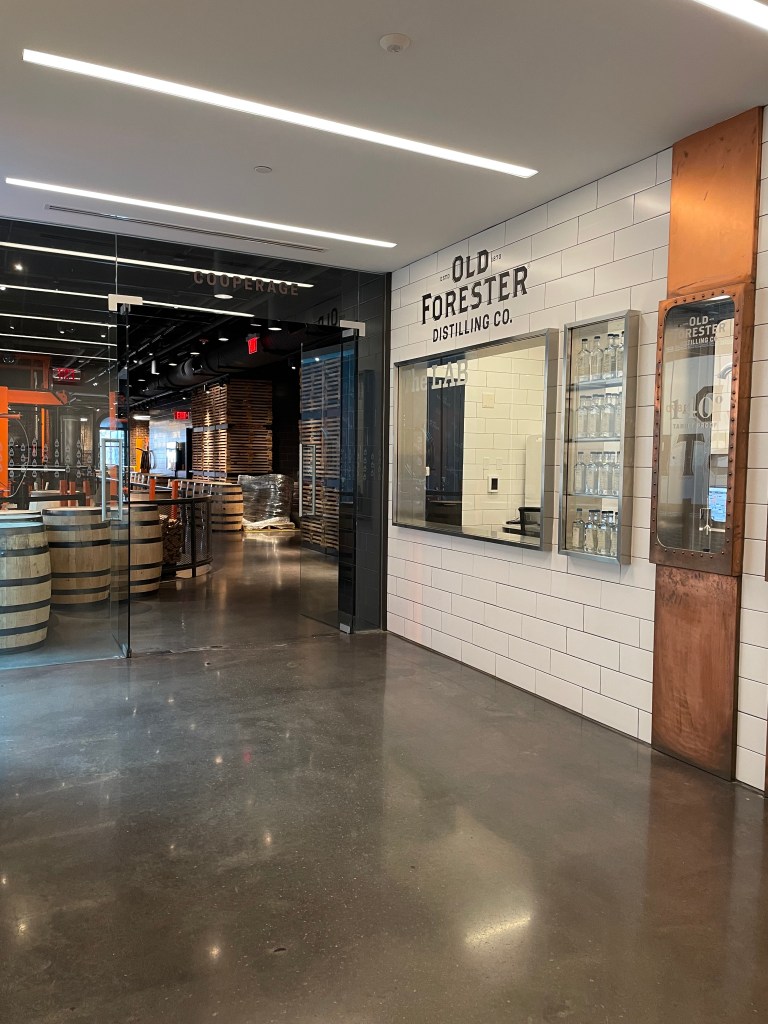
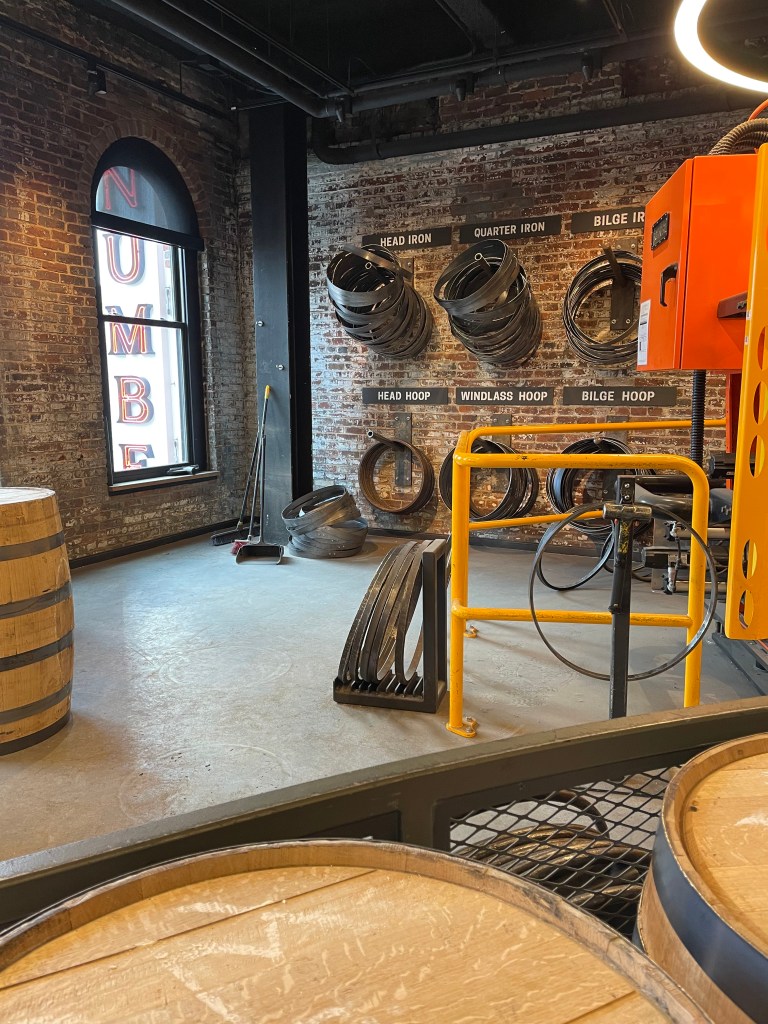
Ending this trip’s series of distillery tours with Old Forester gave us a chance to learn more about the barrel making process of distilling and I loved seeing the rickhouse 12 barrels high. Our tour guide, Lucy, dressed as Smokey the Bear for our Halloween tour. If I recall correctly, the barrels read 2 digit year followed by a letter to represent the month and end with 2 digits to reference day of the month. She educated us that the letters utilized don’t coincide as expected; you cannot use “J” because January, June, and July would not be distinguished from each other much like March and May cannot be marked by “M.” A fan favorite was also seeing the inside of a whiskey barrel get charred. From this respective tour, I most enjoyed the Old Forester 1910, their product that undergoes two barrelings. I never realized that was a thing, and the bourbon is very easy to drink.  

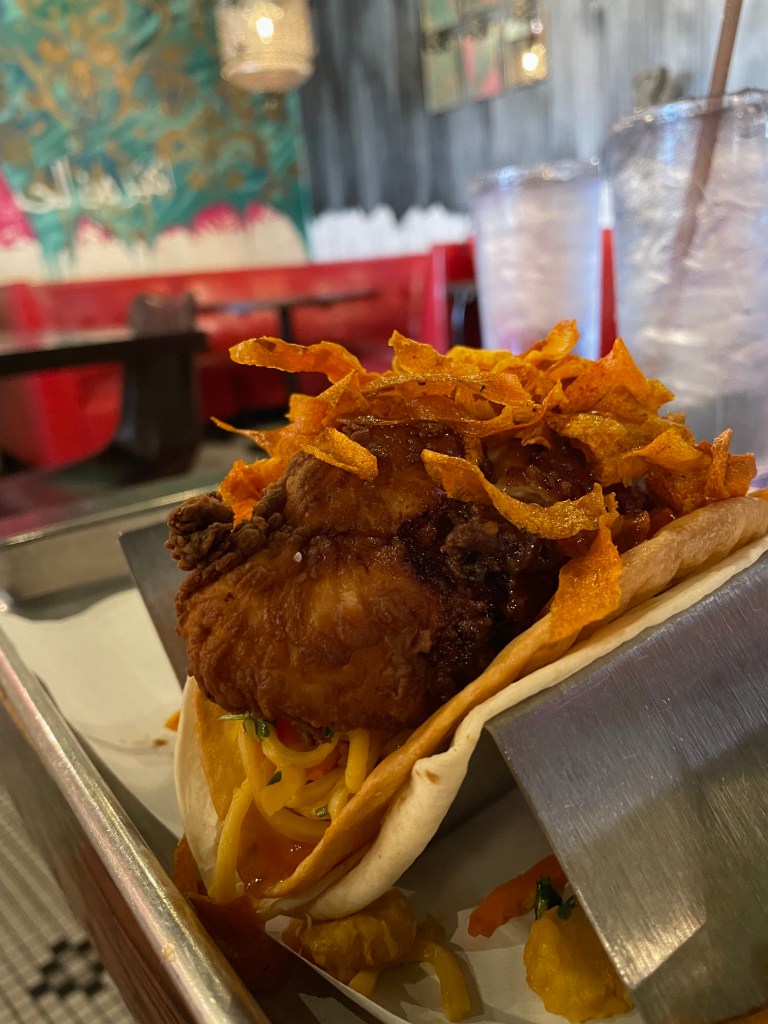
I found myself easily falling in love with the area and that’s a lot to say on my first trip even though the weather was mostly in the 30’s-40’s, not the best way to encourage others to make a move. The tours are one thing—obviously, no one is going to go on a distillery tour every day. We’d need more things to sustain us in we were to live in the local area and I think the city has enough interesting venues and eateries to explore. Our stay at 21C Museum hotel gave us the chance to see some beautiful artwork; Art Eatables is a smallish place we popped into for our daughter to get bourbon chocolates and then she settled on rock candy instead. I found a few Kim Perry bourbon prints at Art Eatables I liked, but I will order them online instead of trying to keep them safe during the flight home. Wiltshire Pantry Bakery & Cafe makes exceptional kouign amann pastries, only $5 each. I’ve made these laminated pastries before; they are a lot of work to make and the ones we had in Louisville are somewhere between baseball and softball size. They are a great buy for the money. For lunch on Wednesday, we treated ourselves to Agave & Rye Wednesday after our long walk through Cherokee Park (lovely, by the way, and we saw a deer there). I had a glass of Sazerac rye, served neat, paired with the green goddess and Jedi epic tacos. I could have stopped at the green goddess taco, they are filling. The green goddess is filled with brussel sprouts and roasted corn while the Jedi has sweet chili crispy chicken and lo mein noodles. 

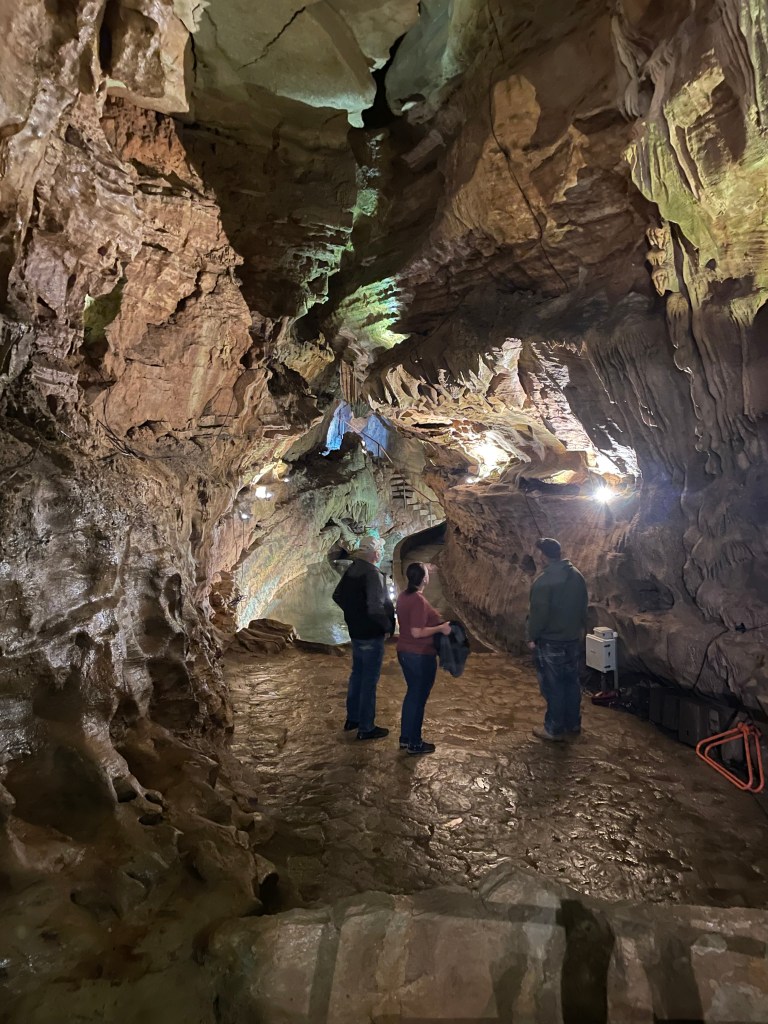
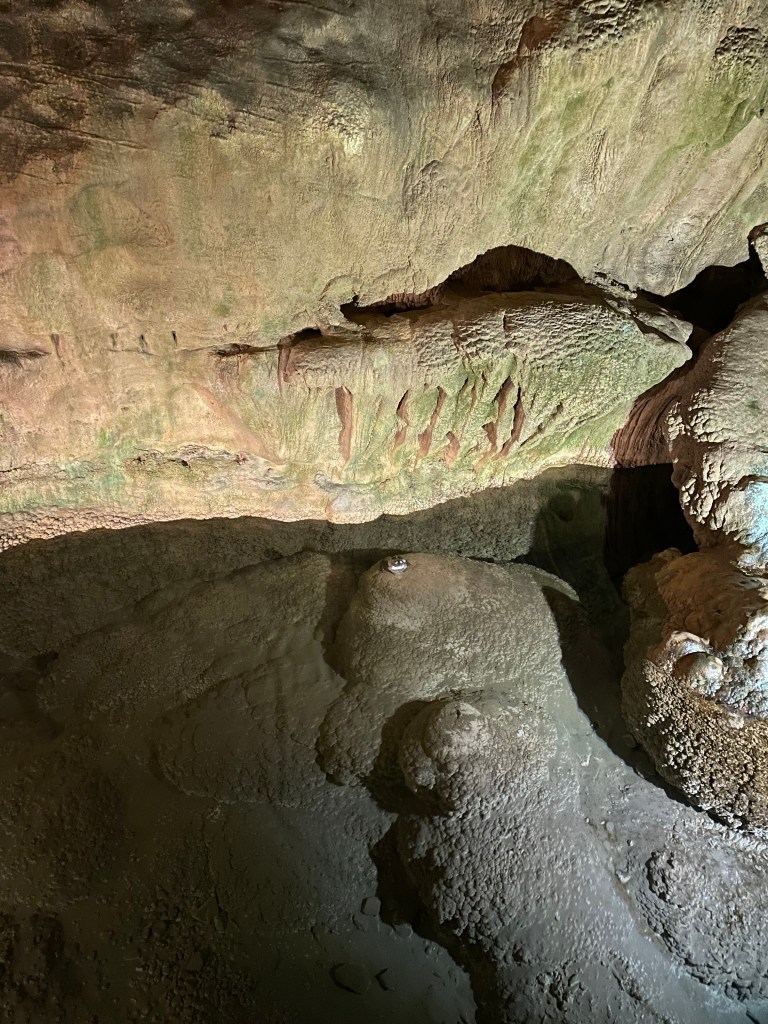
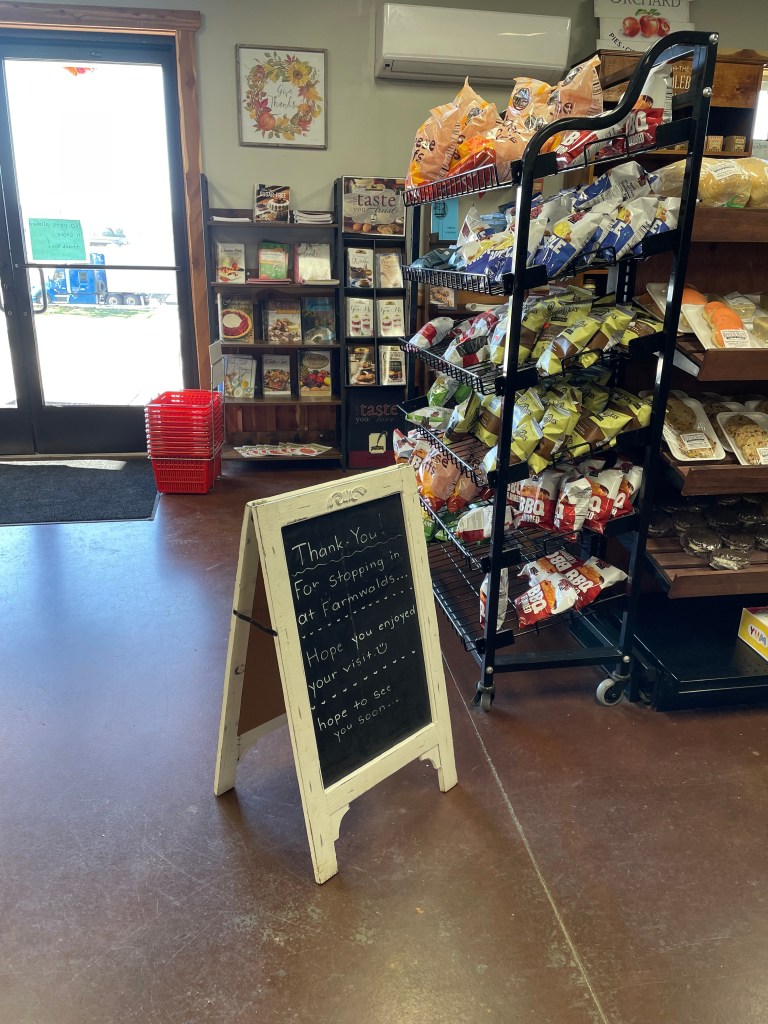
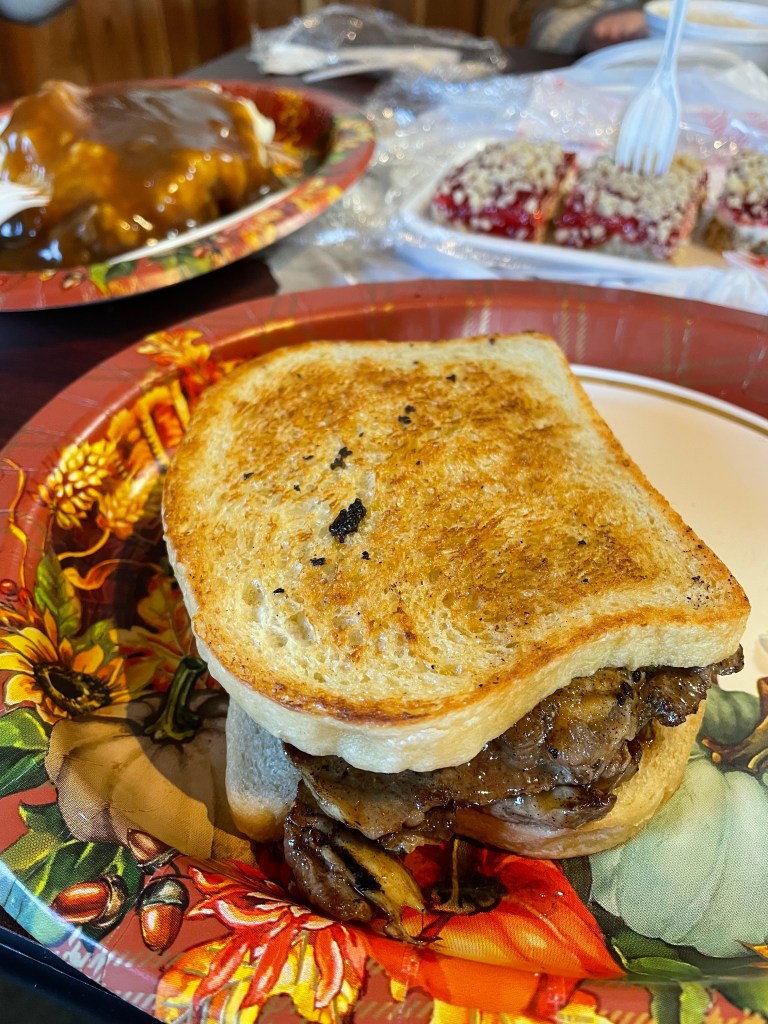
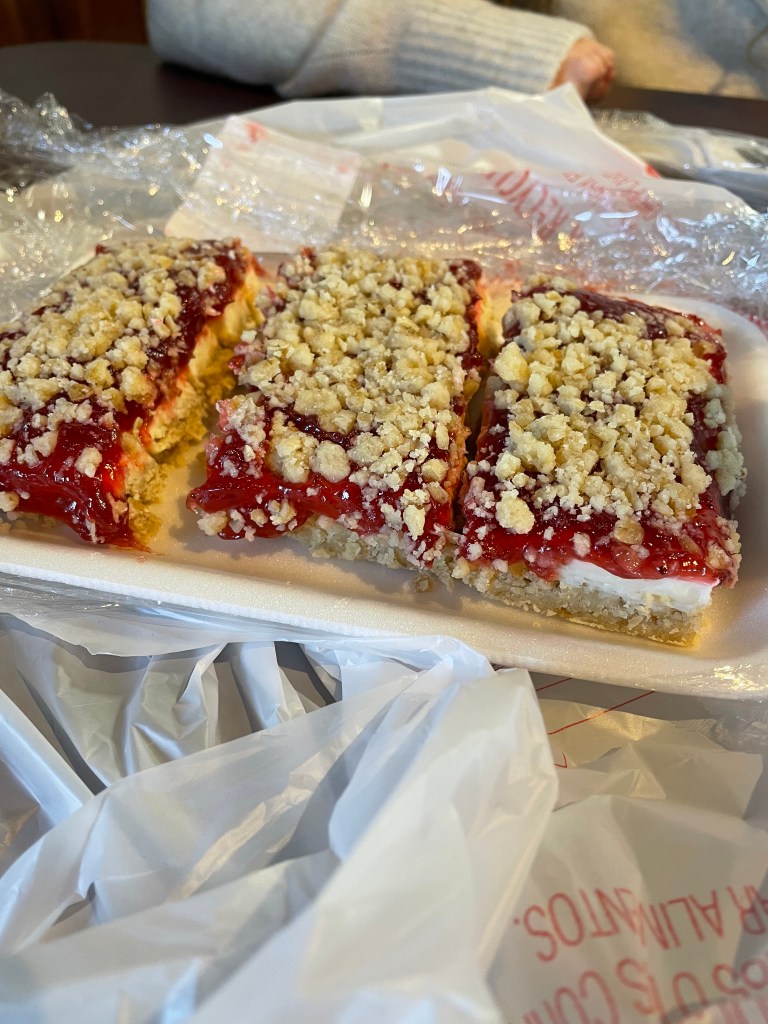
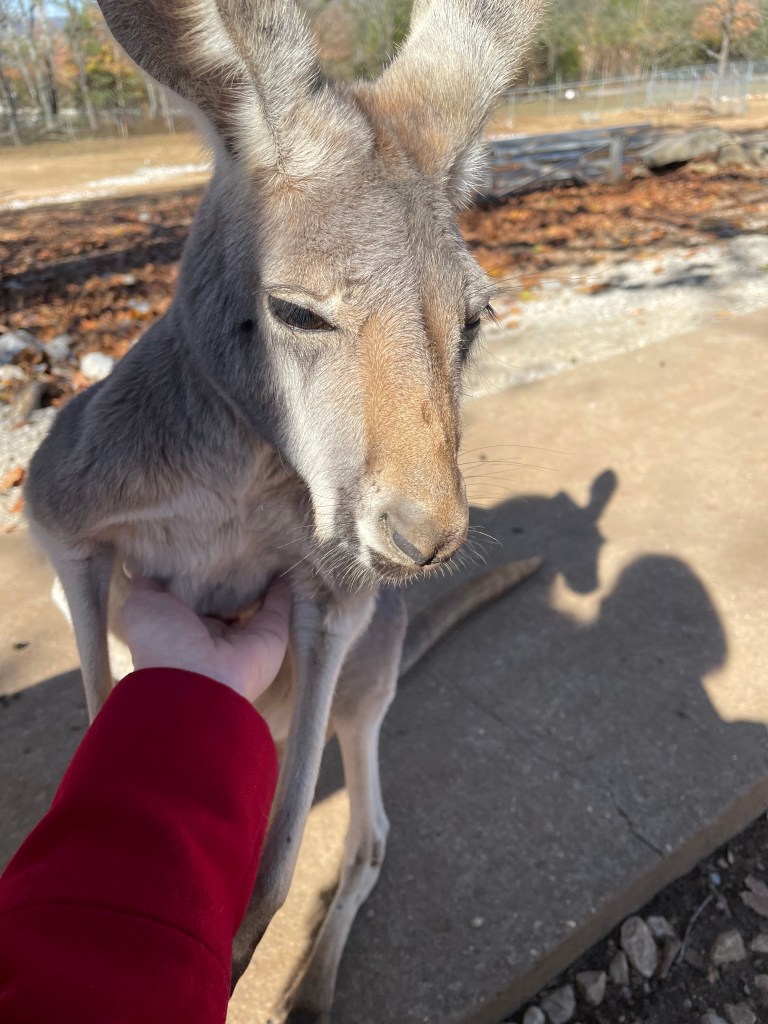
We said goodbye to Louisville on Thursday, but we didn’t leave Kentucky right away. We visited Kentucky Down Under. No way we wanted to pass up on petting and feeding kangaroos! As part of our admission price, we also took a tour of Mammoth Onyx cave, which opened to the public in 1922. There are a few tight spots to walk through and some slippy steps, but it didn’t feel claustrophobic as I was expecting for being in a cave. There are handrails in areas that also require more careful stepping. Our tour guide, Chris, was also easy to get along with; he had fun showing us the UV features on driver’s licenses, but the real winners in the group were the family from Denmark. Their passports had the most security features for the tour guide to check out. Our last meal in Kentucky was at Farmwald’s Restaurant & Dutch Bakery, located in Horse Cave, KY next to Kentucky Down Under. I had the ribeye sandwich ($8.99) while my husband ordered the roast beef manhattan ($8.99) and our daughter opted for the mac ‘n cheese ($3.49). We didn’t need dessert by any means by the strawberry cheesecake bar (maybe $5 something) was divided up into roughly 3 cellphone size portions.   

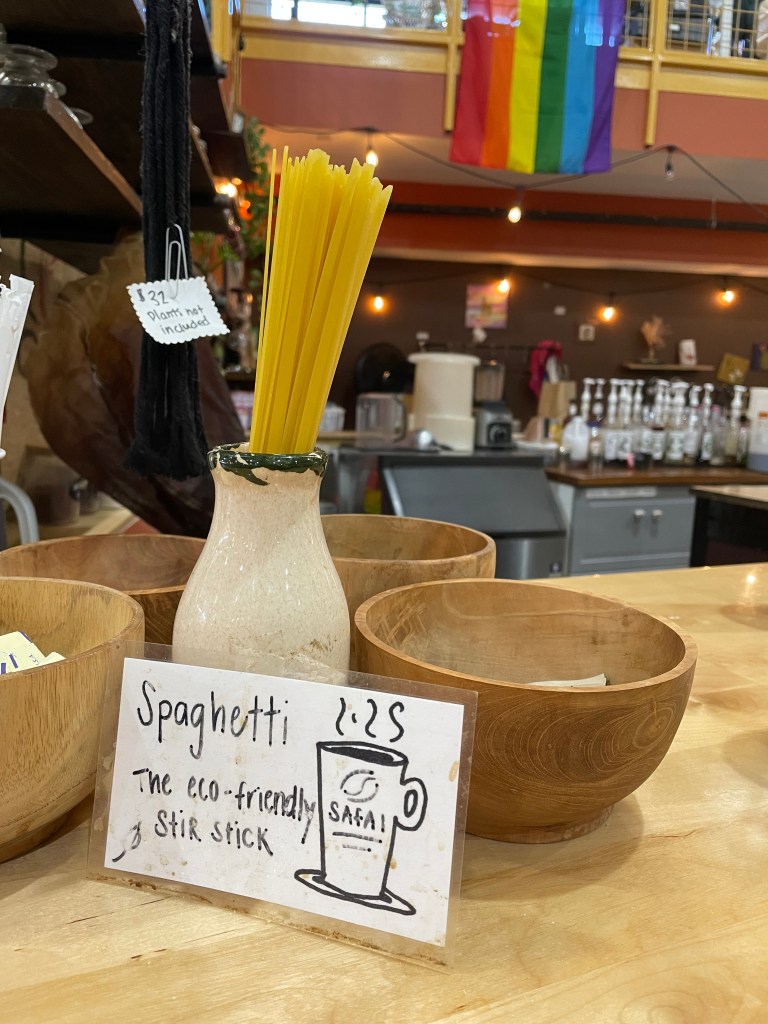
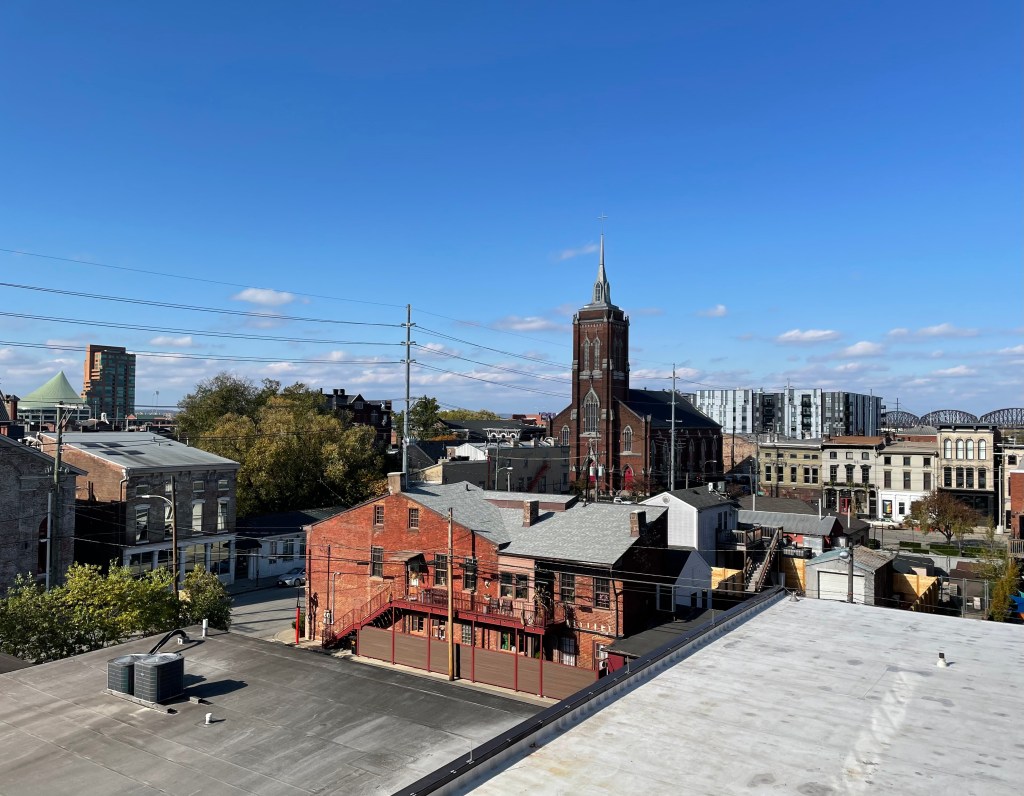
As easy as it is for me to ramble about fun, lighthearted things like drinking with friends and playing with animals, I want to touch on one last thing: Louisville is a lot more progressive than I imagined it would be ahead of the visit. Residents aren’t shy about hanging up their pride flags. We also saw Black Lives Matters yard signs and a prominent “SAY HER NAME” mural walking in downtown Louisville. In an area I pegged might be a deeply far right Republican territory, the area felt more like what I imagined Portland, Oregon feels like. From its appearance, it also shares the feeling of Grand Junction, CO; part of San Francisco, CA; and Newport, RI. There are quaint shops, water views, and tree-lined streets that make some neighborhoods so inviting, it’s hard to want to do anything else other than take a long walk with a warm coffee in hand. Every stranger we passed was polite and friendly, some more friendly than what I encounter here in Arizona crossing busy and even less friendly traveled streets. I’ve seen far more ‘Merica type sentiment in Arizona showcased by gun-related and “Vote for Trump” window decals on in my local area compared to the types of vehicles I noticed in Kentucky. In fact, it seems there is more love for the University of Kentucky based on the license plate covers, window clings, and souvenir items I came across than there is for a presidential political candidate for the upcoming election in 2024. On the political front, there were a plethora of yard signs for current Kentucky governor Andy Beshear. I am eager to return to the area knowing what I know now.

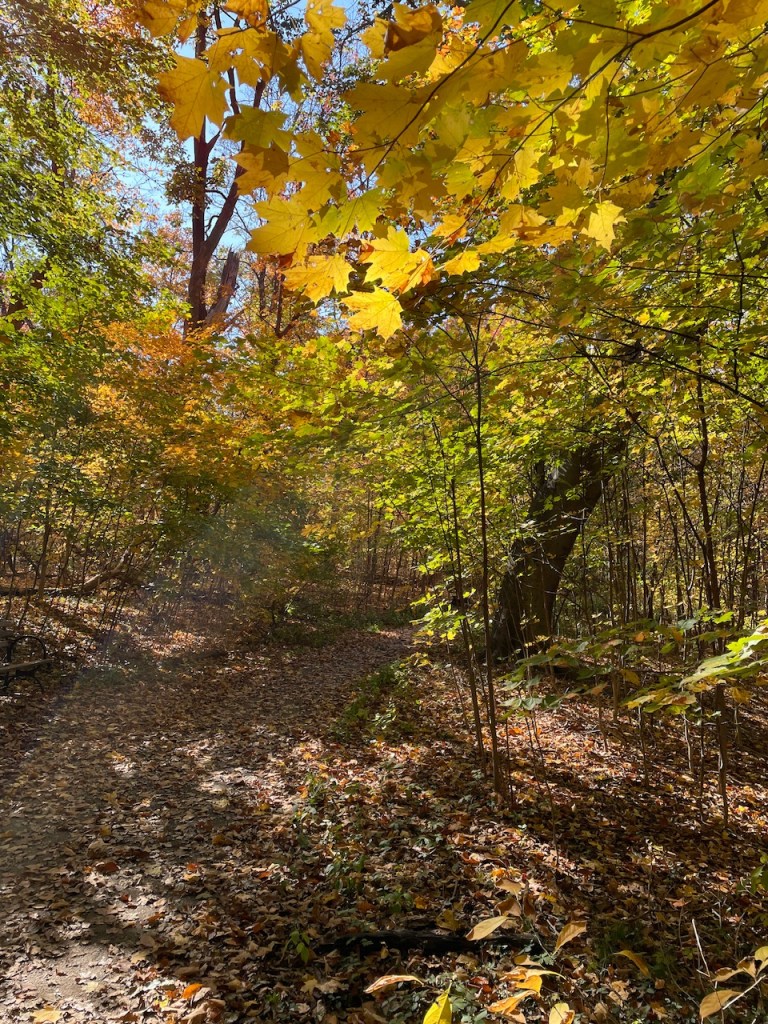
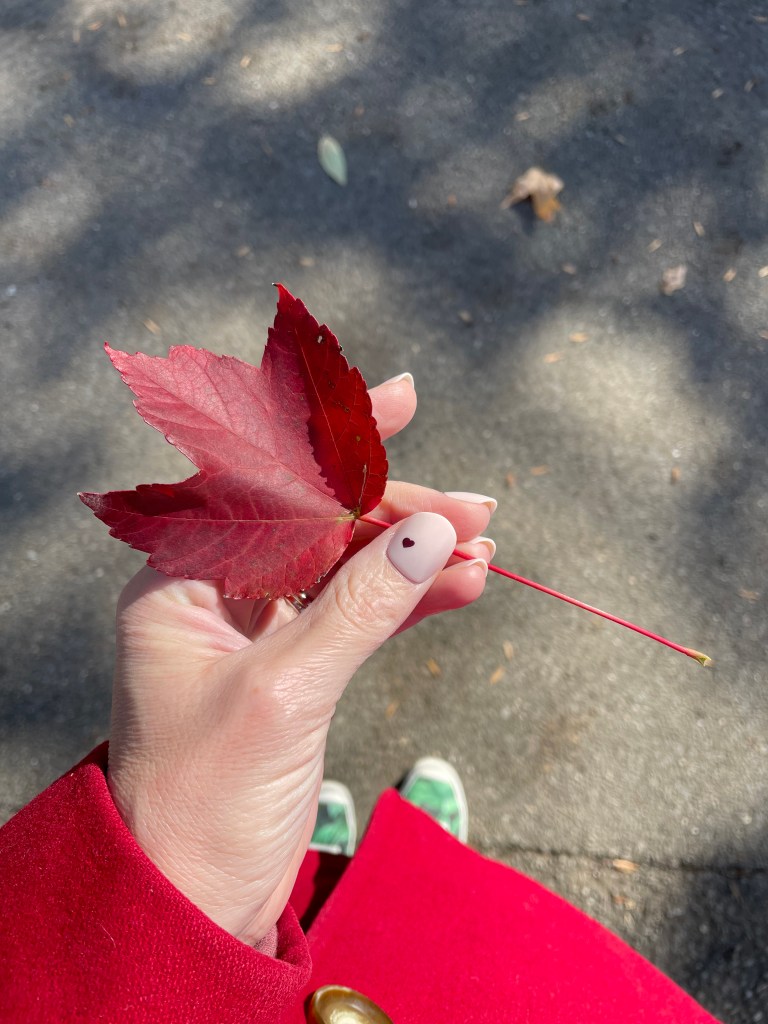
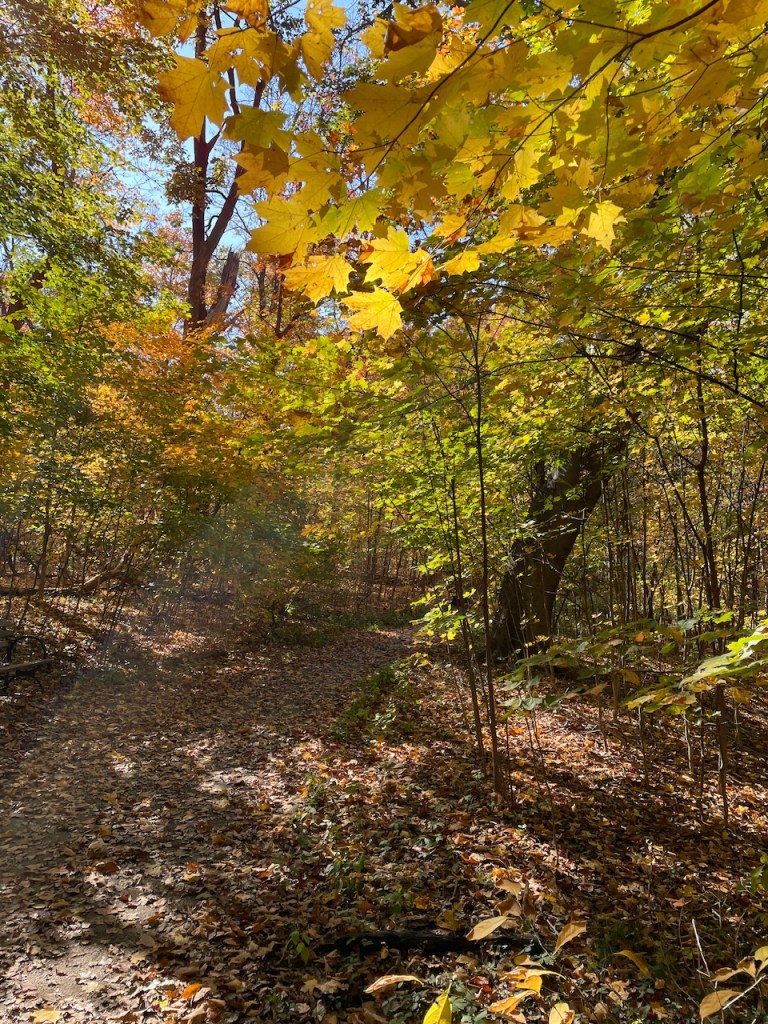
During our trip, it was mentioned that bourbon leaves with you a Kentucky hug, that warm feeling that lingers after sipping it. I can say the feeling also encompasses most of my visit here. The cold certainly took some getting used to, especially after it was still in the 80’s in Phoenix, Arizona when we departed for our vacation. The area though is a different story. Political views of all kinds exist here. As a former moderate Republican and what I would describe as currently a very moderate Democrat, I didn’t feel out of place here. There is space to enjoy nature and places to unwind, with or without that Kentucky bourbon hug. I appreciate greenery and the shift in seasons more after living in the desert and being deprived of the beautiful changing of colors in the fall. I like that the area utilizes art to discuss racial injustice, what it means to be seen, and societal history alongside personal narratives shaped through work and personal struggles.

The warm reception we received during our trip, not only through reconnecting with friends but with locals in the area, is a key part to why we have discussed returning to the area. Arizona does not afford us the type of land we want to live on and with a rising cost of housing here, it was encouraging to see what a move to southern Indiana, placing us just north of Louisville might offer. Being so close to Kentucky, we’d be in a good spot to still visit the many more distilleries there are to tour and fall is only one season to enjoy the beautiful landscape of this state. With a return to warmer temperatures in the late spring or early summer, 2025 is our plan to visit again and see what the area holds for our future. For now through, I am in my research season. We didn’t make time to tour any part of Indiana. Our friends (and our waiter at Agave & Rye) provided good info that southern Indiana would have a little more to offer than Louisville and so, we’re taking a bit of a gamble to see if our family could call that area home to live out some homeownership dreams that are financially out-of-reach in Arizona and allow us to escape the unbearable triple digit summers we’ve grown accustomed to since arriving in 2012. This year, with its record setting amount of triple digit days, is an impetus for me to revisit my feelings about cold winters, and after living mostly cooped up during the pandemic years, I am ready to see what a move could afford our family as a new chapter in our lives and a different way to experience living in the United States.

September Reads: Reframing Our Look at Mental Health Conditions and Recovery

I inadvertently picked up a few books that happen to be good reference materials to share this month: September being Suicide Prevention and Awareness Month. Each pulled my attention for different reasons. Kikuko Tsumura’s There’s No Such Thing As an Easy Job for the protagonist’s quest to find a more meaningful job after being burnt out in another (who hasn’t been there before?!). September Letters by Brittany Snow & Jaspre Guest called to me the way Post Secret did in the past; a lot of us are still learning how to write about our personal struggles and it helps to have a willing audience to break down our fears. The last, Evanna Lynch’s The Opposite of Butterfly Hunting is one I’ve been trying to locate at Barnes & Noble for a bit, but I wasn’t going to hunt down an employee to locate it after the business revamped their store layout. What can I say? I am obstinate. I wanted to find it, unassisted, and instead of finding it in the Social Sciences and Memoir section of the store, it was located under ‘Entertainment.’ I am sure it has squarely to do with the fact she is one of the Harry Potter actors, but if you read the book, it is not designed as entertainment. Her book centers on her recovery from anorexia, and while I originally grabbed it to generally learn about her since Luna Lovegood (her character in the Harry Potter films) is my favorite character in the whole series, I was drawn to how her recovery parallels a lot with managing PTSD for me.

Addressing work burnout is something I think our society sometimes pokes fun at, because older generations like to indicate they’ve “been through worse”, somehow undermining our struggles. One of the most important things I’ve had mentioned to me more than once is not to compare traumas, and I think in the same vein, older generations’ efforts to minimize our work frustrations is just as dangerous. They are creating rifts that don’t need to exist. Work environments change drastically. Some of the older members who scoff at younger workers ignore the fact they entered their careers with less debt, more secure retirement funds in the form of pensions, and generally had larger family networks to take certain burdens off their plates. Think of how many old guys who worked more physical labor jobs you know who don’t manage their own bank accounts, do indoor housework like dishes, grocery shop for their families, or set up medical appointments. How many of those guys have wives who do this stuff for them? They might have been the sole breadwinner for their family, but that reality does not mean they should devalue the emotional or mental struggles others face as they navigate knowledge-based work. Younger workers grew up in an educational system that pushed as many as possible towards higher education and these jobs not only serve knowledge-based work environments and their workers, but they cut across into care for blue collar jobs and those employees. These jobs are essential to providing services to help vulnerable persons, whether they are homeless, live with disabilities, or are preyed on in various ways, such as individuals who have been sexually assaulted.

September Letters is the type of book that reminds me I need to be more forthcoming in my own struggles. In fact, I have shared some of these sentiments more recently with my friend Bart’s dad. Bart is my main reason for becoming a Marine, for those of you who are new here. His time as a United States Marine was cut short when he was killed by a National Guardsman during a trip home to see his family for the Fourth of July. I am not someone who believes everything happens for a reason. Losing him was devastating, not only for me, other friends and loved ones, most importantly his family, but it was an absolute shock to our small community. Having Bart’s dad’s blessing to share some of the things that were written to me from him and his wife as I started my journey as a United States Marine are crucial to the story I want to tell for my memoir (this 7-year project now!). For years, I’ve skirted around how difficult coming home from Iraq was in 2005. I projected a lot of unnecessary anger onto others, I drank excessively, I stopped caring that the Marine Corps wasn’t the place for me, both for the poor quality of medical care I received in ’05 and for the regular intrusions into my personal life that I felt had no bearing on my ability to serve as a Marine. What I’ve been unwilling to say over all these years is that I struggled in 2005 with suicide ideation.

My whole life felt like it was falling apart when I came home from Iraq, and I was unable to identify part of my struggle began shortly after Captain Brock was killed on Feb. 2nd, 2005. I was constantly on edge on guard duty when it was on the backside of our work building facing the portajohns where he was hit by a mortar round. At the time, I didn’t realize the boa constrictor like sensation I felt wearing my flak jacket and the chest pains were symptoms of PTSD developing. In spite of receiving an educational message for our chaplain that “suicide is a permanent solution to a temporary problem” after we lost a Marine to suicide during the deployment, in 2005, I wasn’t taking those words to heart. I was sitting and stewing in my grief and anger that coming home was a shit show. Financially, I was struggling after losing money to repay student loans that went into default; it would have been a bit easier if the debt collector wasn’t as harassing a personality as he had been over the loan situation. A six-month relationship stalled and I ended it because I was tired of feeling like the bottom of his priority list. Come to find out years later, I learned his family never knew I existed as his partner, so I called that one correctly. Getting promoted to Corporal, while better for my bank account, meant I couldn’t be friends with my Marines as I had pre-promotion (social isolation). Friends and family back home were rather off-limits due to the distance that separated us, and reflecting back, I wasn’t my best self when I saw them either so things were strained a bit (maybe months). Once I started drinking more heavily with other Marines in California, I lost track of my ability to manage my problems. Instead of confronting them, I became more depressed that life felt crappy.

The lowest point didn’t happen right away. Things went on like this for months until I went to Tech Escort school in Huntsville, Alabama. At this point, there was this public self I put on and this private person I was tucked away in my hotel suite. I went to work, the only woman again in a sea of male bodies, and I made time to go to church on the weekend. I want to say the school was only about a month long, but there was something about the isolation there that hit particularly hard. One day I realized I didn’t have to put up with a lackluster life–I could be my own solution and give up. (I’ve thought about sharing this story at least once every year since the second or three year I started this blog.) Part of me is grateful I didn’t write a suicide note or even a journal entry because I don’t want to go back to seeing that part of myself that felt she had nothing to live for. My saving grace was a desire to repair my relationship with my youngest biological sister. Something I was unwilling to admit to her or the rest of my family all these years. In my deepest moment of self-hatred, I felt others would have so many happy memories of us to sustain themselves, and her and I butted heads all throughout our childhood years. Not growing up in the church, I did still have a small conversation with God about my pain and the only thing I made myself do was get through that first night.

To want to play an active role in turning your life around is not easy: Evanna Lynch expresses this reality quite well in The Opposite of Butterfly Hunting. Mental health treatments run the gamut and after all these years, there is still quite a stigma over mental health care versus treatment for ailments of a physical origin. Knowing this personally is part of my reluctance to share my story over the years. I don’t want someone to come out and tell me my pain isn’t real. Even after my lowest point in 2005, I didn’t see mental health treatment in the Marine Corps. This is something that certainly created challenges when I was looking for support through the VA and it’s a decision I wouldn’t want others to replicate. While I wavered between whether I wanted to stay in or not, I felt I couldn’t bring up my issues. That to do so would cause all career opportunities to be taken away from me. I didn’t want someone to be on suicide watch over me or to feel more out of place among my team. The only person I let in was my then-boyfriend, now husband in a letter dated Feb. 4th, 2006, barely a year after Captain Brock’s death.

Being with someone who finally acknowledged me as partner, not a placeholder in their life, was life changing. By no means have things always been easy, often far from it, but I was free from having to feel like I was on this hamster wheel to earn a place in someone’s life and he wasn’t scared by my admissions. These things combined to start a healing journey that continues to this day. Keep in mind I was 21 when I made this admission to him and he was only 19, so if you’re in your 30’s, 40, 50’s, I have faith you can also turn your life around. I think a big part of what we get wrong when we talk about overcoming suicide ideation and coping with mental health is stating, “It gets better” when we should be saying more often and more loudly “You become more capable to face your struggles and if you need help, there are options so you’re not doing this alone.”

I would love to rave for paragraphs on end about the healing power of Evanna Lynch’s book in seeing parallels to my own journey, but here are some ideas to help you or someone you might know struggling today.

People

I am the first to admit I crave longterm committed friendships. I want all my friendships to work out. There are people though who like to use me as bait for other life objectives they have or are completely indifferent to my feelings. I’m not an object. I am a person. The people I’ve removed from my life are gone because of their attitudes, behaviors, and actions towards me. You might need to part ways with people, too, if you find they are trying to derail your recovery and maintenance of healthier habits. None of the people I’ve stopped associating with have apologized for the hurt they’ve caused; if anything, they’ve all, on one occasion or another, insinuated I overreacted or that I’ve tried to rob them of something. I’ve also learned it is dangerous to keep company with people who regularly rely on alcohol as their coping mechanisms.

Things

Not all things are good for you. What is a bad is circumstance-based. In my life, alcohol was adding to my problems, not eliminating them. In 2005, I had moments where I fully understood drinking wasn’t helping and I took breaks from it. My second deployment is still a chapter of my life I could have done without, but it, too, was helpful because it required sobriety. I needed it after drinking heavily the latter half of 2005. I’m not sure what point I realized I could pick more of a path between sobriety and choosing drinking. I did make a conscious decision though to stop drinking kamikaze cocktails, my self-hatred, “I’ll just stew in it” beverage of choice. Years now, I still don’t drink them when we go out and I don’t make them at home in spite of often having the ingredients to make them. Like some people know they cannot trust themselves to own a firearm anymore, I know drinking these would just bring all that pain back to the forefront. I’ve also come to enjoy a lot of alcohol-removed beers and wines. The non-alcoholic Stella Artois is my favorite NA beer; my second choice is Athletic Brewing Co. as they have a variety of flavors. Surely sparkling rose is pretty great so I look forward to trying their other products.

Places

The Marine Corps is a place of employment I realized I couldn’t stay at, and it is a difficult choice I’ve overthought far too many times. I’ve been guilty of being jealous of friends and strangers who succeeded here, but for me, it wasn’t working. Between the invasions of personal privacy while the Marine Corps had no solution for my health problems, being present there at a time where the drinking culture was at a pretty all-time high was not good for my health, and I knew deep down the drive to always improve all combined to make work a place I disliked going to every day. I’ve found the same is true in other jobs, so taking a friend’s words in mind that a place of employment should not exacerbate a disability, I am more mindful of how I spend my working years now.

Positive Replacements (People, Things, and Places)

I cannot find the exact item to share, but there is some information that reads that for each suicide loss about 134 persons are impacted by the death of a loved one or friend. This statistic is important because while your pain can end, it is only transferred. To actually end the pain is to seek help, form healthier attachments and coping mechanisms, and to give yourself grace. For me, I have part of that grace wrapped up in my forearm tattoo. In lieu of the common semi-colon tattoo to mark overcoming my hardships, I have a lot of symbolism wrapped up in the flowers, colors, and placement of this tattoo, my only marker of my Marine Corps service on my body. These all mean something to me. You don’t have to wear your recovery on your person, but for me, it helps me forgive the person I used to be. I also have a large network of friends, family members, and pseudo family members who choose to be here for me. I cannot make up for the people who harmed me, but they can go find less and be short of my expectations. They had their chance to treat me properly and didn’t. Apologies aren’t forthcoming, so expecting closure on those fronts is unrealistic. This includes family members, too, just to be honest. I’m not putting up with bullying, indifference, or emotional abuse from anyone. I have apologized to myself for all I put up with over the years. You can also find me exercising, cooking, baking, and reading to better adapt to my post-deployment self and all the good and bad that comes with this identity. I would encourage anyone still exploring hobbies to cope with mental health challenges, those physical hobbies are a game changer. These things require a type of being physically present that helps smooth over stressful situations, serve as confidence building exercises, and are the types of hobbies you can share with friends or family also on your journey with you.

~Cheryl
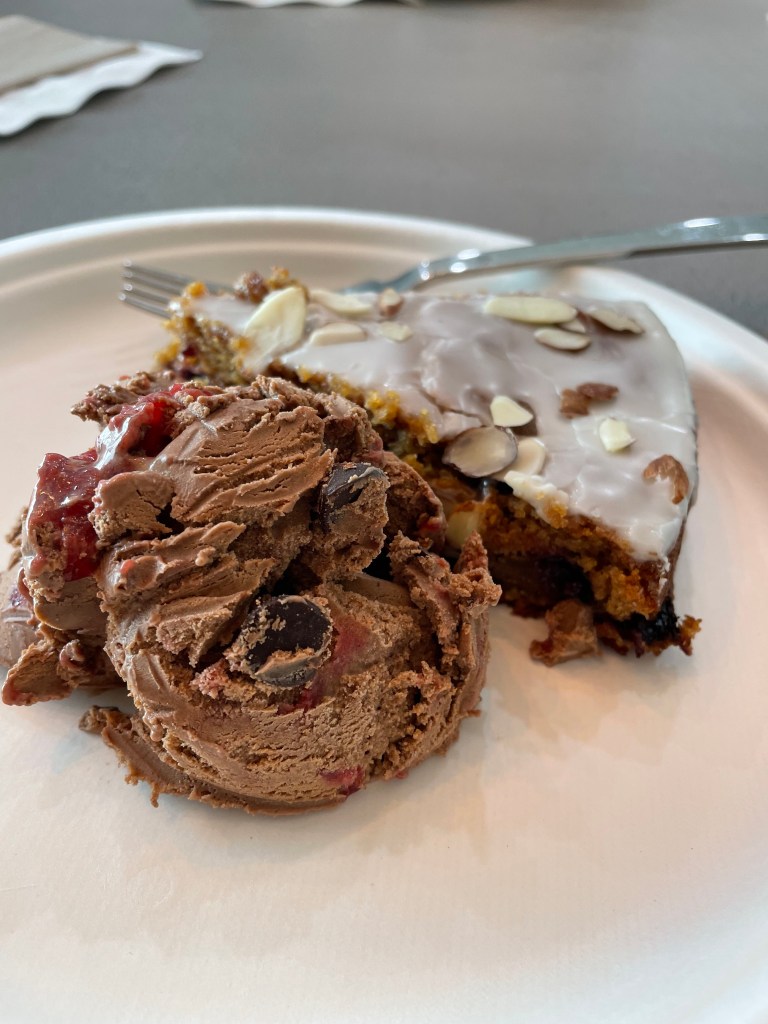
Evanna Lynch’s vegan cherry cake recipe can be found at https://www.ciwf.org.uk/media/7444894/bake-with-compassion-guide-2021.pdf
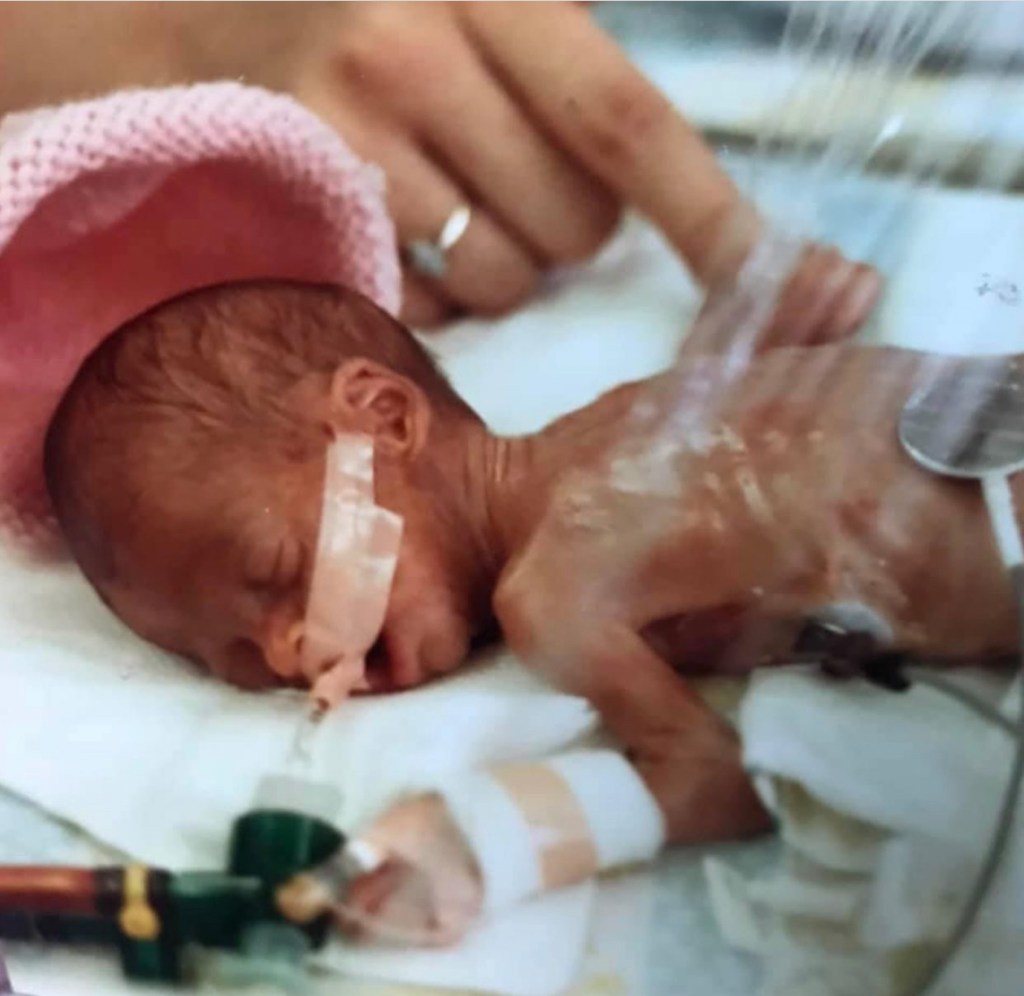
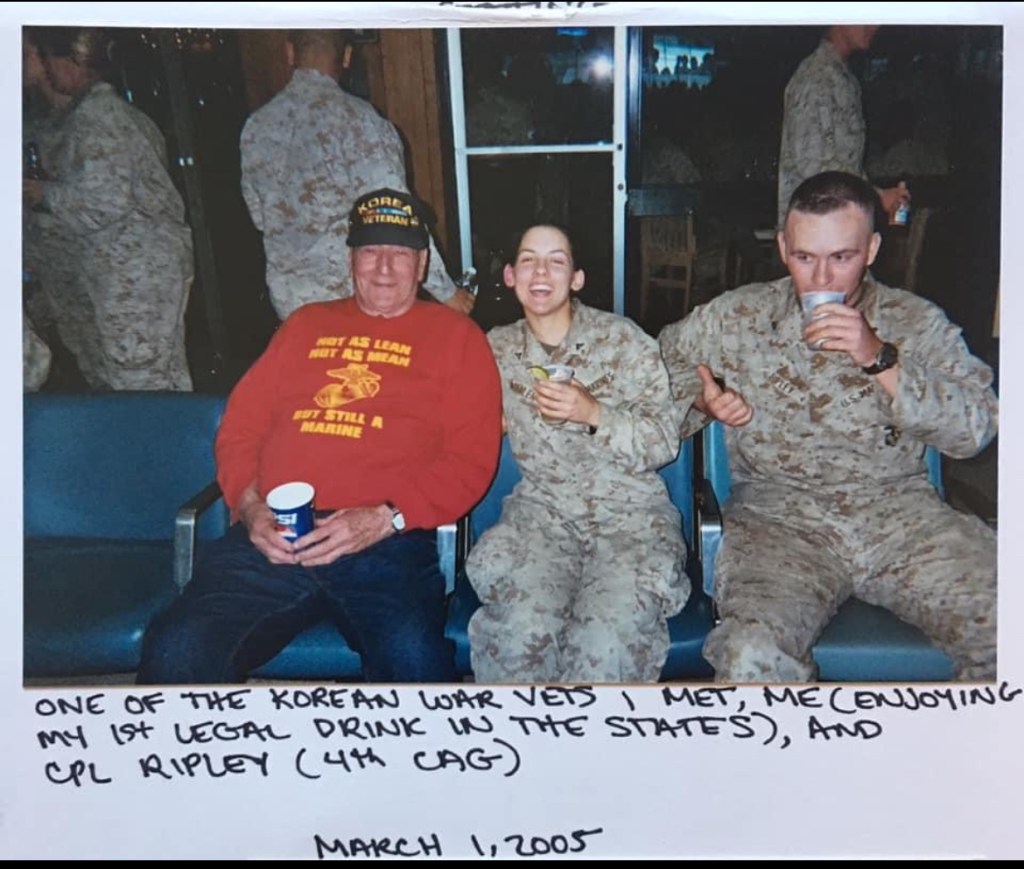
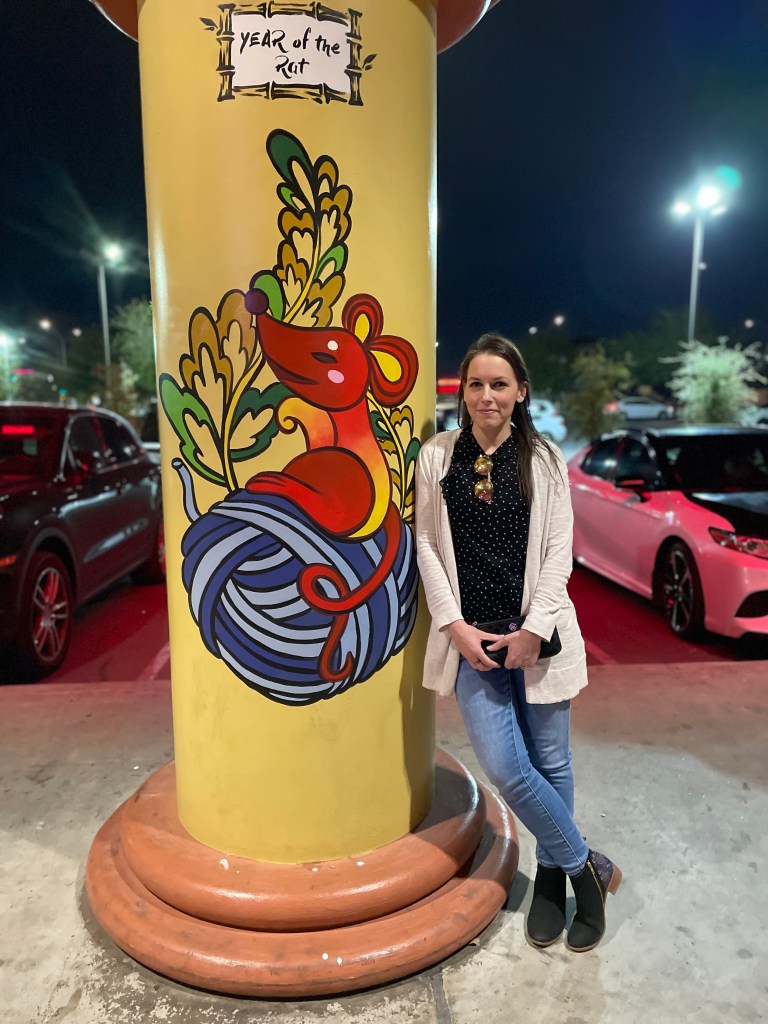
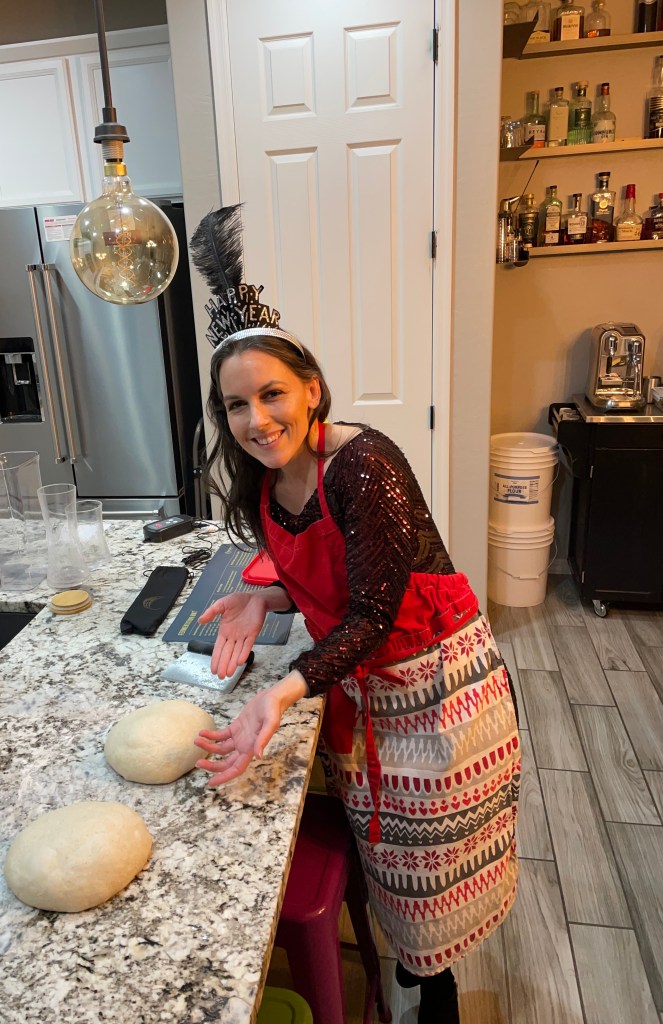
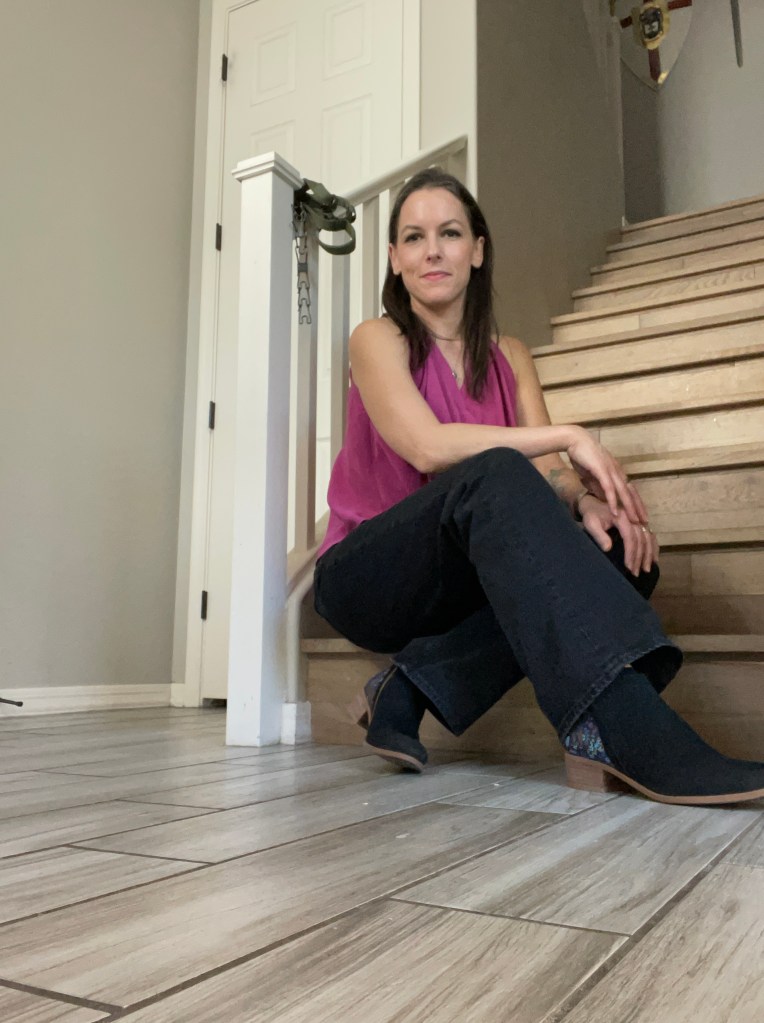
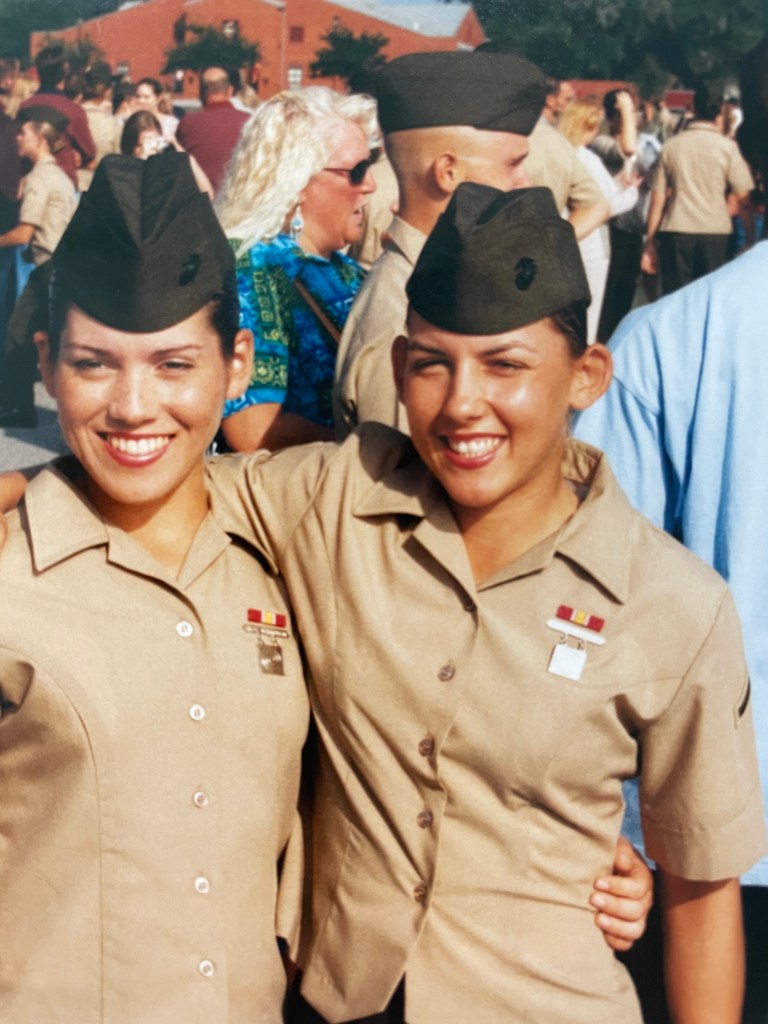
21 year old me didn’t know I could one day become the 39 year old version (married, mother, homeowner, with 4 college degrees, and a wonderful support team for my work life and home life).

VA Compensation Claim: Secondary Issues to Service-Connected Disabilities

For months now, I’ve gone back and forth whether to share that I initiated a new claim with the Department of Veterans Affairs (VA). My health suffered substantially last year, and in speaking about those issues in bits and pieces on here, I finally felt it was important to also share that I put in a claim for compensation with the VA. The important thing to keep in mind is that each person’s claim is different, so what I am sharing today would not mean the same result for someone else. I am just hoping that by being transparent, my experiences will help someone feel more comfortable/more prepared for what a disability claim might entail.

I opened my claim in April of this year. Around that time, the average processing time was 102 days. Knowing this information, I realized my claim could be decided around early August. (Again, we’re talking average. If you’re submitting 20 medical issues on a claim, be prepared for a longer wait time!) Yet again, I made the personal decision to go about the claims process without an attorney. I feel that an attorney cannot advocate for me the way I can, because I am the person living with the health problems. Some others might need more help either based on the severity of their disabilities, their lack of comfort regard legal language, what have you. I also opted to submit my claim online, allowing me to track the status. The stages are a bit basic in nature, but it was enough for my needs. For anyone new to the process, it is also worth sharing that at any point your claim can move back a step in development. Don’t let that be a shocker.

I wasn’t sure if I’d need a C&P (compensation and pension) examination this go around. I had recent medical evidence I provided as part of the the claim. My claim was for GERD secondary to PTSD. For others, there might be a direct connection to their military service, but I feel if that applied in my case, I would have noticed symptoms sooner. Before I continue further, I would like to reiterate that each person’s medical issues vary in frequency and severity. The VA’s schedule of disability ratings takes those things into consideration. You can see these breakdowns by various bodily systems in the VA Schedule of Disability Ratings.

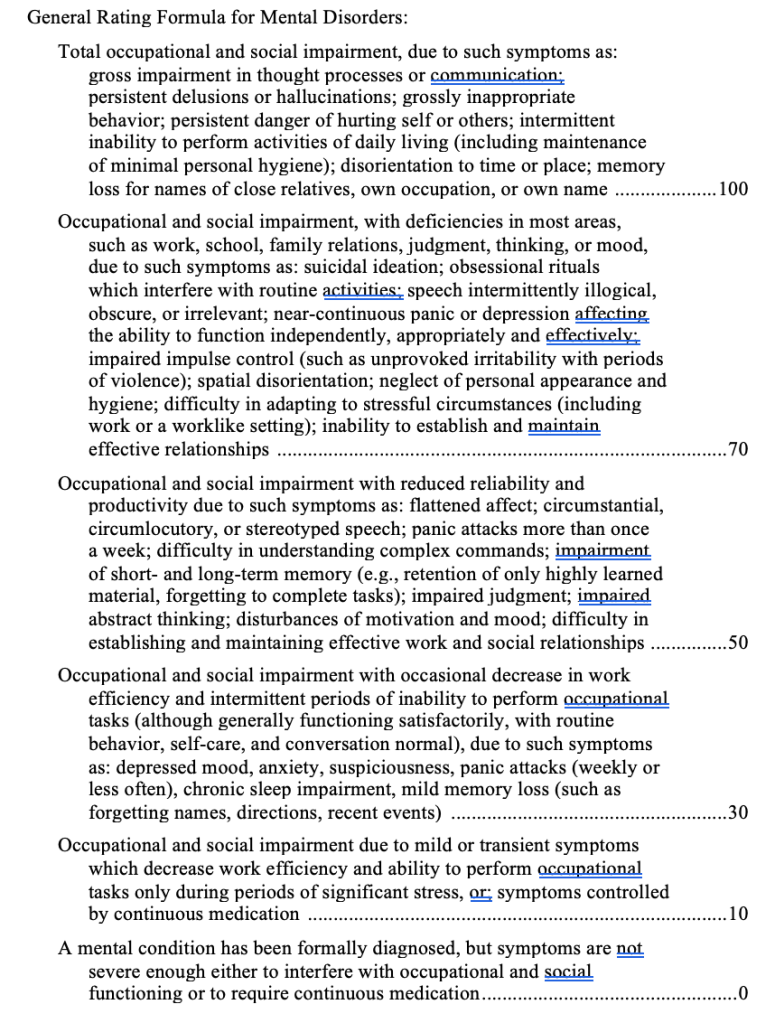
Here is the breakdown for mental health conditions.

The percentages of 0, 10, 30, 50, 70, and 100 greatly change what type of financial support is made through the VA. A zero percent rating is not compensable. A veteran with a single 10% disability rating receives $165.92 per month from the VA. The same single (i.e. not married or with no other eligible dependents) veteran with a 100% rating (excluding any situations where special monthly compensation applies) receives $3,621.95. For a full listing of 2023 rates, please visit here. When you look at these different ratings, you can see how the impact on the person’s life changes significantly from the condition is diagnosed (and more of a slight inconvenience) to where someone struggles in areas like their employment or social connectedness with others.

My claim also happened to fall in this window of time where the PACT Act passed last August, so I knew it was possible there would be a look back at my service experiences regarding possible hazardous exposures. This is the part I knew would be a bit more stressful for me. I got out in 2007, so some of those things that were once clearer in my memory have faded because the job knowledge is no longer relevant to my career today. These are things though that became important to talk to the provider I saw for my C & P exam. Again, I was partnered with QTC (one of the vendors the VA contracts with for these). A big thing to keep in mind is you might not live close to where the C & P exam is taking place. Each time I’ve had one, it’s been roughly 40 something miles from my residence. There is travel reimbursement for the process, but the situation meant planning time off from work and hoping nothing happened to where my appointment got canceled. (Vendors, like everyone else, might need a sick day!)

I was glad to see that the receptionist staff at QTC were respectful, as was the examiner I met with in early August. Remember what I said about when I thought my claim would be decided? It’s ok though; these things take time. I am not terminally ill, I am not in financially dire circumstances, or have age related factors that necessitated priority processing. I received notice in late July regarding having an appointment in August, which gave me about two weeks to plan for the visit. Meeting with the examiner, I came prepared with a Statement in Support of Claim filled out. Personally, I don’t like going to medical visits, and I have no problem throwing the Marine Corps under the bus for this feeling. Across the board, the providers I had in the Marine Corps were difficult, between being pushy about the type of birth control I should use, and up to and including the person whose half-hearted efforts on my early 2005 medical visits listed my chest pains as not being connected to my deployment, these people made it more difficult for my health conditions to be considered valid when I got out and wanted support from the VA.

I will let you know the provider gave me a moment to share those feelings. I really appreciate that she let me discuss how I attempted to have early symptoms addressed (both in and after service). Talking about deployment stress (or any stress really) will be hard and you just have to be willing to unpack all that during your visit with the provider. These strangers don’t get to know you the way your regular medical providers do. So we just jumped in there. I explained the digestive health problems I’ve had over the past several months. It was tough telling her that at the time where I was waiting for biopsies to come back on four organs my management team at SSA never bothered to ask about how I was coping. We had to go through what my symptoms were, what seems to bring them on, and the frequency and severity of those issues. After discussing those issues, we dove into the possibility of my condition being related to toxic exposures. She brought up a site called VetsHQ that has a list of burn pit locations. I figured as much being at Camp Blue Diamond and serving at Al Asad Air Base, we were around these things, but I never saw anything actively going on. Save for the fact, my team and I used to burn printer cartridges in a small burn barrel outside our work building on Camp Blue Diamond–we’d burn those along with printed documents and people’s cards from home that they tossed into their burn bags by their work stations.

She took it all in stride. The kinds of things these providers probably have revealed to them on a day-to-day basis makes me comparable to psychologists and psychiatrists. We’ve got a lot going on as a specific population of Americans. And the conversation kept going on. I was upfront about how my job as a Chemical Biological Radiological and Nuclear (CBRN) Defense Specialist meant being careful about the risks. During training at NBC School, we went through a live nerve agent chamber and our gear was tested before we walked through the facility for our final exercise. Then again, during my second tour in Iraq, people were screwing around with unknown chemicals in a bunker on Al Asad. My team donned our hazmat suits (think these, not this) and pulled those containers out of the bunker. The chemicals weren’t weapons of mass destruction, but still they were things those individuals shouldn’t have messed with and their negligence resulted in experiencing chemical burns. It is a bit embarrassing though now to admit that much of our job, aside from maintaining our warehouse of chemical protective gear and equipment, was clean off air conditioner units around the base. We’d go out in our regular uniforms and use our decon truck to hose those things off. What all was in the air, who knows.

All told, my C & P took about an hour, maybe slightly more. On top of having the one-on-one with the medical provider, I also had a blood draw. The team needed to see if GERD (which itself is not a disability in the VA’s schedule of disability ratings, more on that later) was causing me to experience anemia. The staff member who did my blood draw was equally as kind and respectful as everyone else. I also appreciate that she got the blood draw on the first try. Over the years, I’ve had a few who mess it up and then they go digging around with the needle in my arm trying to find the vein. It’s the worst. I will tell you though you do not get a copy of your C & P results. If you want a copy, you must submit a FOIA/PA request. Since everyone was rather respectful on this visit, and my last C & P provider was the same way, I don’t feel those results are things I need in my personal records at home. Should my feelings change though or I need information from those appointments, I am aware putting in a FOIA request could take months to process.

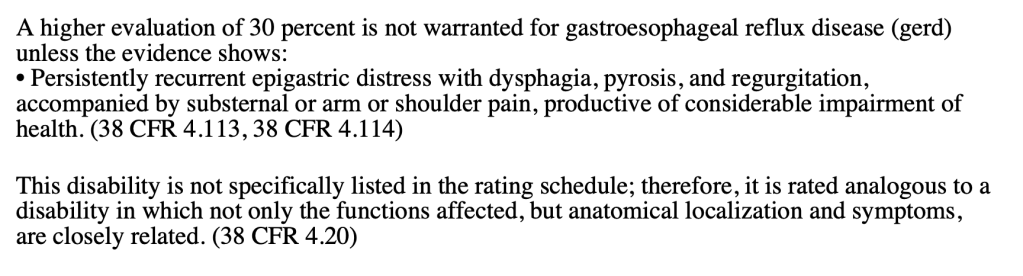
Now, here’s where we are today. The VA reached a decision on August 17th, not too much longer than the original expectation based on April 2023 average claims processing times. My claim wasn’t too complicated with one medical issue and only two regular doctors’ records plus the C&P exam results. And after starting this blog post, I realized I did forget to mention to the medical provider–whether this is relevant or not–but prior to leaving for our first tour in Iraq, our unit had all our uniforms laid out on the parade deck and they were doused with insecticide. The team used those sprayers you see professional pest control companies use and sprayed each individual uniform. We had to allow the uniforms to dry fully before we could take them back. The irony is it’s not safe to wear while still wet, but each human perspires, so eventually you have to wonder how much of that insecticide gets onto your skin. Semi-related tangent aside, I wanted to circle back to the fact this was a simple claim due to few issues attached to it, but complicated in the fact GERD is not its own disability within the VA’s Schedule of Disability Ratings. My final decision from the VA resulted in the condition being labeled 10% secondary to PTSD.

This decision is relevant for a few reasons. One, that I can now get treatment from the VA–and my necessary medication–if I’d like from the VA’s health care system. Right now, I haven’t made that decision. I want to ensure the medical care I get is close to home and if my closest VA facility cannot accommodate services for this condition, I’m not willing to regularly travel an hour out of my way when the current gastroenterologist is roughly 20 minutes away. Two, if this condition continues to get worse, even with treatment, I can later file for an increase. It was better, in my opinion, to notify the VA rather promptly about the development of this health condition than wait a few or several years and potentially create more obstacles in connecting the two health conditions for treatment purposes. I say treatment, rather than compensation, because while compensation can help people cope with either being unable to work or unable to work at the same level as peers without disabilities, medical care can become unbearably costly to afford. The third, and last reason, is that let’s say the condition progresses to the point that it results in cancer in one or more organs and that progression of disease results in my death, having the disability on record as secondary to PTSD could make the application process for death benefits and survivors benefits easier on my family. Most people may not want to consider that last reason as being as important or even more important that monthly compensation, but it is hard on families unprepared for a loss of income or the the costs associate with burial.

Let’s go back to my example of a veteran from earlier, the one rated at 100%. That single veteran is currently compensated at $3,621.95 for month for their single disability or combined disability rating. That veteran with a spouse is compensated instead at a rate of $3,823.89; when the veteran with a spouse passes away, the spouse does not continue to receive the $3,823.89 per month. It does not continue to live on until the spouse passes away. The surviving spouse is potentially eligible for Dependency and Indemnity Compensation (DIC) and the basic rate is currently $1,562.74. That’s the base rate, but some survivors could receive a slightly higher payment, but what a huge change in income. We all must be prepared to consider how our eventual deaths will impact our loved ones’ financial standing after our passing. That’s why I am more cautious–I carry more life insurance than my family members would need in the immediate days after I die and I am willing to go through things like the C&P process to get a disability I feel is in one way or another related to my military service on record with the VA.

The 10% rating I recently received does not change my combined disability rating with the VA. This issue is another important thing to discuss today. The VA uses a whole person theory, so a person without any disabilities is considered 100% abled-bodied. Each additional disability that is either service-connected or secondary to a service-connected disability has the potential to increase the combined disability rating; sometimes, it doesn’t though. Let’s say someone’s combined disability ratings are 30%. Their next disability decision is a 10% rating. Using the VA disability rating calculator, their new combined rating is 40%. The calculator will show you from 10%-50%, adding a second 10% bumps up their compensating rating to the next higher increment (done in 10’s). If the previous combined rating is 60% or higher, the additional 10% doesn’t move them up to the next compensation level. This conversation is also excluding certain issues like special monthly compensation. There are additional needs that necessitate compensating the veteran further for their losses.

For the longest time, I’ve been a bit hesitant to talk about these kinds of things, because I’ve also been exposed to veterans who gloat about their 100% ratings. Or, in other circumstances, I meet veterans who talk about the fact they are owed a 100% rating or they are trying to get a 100% rating. It gives me a lot of discomfort to know that I have members of my veteran community who present those opinions. Thankfully, their voices are offset by other great people in our community who also have 100% ratings and I can see how that rating is helping support them and their families in spite of the challenges they experience on a regular basis.

To help show why my rating for GERD is 10%, here’s a snippet of my decision letter. I’ve been fortunate to not experience vomiting with the condition at this time. As well, my weight loss with the condition was quite temporary. Before my primary care doctor knew what was going on, she thought it was a more simple digestive health issue and prescribed a week of antibiotics and a week on the BRAT diet. By severely limiting what I could eat to bananas, rice, applesauce, and toast, my weight dropped down to about 105lbs. Now, I am back around 120, my regular weight. The recent bloodwork at the C&P did reveal moderate anemia, but the combination of symptoms is managed by diet modifications, medication, and has not contributed to an inability to work at this time. My goal is to keep it this way, to the best of my abilities. It is easier on my family financially for me to work (and be taxed on my earnings) than it would be if my sole source of contributing income was tax-free compensation at a higher percentage.

It is a lot of work now to try to stay healthy, but I want you to know each step you take to managing personal health matters. I hope this post has inspired you to do the the things you need to do to tackle your own health issues (and perhaps some financial goals!) to live a better life and to care for your loved ones when you do eventually pass and all that’s left are memories.

A War Veteran’s Relatively Quiet 4th of July: Recap

Each year, I remind myself I have no control over what my neighbors are going to do. On a day-to-day basis, I have no qualms with them. I have better neighbors compared to the couple whose garage was directly behind ours in our previous neighborhood and decided to park a car outside their garage, serving as an obstacle to us leaving or entering our own garage. I have better neighbors now (generally speaking) than those would occupy all the visitor parking spots in our previous neighborhood because their garages were full of crap they were too emotionally attached to that they weren’t parking their vehicles in the part of the house specifically design to HOUSE a car. (If you want to read an interesting article on America’s car and housing dilemma, NPR has a great piece on the matter.) Do I love all my neighbors now? No. But I am finding my new housing situation, established in January 2020, is better suited to my family’s lifestyle and a big upside has been reducing my exposure to fireworks throughout the year.

The reason I’ve been able to reduce my exposure is I am no longer bordered by two high schools that use fireworks as a celebratory tool during high school football games and graduation ceremonies. Taking these calendar days off my emotional plate leaves me with only the days surrounding the Fourth of July and New Year’s that locals are legally allowed to use novelty fireworks. Consumer use is permitted in my area from May 4th-6th (not sure when that got added!), June 24th-July 6th, and Dec. 24th-Jan. 3rd. People do not stick to legal fireworks though, so each fireworks season means there is an unknown exposure of people lighting illegal mortar tube fireworks that increases my anxiety. The prospect of a $1,000 civil penalty is not enough of a deterrent to keep people from using aerial fireworks. Given that I don’t meditate, I am working on coping in other positive ways. Each person can choose their own way, like indulging in hobbies, finding an area where fireworks are not permitted (and generally people abide by the laws), choosing counseling, medication, talking things out with friends or family, etc. to make this season a bit easier. There are many useful options. Pick a lane.

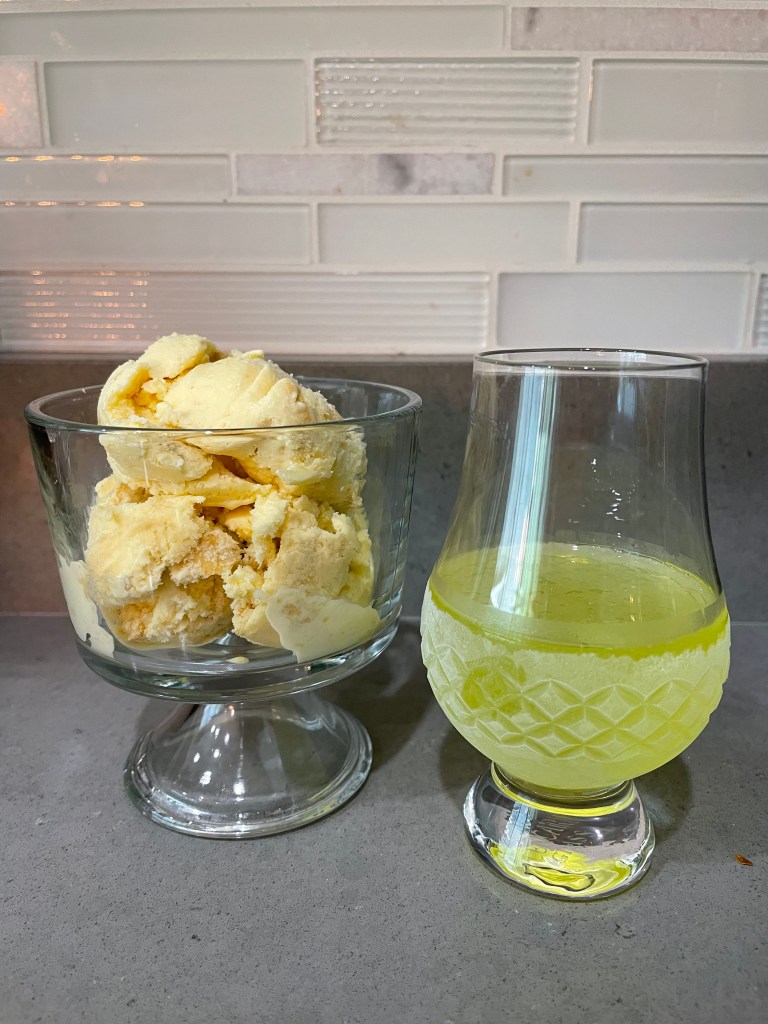
I knew back in June I wanted to ease the stress on my plate for the week of the 4th, especially in light of having to go to work the day after. I already discussed the menu I selected in my last post, PTSD & 4th of July Prep. Most of that prep went accordingly to plan, but we did forget the toppings of crushed chicharrones on the hot dogs and crushed peanuts in the salad. In these moments, I am a bit grateful to not be an food blogger; I am sure there would have been several comments about my mistake and perhaps many more about what substitutes I could use for 1) fish sauce, because people love or hate it, 2) Mexican crema, because people already have sour cream on hand instead, and 3) peanuts, you know, because allergies. Anyways, my family loved the menu, which makes me happy. It was easy to pull together in stages, allowing me the chance to spread out the labor ahead of the 4th and on the 4th so I didn’t feel I was held hostage to the kitchen. One of my favorite parts of making the meal was pulling the ice cream together. I’ve made ice cream for a few years now, but I didn’t realize I wasn’t preparing the custard to the proper temperature until this year. I used a thermometer instead of checking to see that the back of the spoon was coated. My guess is I was probably pulling it 10-20 degrees earlier than I should have because this year the custard was wonderfully thick when I checked it the morning after to put into the ice cream maker.

After enjoying our holiday lunch, but before digging into our ice cream, we settled into watching “Ender’s Game.” This past 4th was the first time I had ever watched the movie and I never read the book until 2005, after serving in Iraq. My husband, then boyfriend, introduced me to the book, along with Fahrenheit 451. It is not a bit ironic that both books are still relevant today as we watch the war in Ukraine continue to unfold and book censorship is on the rise. Ender’s Game chooses a very interesting way to approach “otherness” as it relates to war using an alien race rather than humans as the target. Being a war veteran, I also think the author’s use of young warriors draws parallels to military recruiting. There is a continued focus to weed out individuals with a host of disabilities or health issues, like allergies, so the fighting force is as ‘physically healthy’ as possible without considering that there are certain roles that could be designated as specifically state-side arrangements. If someone could not occupy a combat role for health reasons, let’s say they cannot eat MRE’s due to a food allergy, the military could still use their skillset stateside and this would just give them an opportunity to serve in the military. Maybe it wouldn’t lead to the same career success as someone who can complete combat tours, but why completely close off the chance to make use of their talents? I digress from my original objective of talking about the 4th today, but military recruiting is something I look at as part documentary/part horror story/part drama. There are so many facets worth dissecting.

My Fourth of July unfolded pretty much exactly as I wanted. For that, I am grateful. It was nice to start the day with a short run and a trip to Trader Joe’s for snacks and a gift for our daughter. Originally, I was thinking a bouquet of flowers, but they had the venus flytraps that she loves, so she got one of those instead. I quite enjoyed the squeals of delight from two toddlers present with their mother who also fawned over these while my husband and I were at the store. We shall see how long I can keep this one alive.

I stuck to my theme of red, white, and blue sans wearing flag apparel for the occasion. My friends and family can do what they want. I won’t judge them for flag apparel, but I am not comfortable wearing it myself.

While I was getting my makeup ready for the day, my husband finished prepping our holiday meal. He also made us a blackberry sangria to enjoy with our lunch. Trader Joe’s had 19 Crimes shiraz for $4.99 a bottle; I cannot remember what the package of blackberries costs us at the store, but it’s such a good time of year to pick up blackberries. The other drink he made for us was a peach sangria using the Oliver Winery Peach Pie wine we already had on hand. We paired limoncello with our homemade lemon Oreo ice cream.

As the day dipped down into evening, we stayed indoors to avoid exploding fireworks overhead on our walks. I do miss having evening walks this time of year since we experience triple digits during the day, but we already had one surprise firework on the 3rd and we needed a quiet evening at home. Leaving the tv on helps me cope more with the sound of fireworks. With the tv as background noise, I delved a bit more into It Ends With Us by Colleen Hoover. I struggled a lot with the beginning of the book, a recommendation from one of my best friends. The author’s introduction of one of the male characters just makes me want to scream to the female protagonist to get the hell away from that asshole. You know from the beginning the kind of person he’s going to be. The author’s saving grace of the story is her development of the male Marine. As you know, I have a soft spot for Marines, having served myself in the Marine Corps, and his character is what has allowed me to come close to finishing the novel. Once I am done with it, I will complete the companion novel, It Starts with Us. I was up until almost 11 due to fireworks, so it’s been a slow week of getting back to feeling like myself. But now that I am feeling more like me, I am looking forward to the weekend. There shouldn’t be any fireworks, we already have some fun plans for tomorrow, and I have a wonderful stack of novels, on top of these two, calling me to curl up on the couch because triple digits is no time to be outdoors.

~Cheryl
PTSD & 4th of July Prep

Good morning. We are closing out PTSD Awareness Month, and Pride Month, today.

Getting ready for the stress associated with the 4th of July is something that changes every year. During the pandemic I shared with my Instagram followers that I am trying to be more accepting of this day. (Note: I have made this account private now due to some personal reasons; occasionally, I do accept new followers on a case-by-case basis.) This day is the anniversary of my friend’s murder and originally after his passing, I found fireworks to be a form of solace. My opinion of this form of celebratory experience changed after serving in Iraq and being exposed to mortar fire. It might sound sacrilegious to say but I wish the observance of the 4th of July resulted in a three-day weekend like the bulk of our other federal holidays. It just makes life easier.

I don’t get my say on the matter, so instead I planned a simple celebratory meal and dessert for our day. We’ll keep the novelty fireworks to our usual sparklers. If you like a bigger celebratory, enjoy what serves you.

Here’s what’s on the menu:

Today is just a short and sweet check-in. This month has been busier than normal, but you are all important to me. I want you to know if you or someone you know struggles with mental health issues, you are not alone. I am 18 years into this journey with PTSD (although a bit less regarding being diagnosed) and there are good days and bad days. This week coming up is not my favorite–likely, it will never be. But I’ve made it through all the past 4th of July holiday festivities. My neighbors are going to do what they’re going to do. Let’s just hope they don’t lit fireworks past ten. I have work the next day.

Reflecting on the Deactivation of 4th Recruit Training Battalion Parris Island

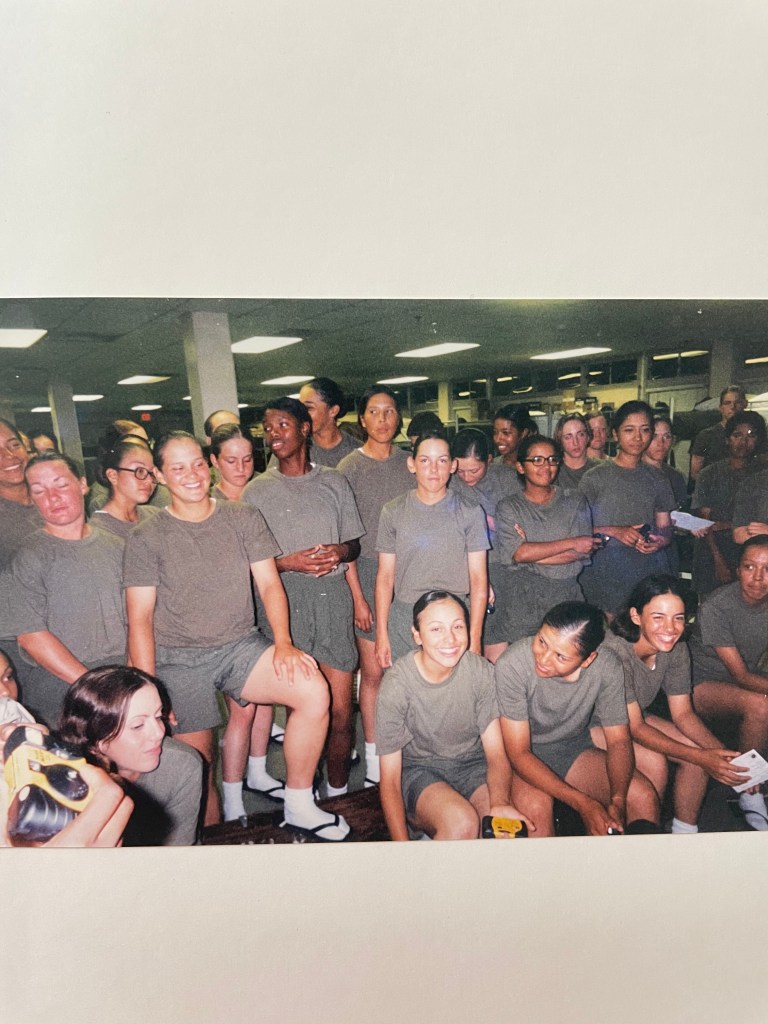
Tomorrow the training battalion I belonged to at recruit training will be deactivated. It is funny to think the training battalion is actually (but barely) younger than me, having been established in 1986. My journey with this battalion started in July 2003 and ended with my graduation in October 2003. Just shy of 20 years ago. The instructors we had for the bulk of our training were all female Marines, although we occasionally encountered male Marine instructors, like when we were at the rifle range.

For the Marine Corps to undertake this move is a big step towards positive changes in better integrating our service branch. From the time I served, I noticed how different some men perceived their service because they occupied male-only duty assignments. But their service experiences are just one facet of how the Marine Corps operates; in fact, how all our service branches operate. All our work in Iraq and Afghanistan the past two decades provides sufficient evidence the military needs female service members serving alongside our male counterparts in roles men cannot occupy due to gendered cultural differences in these societies. This reality is an important reminder to our own society we needed to revisit expectations of women in the military. The Marine Corps is, like all the times before, kind of the last kid in the family to change how it behaves.

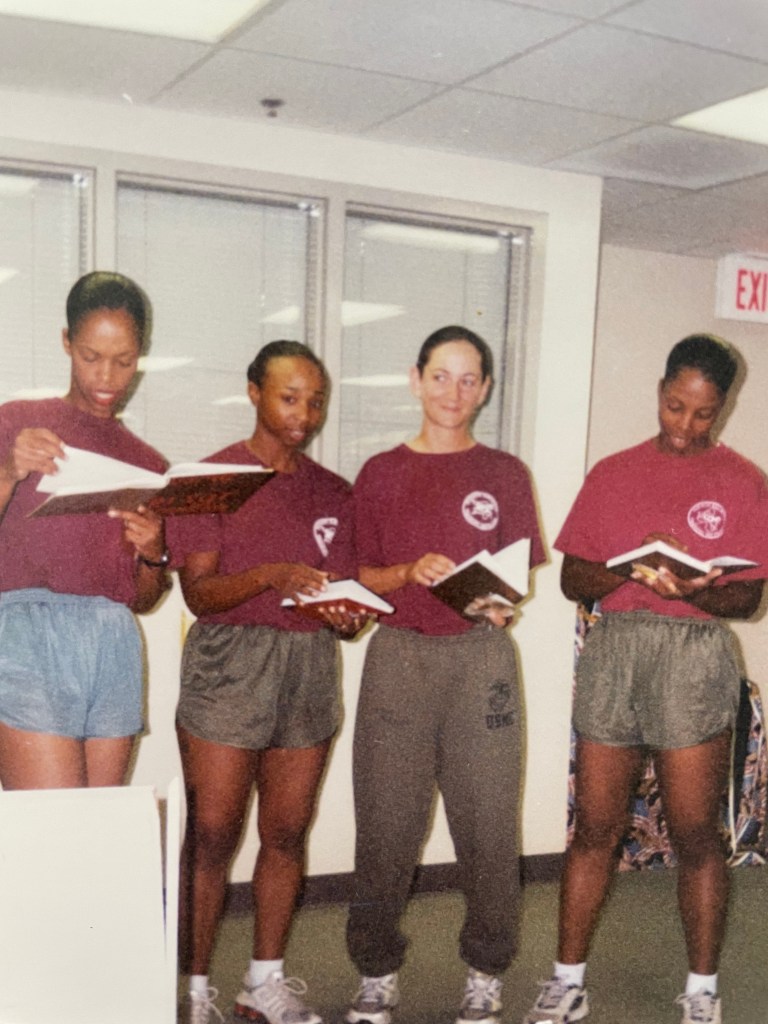
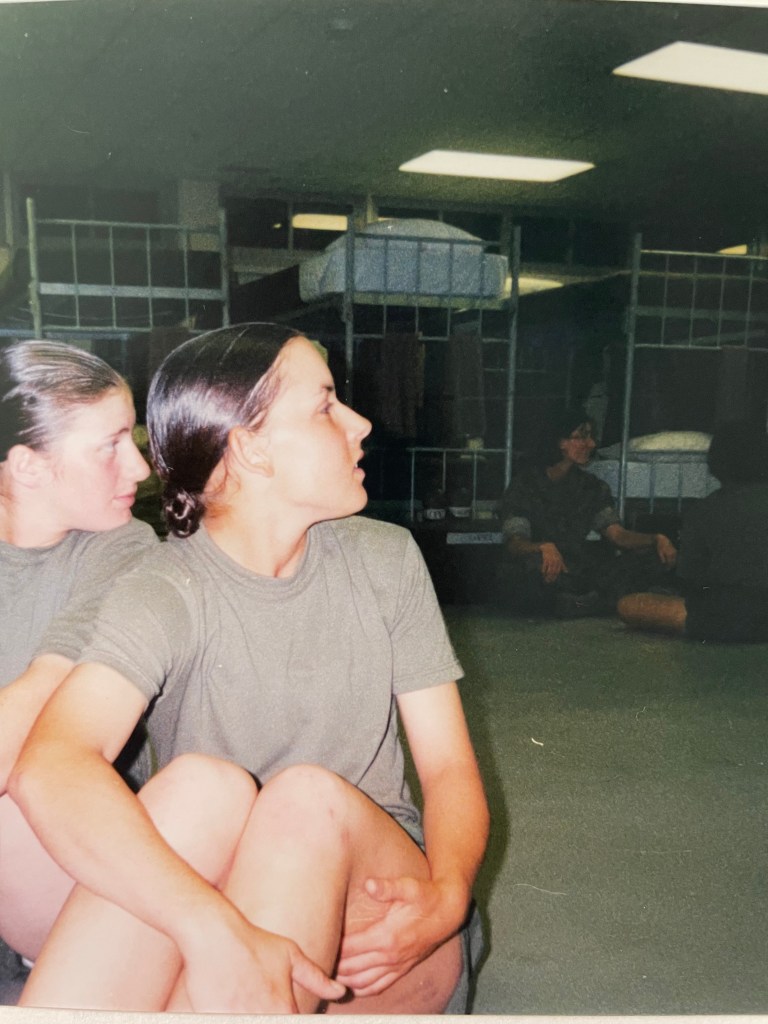
I look forward to learning how the Marine Corps improves with this change, but for now, I wanted to share a few photos from my days at Marine Corps Recruit Depot Parris Island, South Carolina. The Marines below helped shape us into the adults we are today. These women taught us how Marine Corps history and traditions, to wear our uniforms with respect and carry ourselves like Marines, and on more than one occasion, corrected our shoulders, wrists, and hands, as part of drilling and handling our rifles. It is a special kind of brutal love for doing the job well. There is no other experience in my life where I’ve had someone once a stranger occupying so much of my personal space. The rigors to become a drill instructor are worst than they are to become a Marine, because these individuals are tasked with teaching people to assimilate into an American subculture and accept the burden not only of being a representative of that service branch but also the consequences, to include perhaps paying with your life, in the interest of keeping others safe.

We were still very much kids when we graduated, but we accepted the title of U.S. Marine the day we graduated. 20 years down the road, I am smart enough now to know becoming a Marine is not the most important thing I will ever do, but the role it played in my personal and professional development cannot be ignored. Adopting the duties and responsibilities of a United States Marine changed the trajectory of my life, but it was up to me to continue to move forward after I separated.

Boot camp is one of those experiences we should treat on some level like other early adult experiences, like starting one’s first job (because for some it is) or leaving for college (because there is a lot of knowledge gained during this experience like a college semester). Boot camp is an avenue towards the person you hope to be; your experiences are aided (or hindered) by the educators you have and your willingness (or disinterest) to learn/in learning. I wasn’t the best recruit, having to learn along the way my timidness was often an impediment to various physical challenges set before us, but I became a better Marine because I never stopped observing my settings and the people around me.

One of my fellow newly minted Marines (left) and I

My observations of the Marine Corps may end some day well before my passing, but for now, I still find it interesting to see how the organization changes. The deactivation of my former training battalion gives me another way to understand my own service experiences within the greater context of my country; it also gives me another way to understand how our society is a reflection of the times we live in. I won’t be present tomorrow for this celebratory event, but I hope all in attendance feel proud of the moment they are experiencing.

For me, I am enjoying my new career journey. Working from home again has been a great pleasure and I am starting, in baby steps, to feel like I am where I am meant to be. The Marine Corps helped make this opportunity possible and after hanging up my uniform that helped me blend in with my peers back in 2007 , I am having more fun now with my wardrobe, something I never fully explored in my 20’s. (I still keep a few camouflage uniforms in my closet for memory purposes though.) Next year I’ll turn 40, so it is a good time to appreciate what 19-year-old me accomplished at boot camp and what that recruit training did to open doors for me as this places closes a door in its history.

Customer Support Triage: Why do we ignore its importance?

If you had the honor to talk to me in late 2021, you might have known how happy I was to quit an underpaying job in private higher education to obtain my goal of working for the federal government. The premise of my job–certifying students’ semester enrollment so they could be paid their Department of Veterans Affairs education benefits–wasn’t the problem. The problem was I didn’t like my direct boss, like many Americans. I didn’t like the lack of a built-in career ladder for that role; I couldn’t take all the years I spent certifying these benefits to move up to a coaching or supervisory role. Said boss wasn’t moving out of her role and presenting an opportunity to take over, to do it better. These things left me stuck with two realities. Sticking it out as an underemployed person, being paid roughly $43,000 a year, felt like earning my two graduate degrees were a complete waste of time. The second reality was to find something–at that point, anything–that brought me up a ladder rung. I didn’t care what the ladder looked like. Rickety? I’ll break a leg, but it might be worth it. Would I climb it blindly now? Yep. How much worse could it be over being paid crap wages again and a long commute to a sketchy part of Phoenix on my in-person days? Was it propped up artificially by something I might discover at a later point in time? Maybe, but tomorrow me could handle it.

Gambling with my career future turned out to be more problematic than I expected.

The temporary elation I felt about having finally “made it” into my dream work industry wore off quickly. Like a piece of fast fashion, nothing about the opportunity felt made to last.

Not everyone will feel this way, so in sharing my sentiments about working for Social Security Administration, please understand that some people love what they do to serve the agency and its customers. If they don’t love what they do, many are willing to suck it up for the opportunity to be paid well. An an example, my career ladder at SSA was GS-9/11/12. Had I done well, the first step at GS-12 in our local area pays $86, 343 effective January of this year. If you have expensive dreams, a number of dependents, or constantly feed lifestyle creep, that amount of money doesn’t go far. Being who I am though, I choose to value dreams and happiness over the prestige of being a GS-12 at one of the local SSA offices. (Over time, I can hit this career milestone somewhere else, so I am not giving up the opportunity, but looking at where it presents itself.)

A GS-12 at SSA was not worth it, to me.

I was at odds with the way the agency is ran, and it was hurting me as someone who values being a working professional. When I first started applying for federal jobs in 2012, SSA was not high on the list. Even when I wavered about whether federal work would serve my longterm career interests and I moved to sporadically applying to federal jobs, I couldn’t shake my feelings about SSA. Being a rather uninformed person without a lot of contacts who were collecting Social Security, I didn’t have a lot to go on other than gut feeling it was the wrong workplace for me. Fast forward to the 2021 version of me, tired of being underemployed and willing to give it a chance, I put on some heavy blinders to receive a pay bump. I stuck it out a little over a year and three months, and I have no desire to go back to the agency. I am outlining my problems with the current operation from my narrow perspective; some of what I see as problems are, in another’s eyes, positives. There are many opinions on where we should focus governmental funds, who is deserving of help, how they should be served, and so on. I cannot appease everyone with my opinions, nor do I expect to do so, but here are my problems with SSA as the agency stands today.

America has a difficult relationship with SSA spending, and it shows when you work there.

Spending reveals itself in how work is managed and how things are maintained. Based on staffing levels, not only at the agency but from what I was told from how understaffed Disability Determination Services (DDS) was also undermanned, it was important for me to pre-interview my contacts and if it was determined they didn’t met eligibility standards, I could take an abbreviated application. (What would have been more useful was having a consistent and effective pre-interview phone call with interested applicants and let them take an abbreviated application at that point-of-contact. No one should be making an appointment a month or two down the road when they could be told in 10 minutes they aren’t eligible!) Each person I could technically deny, whether he or she had an insufficient work history to quality for SSDI or received too much income/support or had too many resources to qualify for SSI, meant my time was freed up to serve someone already receiving benefits. My “free” time was then available to stay on top of incoming paystubs to keep SSI recipients’ payments as accurate as possible; I worked (more towards the end of my time there) learning the SSI overpayment process; or the agency then had me at its disposable to cover front-end interviews for Social Security Number cards when it was short-staffed and in-person activity was high and they’d pull any person not interviewing or on phones to clear the lobby.

Aside from the workload feeling untenable as a trainee, seeing the lack of investment in the agency and the trust of its people additionally felt awful. Simple things like waiting for the agency to repair a broken parking lot gate arm so as to prevent the employee lot from being used by customers or how office supplies are locked up and only managers are allowed to distribute Post-Its. Even the two fridges in the communal break room, as I learned, were purchased from employees’ shared contributions. The agency also did not pay for the microwave, water cooler, or coffee machines. People donated what they had in excess or chipped in to make these modern conveniences available.

From my educational background perspective, I don’t feel it makes sense to treat the agency’s lobby as an emergency room of sorts. The walk-in service is grossly problematic over the inconvenience sometimes seen in appointment based services. People would gripe constantly about having to wait out in the cold but worst still waiting in the summer. Who wants to bake in the 115-120 degrees Fahrenheit sun? The lobbies are small, so outdoor waits are normal. Looking back, I think our lobby capacity was something like 53 persons. There are no outdoor shade structures, benches, or seats for clients to utilize. Not surprising given that over the years across the United States more and more places pare back or making rest structures uncomfortable so as to deter the chronically unhoused from resting there. An increased ability to utilize online services doesn’t mean all persons who are capable of taking advantage of those opportunities will do so, which would reduce the delays experienced by persons lacking internet access and allow the agency to better serve non-English/limited English speakers who cannot use or don’t fully understand our English-based applications.

In advocating particularly for our limited/non-English speaking and deaf customers, the lack of planning appointments out properly means that these seem to be the groups most disadvantaged by policy. I was told my goal was to take a disability claim in an hour and a half. Anyone belonging to one of these groups needs more time because there is an intermediary serving as our translator. Instead, the goal was to pack an appointment day with 4 disability claims. The most I was ever able to manage was 3 appointments, and none of those days went smoothly. Some people need an SSDI application, an SSI application, a representative payee application, and have a household with 5-10 individuals. That’s a lot of development needed. Oh, and you want to add a translator to one of those appointments? Six hours of the day eaten up by those generic pre-determined time slots. Take away 2 15-minute breaks and a 30 minute lunch. There is only a one hour leeway for mistakes/miscommunication/working around computer failures/planning ahead of the appointments to help them all run more smoothly. (And there are days that free hour is just gone if there’s an employee meeting that could have been better served by an email.) I wasn’t good at handling the stress of it all, feeling like my soul was being crushed left and right. There were a lot of weeks I despised my job, and some days those policies were exacerbated by hostile clients. Ultimately, I decided it was in my best interest to leave so I could go back to feeling like myself.

Not everyone gets to walk away like I did. I feel bad for those clients I really wanted to help because the systems in place don’t have their best interests at heart.

Our nation’s workforce with the goal of maximizing financial gains is designed to keep a lot of individuals with disabilities out of the workforce or in a state of underemployment, and if they don’t have family or friends to support them, they need financial assistance through SSDI or SSI to get by. Living in the United States means confronting this system that devalues people and then is left wondering why no one wants to work in that role/agency/industry or stay that along. We’re tired. Seeing the inequality is one thing, but also helping support it in some way is demoralizing. People most reliant on community support are paying the high cost of being served in a way that doesn’t address their unique circumstances. They’re the ones most in need of appointments built around when they can take time off from work, can access public transportation, or a suitable friend or family member can take them to the local field office. People are inhumanely waiting outdoor in these long lines, with no access to a restroom, until they can get in the building and get an appointment number. Some are even too nervous to use the restroom while waiting in the lobby for fear of being passed over and having to wait longer. They are the ones that would come to the interview window and ask permission to go relieve themselves, adding more time to a system that’s been clocking their wait time since they got an appointment number. (Yes, their lobby wait time is measured. The length of their phone or in-person visit is tracked. If you’re a non-responder, yep, that’s recorded, too.) Getting back to the heart and soul of service though, some people deserve more help than others and I couldn’t keep fighting for the system that exacerbates the problems of the poor and disabled, treating them like a homogenous group.

Why should the American worker whose family is reliant on her staying employed in her low wage part time job, leaving her little time to improve her English speaking skills, get the same hour and a half long phone interview slot for her child’s SSI claim as the recent college graduate who has internet access and a computer, but didn’t feel compelled to complete his disability application online in spite of being fully able to do so?

She needs the support and he’s choosing to consume it.

Customer support triage is not impossible in this situation, but it does require ignoring some rules we’ve commonly accepted in life. In this case, we need to teach that supporting the most underserved in our community means addressing equity over equality. We don’t all need the same support, so it should be funneled towards where it is needed most and the frontline workers assisting them need to have their needs attended to as well so they can perform to the best of their capabilities. Adjudicators need permission to schedule longer interviews, when necessary, and that can be planned out at first contact. These centers that have disproportionate queues should have the chance to explore appointment days again, like what was implemented during the pandemic. If someone misses their appointment, all the appointments that want to move up and get seen earlier get the chance to do so, giving some freebie slots in the afternoon for the occasional walk-in service. I don’t feel these are difficult things to ask for, and perhaps, if given the chance, might do some real good to turn around SSA’s image and rapport with its customers and employees alike.

A Life of Fullness

Today, on my way to work and on my way home, I listened to The Financial Confessions podcast’s “Burnout, Boundaries, and the Lie of Consumerist Self-Help.” A little sprinkle of advice that we often hear from our parents: you don’t need to spend money to fit in with others and you shouldn’t feel pressured to conform to social standards. Their messaging, wrapped in different language choices from how my parents have spoken of my potential and place in social groups, provided a nice little reminder I could probably use on repeat once a week. Year after year, I’ve sought to hit the next rung on my career ladder and worried too much about how my life compares to that of my peers. The earlier steps were “easier.” Or they felt easier. It is easy to forget who I was at 16 applying for my first job. I carried around a lot of nervousness. Putting my name and some basic information about “qualifications” on that paper application did not make me feel like I was a shoe-in for the cashier job I ended up working for roughly two years. Really young employee me would probably laugh now that here I stand, on the cusp of turning 39, still a nervous person when it comes to interviews of any kind. (I’m talking jobs and friendships alike.)

I loved listening to this episode today because it represents another message telling me it is ok to avoid living life like everyone else. Maybe it’s not the same construct as Eve Rodsky’s Find Your Unicorn Space but the message is pretty close in sentiment. We live in a world that constantly eats away at one of our finite resources: time. This same world is also always encouraging us to spend money, one of our other finite resources, in a quest to show off who we truly are (or want to be). Listening to this podcast today was a wonderful compliment to the one I listened to yesterday on my way home: The Lazy Genius episode #294 How to Celebrate Your Own Birthday. I didn’t plan a week of catching up on podcast listening, but the two podcasts hit me at a moment when I needed a break from my favorite rock and pop songs to fill my commute time.

Given that this year will be my last year in my 30’s, I want to be an example to others that just being you is enough.

For me, it’s time to be done thinking of a career as rungs on a ladder and that ladder you hopped on at 22 or 35 representing everything valuable you contribute to society. I’ve seen for far too many of us, it is a stepping stone at best and for others, it’s an anchor weighing them unfortunately down in a less than ideal spot in life. Yes, we can go up and down a ladder as much as we like in many cases, but some ladders don’t fit where we need to go. Maybe we should start thinking of a career as a hobby farm. We can plant a few things here and there and see what works for the space available, our individual attention span, and personal tastes. We get to enjoy seasonal fruits. We can share the excess value of my contributions where they might be best appreciated. A part of me wishes I had thought of my working years a bit more this way ages ago, but it takes the right influences to nudge my confidence level from “timid newbie” to “What the hell…let’s do it!” At a minimum, I have 23 possible years to accrue more earnings to meet my retirement goals; I could stay on part-time in my 60’s if I find value in the work or find I need extra money; and lastly, it’s always possible, my career journey ends abruptly and I am reliant on disability benefits to nudge my budget away from the red.

Based on where I am today–both in my career and budget–I wanted to mention how much happier I am now that we’ve pared back on mindless spending. This step away from the immediate gratification culture I am often confronted with has really changed my life more than a number of other choices available to me. One of my biggest spending mistakes was my previous obsession with self-help books in my 20’s. Some of it might have been that the genre was doing quite well with publishers at the time and some of it might have been not accepting the fact my post-deployment life didn’t fit the way I wanted it to at the time. I didn’t feel like I was grown up after Iraq. I didn’t feel like I fit well in the Marine Corps’ rigid structure. I didn’t feel like I was part of my friend group from back home and college either. Being lost looks different for everyone and it’s kind of disappointing to realize society is cultivating this idea that conformity is the end goal–but only until being unique becomes marketable again. Around the time that I accepted I didn’t need someone else’s acceptance, life shifted. I realized the Marine Corps was a chapter of my life, one that I could reread over and over again and take new meaning from. If I had stayed in, I don’t know that I would have learned to appreciate money they way I do now.

The podcasts I listened to this week made me feel proud again of my individuality. I don’t have to fit anyone else’s aesthetic. I don’t need to treat my aging body or my true age as something to be ashamed of and there’s no shame in celebrating my journey a bit differently. My body is not a trend to aspire to nor should my way of perceiving the world. We would be lost if we all looked, sounded, and talked the same. My interests don’t need to be trendy and I hope yours aren’t either.

As something who often hates being asked “Tell me about yourself.” I know that who I am is someone I found.

I was once lost because I kept trying to meet goals others projected onto me. Those goals hurt my love of education, how I felt about my body, personal relationships, and career interests. Once I started to care a little less what everyone thought, I started to understand the body, mind, and spirit that make up who I am. This short stature means I often need help; it can take the form of ladders, but most often, it means politely asking a taller person to put something within my reach. My mind is not dented because the hardship of serving in Iraq resulted in PTSD. I am more empathetic than I was before and small details catch my eye a bit better. (Granted, typos happen. I’m working on being a better editor every day!) My love of reading improves my mental state and while I’ve traded in fiction for the allure of reference writing material and memoirs for the most part, I find all reading to be valuable. My spirit is clumsy. That brain-mouth interaction fails me often and my spirit who forgets to pay attention often results in me falling up and down the stairs. My clumsiness is part of my charm–and bruises are evidence I lost a fight here and there with a chair, the dog who ran into me, or the counter that never moves out of my way.

The next couple of steps in my future might not be easy in my quest to embrace my individuality even further, but I’ve faced obstacles before and felt like I didn’t fit in. I don’t care to compete with others (been there, done that) and it’s getting old hearing stories to press on, regardless of the costs. I am happy to hit a year where I am ignoring the hustle culture messaging. Sure, there’s always more money to be made, but I constantly see people with a lot more and they aren’t happy. They just keep changing the goal post they call ‘happiness.’ Maybe it’s $70k a year. Maybe it’s the 3,500 square foot house. Maybe it’s x number of vacations a year. Their dreams are not my dreams, and I refuse to envy them anymore. It may take some time to stop reading an article here and there on some odd case, but I will eventually do better. The life experiences that generally make me happy and feel like I’m living the life best suited for me are pretty simple. Here’s what my full life looks like today:

Family

  1. We almost always eat dinner together.
  2. We take turns doing the dishes.
  3. We don’t raise our voices when we’re angry.

Work

  1. Avoiding handling money.
  2. Keeping my commute to a minimum.
  3. Ample PTO/sick/vacation time.

Writing/Reading Goals

  1. Give me a vocabulary challenge.
  2. Help me see how to better portray my own lived experiences.
  3. Mix things up with easy reads and long-term reading projects.

Friends

  1. Gather for fun experiences (with and without alcohol).
  2. Improve my recall of important dates and checking in.
  3. Avoid gossiping.

Vacationing Like an Adult: Financial Transparency in a World Full of Influencers

Vacations are dreamy.

You get to leave behind waking up early, commuting, crowded communal fridges with questionable smells, and the exhaustion of irritated clients who seem to get more nasty in their behavior and word choices every day.

Vacations are the kind of magic grown ups get. We traded in beliefs that Santa Claus, the Easter Bunny, and the Tooth Fairy exist for a world of rooms that seemingly clean themselves (thank you to all the tireless janitorial and maid staff). Our child selves who once craved to be a new profession every day revel in our adult escape from our true professions. Maybe we are underpaid, under appreciated, or overworked. Or all three. Any way, we get to abandon that worker identity for a set period of time. After all, how many people ask you on vacation What do you do? None, right?! It’s a bit magical to move about in your private albeit borrowed space enjoying your extra sleep, the views and food, and literally being waited on. The pampering is worth the cost.

So why do so many influencers stay quiet about the funds it takes to get to some of the places they visit? Maybe it’s their way to avoid dimming the magic of the trips they go on but shedding some of that mystery has a real purpose. You can inspire people to save up for their dreams by showing them some of these amazing venues are less out of reach than they might imagine.

Today I will provide the behind-the-scenes look at our recent California vacation. We stayed at Terranea Resort in Rancho Palos Verdes, a place we’ve never visited before. Although we were in California to participate in the WB Studio Tour and check out Wizarding World at Universal Studios, we choose to stay here for the ocean views and the food choices. An added bonus is the entire resort campus is non-smoking. People could not smoke tobacco products or vape either. My personal belief is a lot of public accommodations need to adopt an entirely smoke free environment.

My only struggle with the resort was the amount of staff members eager to greet my husband’s service dog. The resort is exceptionally dog-friendly and staff often missed the fact Gregor should be left alone even though he was wearing his gear identifying him as a service animal (not a requirement, by the way). Here is a peek at their resort policies on dogs and the resort fees I’ll share about later.

As the costs of many things rise in Arizona, we also realized planning for this trip meant planning for California prices. The allure of AirBnB’s has dimmed in our eyes based on the amount of extra cleaning fees being tacked on for stays even though you clean up before you leave, so staying in California meant planning for the aforementioned resort fees, parking costs we might incur, and pre-made meals that add up for a family of three. Of the on-site restaurant options, we grabbed drinks and a light breakfast at Sea Beans; our casual dinner was at Catalina Kitchen followed by a breakfast buffet there; but Bashi was the all-around favorite for us. We went here for New Year’s Eve and now I kind of wish we had done our second dinner there, too.

Bashi won out both for the amount of dairy free dishes (more on that in a minute) and the portion size. The wok fried garlic noodles ($18) I enjoyed was substantial enough to be my dinner, a small side for my husband, and our breakfast the next morning paired with the bit of leftover Peking duck from his dinner ($75). In all fairness, I forgot what our daughter ordered for dinner, but we all left satisfied with our meals, the two Americanos and one Ramune strawberry soda, plus the leftovers and the to go orders of mochi and a slice of vegan meyer lemon cheesecake. This one meal, $210 with tip, represents the bulk of what we spent on dining at the resort. Our resort savings on food is all courtesy of being Amex members; travel is something we want to enjoy more so it made sense for us to explore rewards options, but this blog post is not sponsored by any of the businesses mentioned today. We set aside our own funds over a few months to make this New Year’s Eve trip possible. For others looking to replicate the experience, their timeframe to save may be shorter or longer.

My personal failing over choosing Catalina Kitchen is centered on not looking at the menu earlier. Nearly everything had butter or some sort of cheese. I do bring lactase enzyme tablets with me in case there are dishes that might have accidentally been prepared wrong when I ask for a dairy alternative. The medication is not always helpful so the safer thing to do is hunt for other menu items. At Catalina Kitchen, I requested the sautéed spinach be prepared with olive oil over butter and I paired my $9 side dish with $22 tuna tartare. I also requested the avocado be removed because that fruit started to make me sick back in 2014. If you want to look at how poorly I prepared for the weekend, check out their menu. It’s a dairy heaven for some and nightmare for someone like me trying to avoid it.

I will take a moment to mention we’ve cut back on ordering alcohol when we dine out. Looking over the lobby bar’s menu, if I had decided to buy something, I probably would have picked the Holiday Fashion ($16), made with Bulleit rye, the Fireside ($20) made with Woodford Reserve bourbon, or the Shunka Shuto ‘Four Seasons’ whiskey flight ($40). Notice a theme? Or two. Or three. I love trying out holiday and season inspired drinks. Even more, I love trying out bourbon and whiskey drinks. Better yet, is saving money for something that matters more. As drink prices creep up to the same as entree prices, we choose to pair back on social drinks. The small bottle of wine in our room was enough to celebrate our NYE holiday weekend. The bottle of Sonoma-Cutrer Russian River Valley 2019 pinot noir paired well with our evening of partially watching Robert Pattinson in “The Batman”. We fell asleep before ten and I was awakened by revelers outside screaming Happy New Year’s at midnight.

Now that I’ve gushed a bit about food and drink options, here’s what really brings people to this resort.

The pandemic made us hold off on travel for so long, it is only natural to want to make up for the lost time. Doing so with an eye on the budget did not dampen the experience at all. Granted, California was more rainy than what we hoped for when we planned the trip. We watched the wind take over the area, witnessed streets littered with palm fronds, and waited out pockets of rain to enjoy what I share with you today.


WB STUDIO TOUR

My love for the show “Gilmore Girls” is why I wanted to do the WB Studio Tour over the holidays. This show was my go-to entertainment during my separation from the Marine Corps and has remained one of my favorite shows to this day. Walking through the set was more fun than popping into the Friends Central Perk set up; I loved “Friends” growing up (still do), but the show does not have the same energy the way “Gilmore Girls” steals my heart. Sookie is my favorite main character; I love how she always creates something fabulous (with the exception of when she was pregnant and did not know it yet!). Her love for other people really shines in her cooking; I love seeing how what she makes for individuals in her life represents them so well. If there was someone who taught me that cooking is a craft, it is her.

There wasn’t a way to pop into Luke’s Diner, so we got 3 orders of tator tots ($19.84) from Al’s Pancake World and sought refuge in the church from the wind and possibility of more rain.

(These photos are a small collection of my overall experience. Ones like my family photo in front of Luke’s Diner will remain private to respect my husband’s and daughter’s privacy.)

And yes, I have a favorite boyfriend. Rory’s boyfriend, Logan, will remain my favorite. For all his flaws, I think if the show had gone on to show how he matured after some early adult personal failures, others would love him as much as I do. I am still hoping he’s Rory’s baby daddy.


UNIVERSAL STUDIOS

Our trip to Universal Studios was more expensive than the WB Studio Tour and being a person terrified of roller coasters, it was not the best use of my money. Seeing Wizarding World was neat though and my lunch at the Jurassic Cafe was as great second choice (my first choice was the harvest stew in a bread bowl). The citrus glazed chicken ($17.99) was served with a cranberry chimichurri, papaya slaw (clearly mine was missing!), and rice and beans. I do wish more places were required to list ingredients in full, so it’s easier to find out what has allergens. I took a lactase enzyme in case there was dairy in my meal; you can never be too careful!

To walk around this area, it is best to explain you are wandering around one of the prettiest shopping centers. I would have loved for it to have more of the feel we experienced at WB so the Warner Brothers Studio Tour London The Making of Harry Potter is something I think we should save up to do one of these years.

NOTE: I ordered the frozen butter beer non-dairy. With the cold California weather, I should have looked into heading into the Three Broomsticks to order the hot version. Whether you order it frozen, hot, or original, the drink is $8 before tax.


Below is the rundown of our categories. I will say I tried to over budget ahead of the trip. I assumed gas would be $5 a gallon, but it varied from about $3.39 or so up to around $4.29. We saved a little on resort fees, but I cannot recall if the credits we had for that are also part of our travel rewards. I should get better about budgeting for parking; I said this last year, too, after our 2021 trip to San Francisco. There was a $15 charge for parking at WB Studio and I feel that should be rolled into the ticket. Our decision to valet the car at Universal Studios costs $50 plus the $5 tip. We still stayed under budget for the whole trip which is what really matters.


BUDGETEDACTUAL
ROOM$1868.64$1868.64
RESORT FEES$150.00$135.00
NYE DINNER, RESORT DINNER,
BUFFET BREAKFAST
$565.00 ***$314.00
ROAD FOOD/PARK SELECTIONScombined with previous$155.69
WB STUDIO TOUR$207.00$207.00
UNIVERSAL STUDIOS TOUR$402.00$402.00
TRANSPORTATION$175.00$163.68
PARKING (ended up with 1 reg, 1 valet)$0.00$70.00
TIPS (out of personal cash; room/luggage)$0.00$9.00
SOUVENIR BUDGET *Our daughter bought other souvenirs with her money.$95.00$91.40
TOTALS$3,462.64$3,416.41

I bundled up for New Year’s, but the jacket was a perfect outfit addition.

Wishing you all a great start to 2023.

~Cheryl
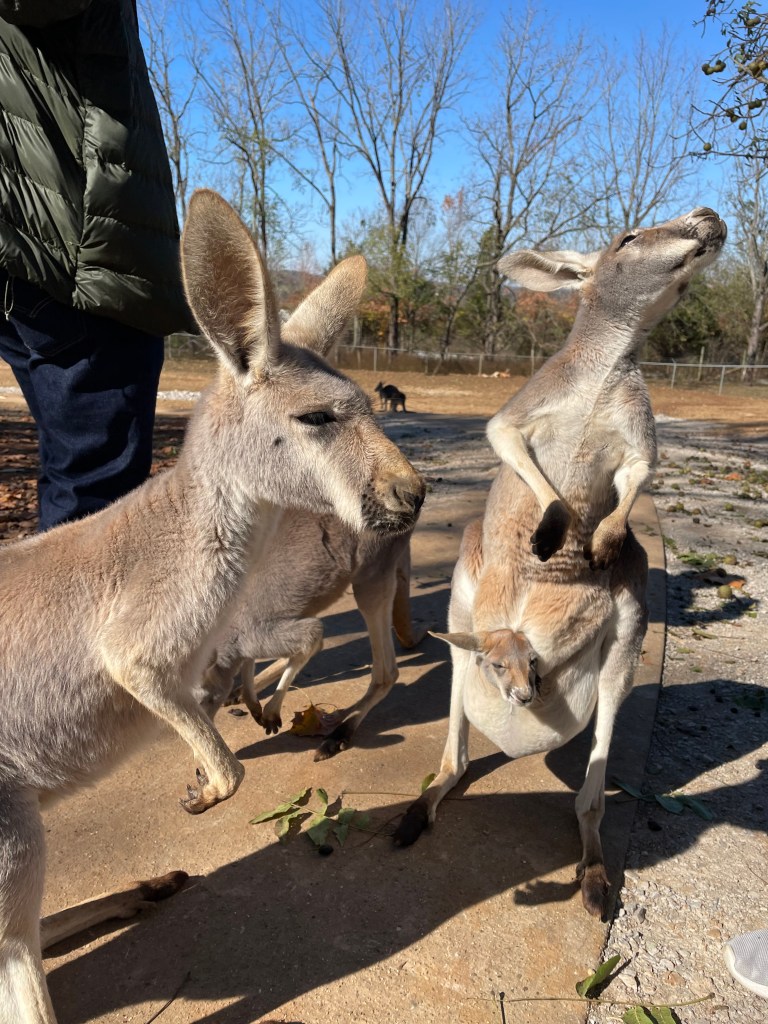
Looking to Write More in 2023: My Why

2022 is almost over.

I am a bit more than grateful to see this year end. A few unexpected health challenges in the form of an ovarian cyst that burst in the spring and dealing with carpal tunnel this late summer/early fall plus losing our 2-year-old dog, Radar, presented some major disappointments. 2022 has not felt like a year full of hope and joy, so I’ve been working on turning around my attitude in the face of adversity. Writing helps me refocus my energy and I love reflecting on my journey of personal growth.
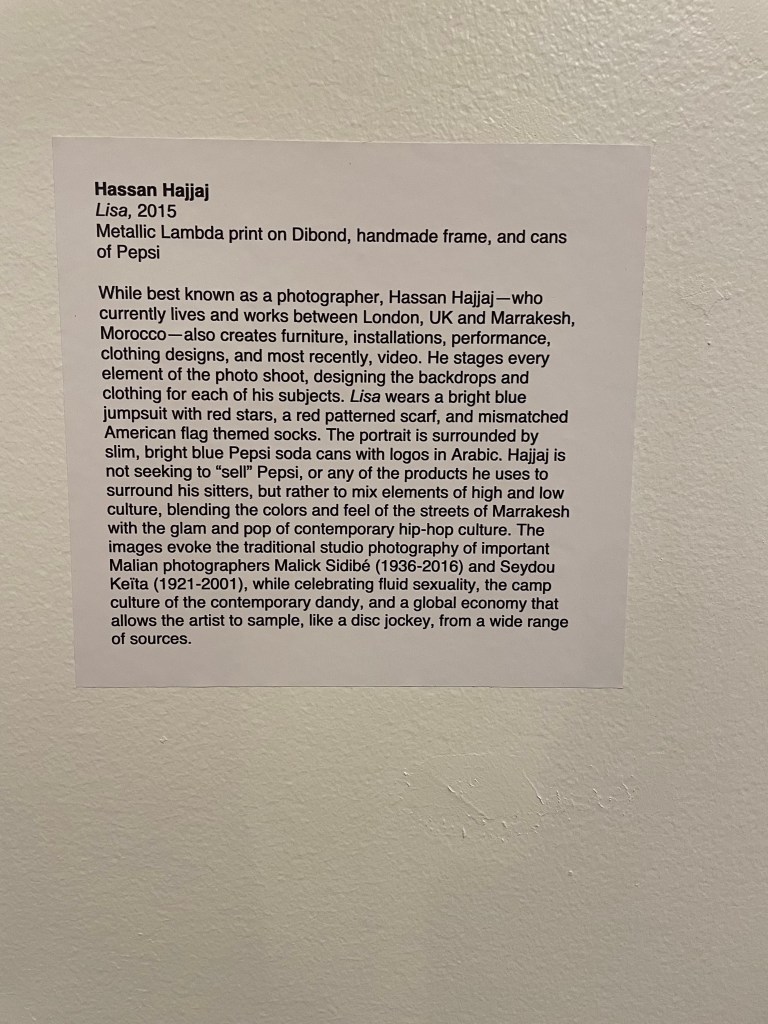
Here are some things about 2022 that remind me this year wasn’t all bad:

  1. We made two extra partial payments on our mortgage.
  2. We set aside enough money for a mini vacation. (More to follow in January.)
  3. We’ve regularly set aside money towards a 2023 fall vacation to see friends living out-of-state.
  4. I found no cost writing inspirational materials courtesy of a local public library:
    • Naked, Drunk, and Writing: Shed Your Inhibitions and Craft a Compelling Memoir or Personal Essay by Adair Lara
    • The Prodigal Tongue: The Love-Hate Relationship Between American and British English by Lynne Murphy
    • Steering the Craft: The Twenty-First-Century Guide to Sailing the Sea of Story by Ursula K. Le Guin
  5. Many of the new recipes I’ve tested are quickly becoming family family dishes.
  6. My friendships at work at thriving as are my friendships outside of work, making Arizona feel more like a place where I belong.
  7. My family and I are trying to be better about staying in touch. (We do just fine on social media, but we’re more of an in-person bunch and everyone avoids picking up the phone.)
  8. I found new vegan cheese options I like:

My journey with carpal tunnel syndrome is not over, but I am finding the condition easier to manage. On days where it hurts a bit to type, I throw on my arm brace for a good hour or more. It’s not like I am backpedaling and needing to wear it everyday and I take that progress as a good sign. My weightlifting journey will take a bit more work to get back up to my former strength level and I’ve accepted that situation is something I cannot change.

As I mentioned earlier, writing is that tool in my tool box that helps me reflect on where I am today, my future path, and the spaces I’ve occupied in the past. I seriously considered getting a dictation technology to help me move forward with my writing due to dealing with carpal tunnel, but right now, it’s looking like I may not need that option just yet. For work, I get by using an ergonomic keyboard. At home, I try to be mindful about using my phone to draft small notes for my writing projects. When typing on my phone for more than ten minutes or spending more time typing on my laptop, I usually wear my arm brace. The end goal being yours truly is going to keep up writing, both because my work life requires it and my personal life is fulfilled by this activity.

Now I have pretty sloppy handwriting, but I had to scribble this little sentiment as I listened to Find Your Unicorn Space by Eve Rodsky on Audible. (No ad talk here. It was a purchase made from our own wallets.) I love that this piece of knowledge that was shared doesn’t quantify success as a writer. It’s not about the size of the audience. It is not about the amount of money one earns by selling their writing. It is not about being a professional or amateur writer or a student in the classroom. One can be a writer without worrying about how the world perceives it. The notion of enjoying the journey and less the accomplishment (i.e. the published book or articles) is something I’ve needed to work on appreciating more. The times I’ve wanted to focus heavily on completing the memoir in X timeframe, my writing suffers. When I take my time to think of what I want to say, reinforced by ideas springing up from reads like those mentioned above, my writing better expresses who I am.

I want to roll into 2023 feeling more like me. Right now, I occasionally make time to write once a month here on the blog. I won’t call it a resolution, but I think it would be nice to get back to writing more. I don’t promise two or more posts a month, but I plan to write here and there what speaks to me. Since this passion project is an unpaid endeavor, maybe that will mean a good post is 300 words and another month what I wish to share, equally good in a different way, will be 800 words or more. I realize I’ve been too harsh on my writing practice. The freedom I have by writing what I want versus others who are paid to write to hawk a product or service is a freedom I haven’t explored as much as I should. This active pursuit of public writing started back in August 2014, so I guess the best thing to say is I’ll see you again in 2023. I love writing for the sheer love of personal expression and that’s my why to keep up this habit.