
Iceland—a bucket list country to visit for many—landed on our radar as a place to visit for a milestone anniversary. The timing of the solar eclipse added another element of selecting a cruise to visit this (expensive) country over less cheaper options for our first family trip abroad.
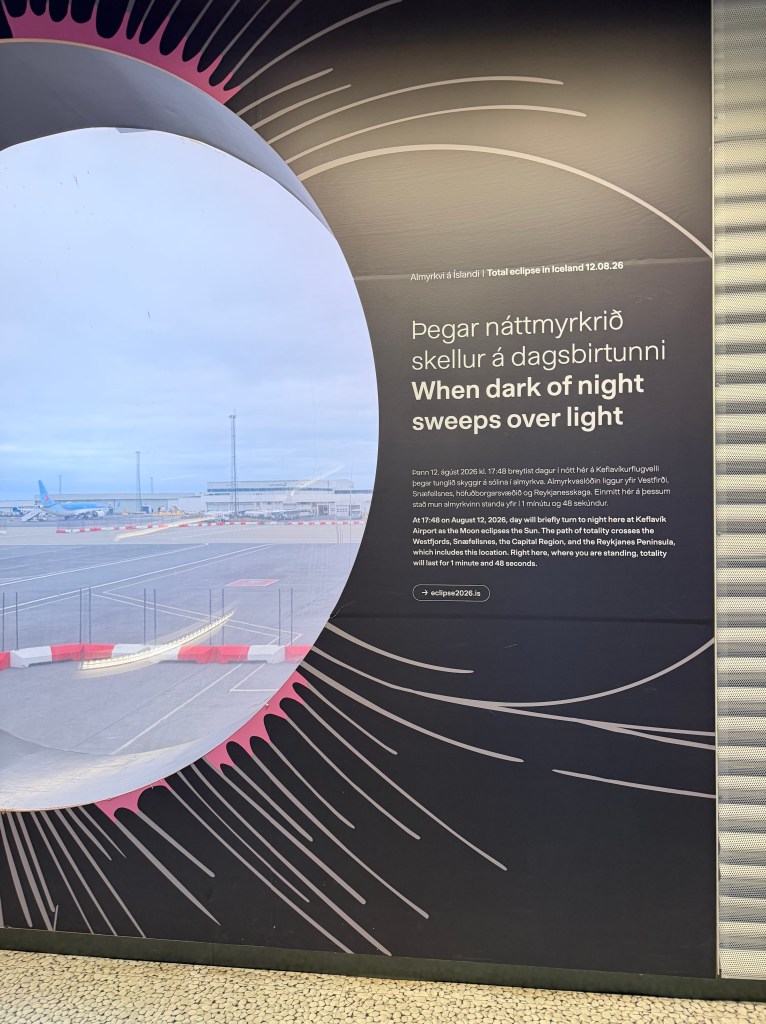
Friends who traveled/lived in Iceland temporarily for their work loved it. Work acquaintances loved it. Everyone had one thing to say: Iceland is expensive. Not it’s unsafe, unclean, unfriendly, etc. She’s going to cost you a little extra—prepare accordingly. Thanks for the warning. I did my best. There was some overspending simply because we found ourselves enamored with Iceland and didn’t want to miss out on a few extra things. (Note: There will always be plenty you’ll miss out on, like us. We missed out on the Northern Lights, which started to crop up again the last few days of our time in Iceland. We weren’t getting up after midnight to try and experience them.)
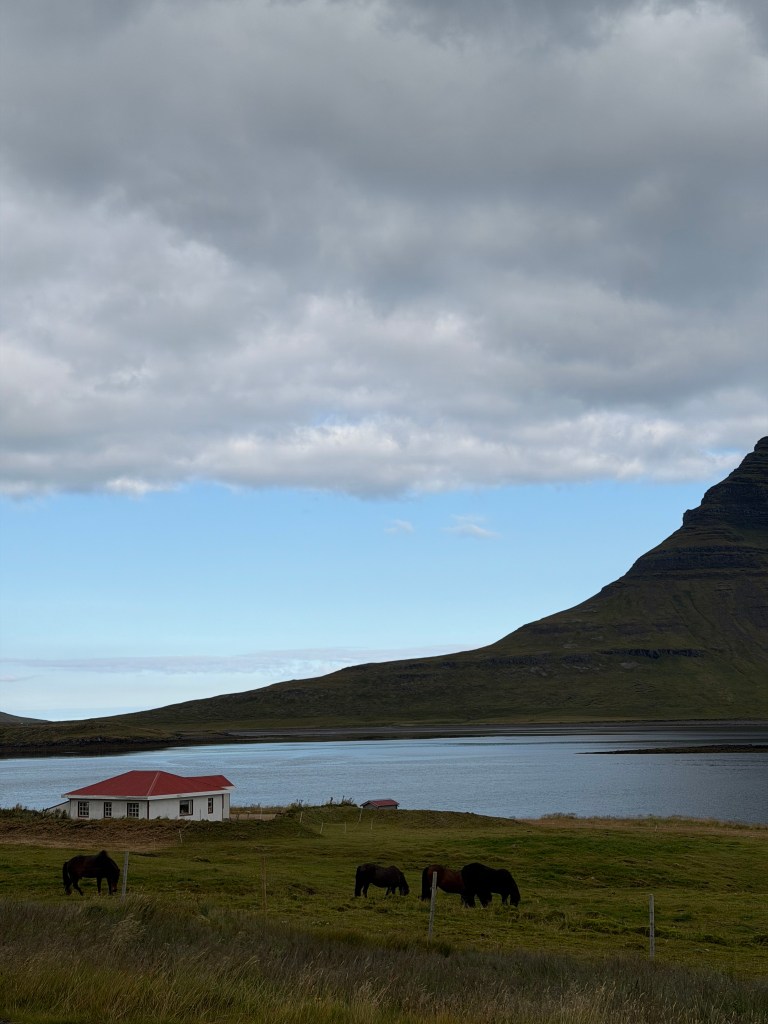
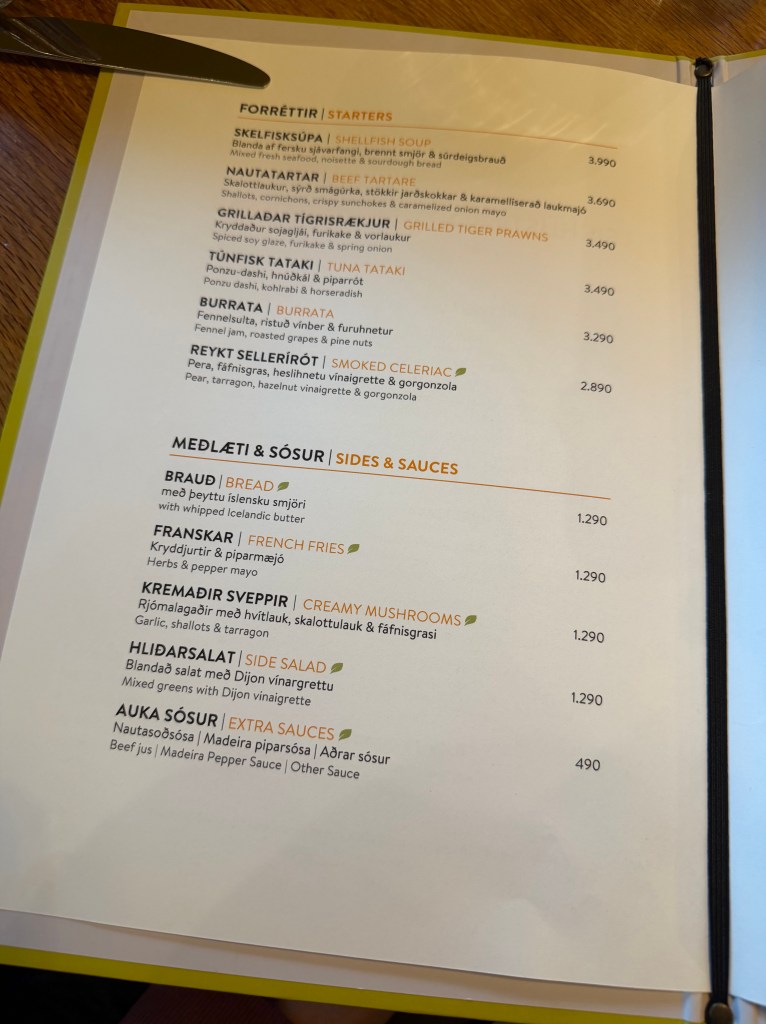
Iceland is expensive for locals and tourists alike. During our stay, the currency conversion was this—1,000 Icelandic krona (ISK) to $8.24 United States dollars (USD). Menus would show a decimal point instead of a comma in their pricing, so 3,890 was listed as 3.890. The current exchange rate showing on Guide to Island’s website is 1,000 ISK or kr (for krona) to $8.25 USD.
An easy “trick” I did for myself was to mentally move the decimal point over and know that there would be a handful of dollars to subtract to get an idea of a meal’s cost. Let’s go back to my earlier 3.890 meal as the example. Move the decimal once to the right; it now becomes 38.90 for my convenience. It’s not entirely accurate. I can guess I need to reduce roughly 2 “dollars” for each 1000 krona the item costs, but if I’m more comfortable assuming this currently as the cost for the menu item, I pick something cheaper off the menu. With the current currency conversion, the meal is $32.08 USD. (With my trick, I would have started with $38.90 and could assume to roughly reduce 6 “dollars” landing at an estimate of the meal costing $32.90 USD.) A 1.700 kr beer means you’re paying $14.02 USD. (Using the earlier trick of mine, it becomes, 17.00 and subtracting 2 for the fact a single krona is involved I could make a quick assumption the beer might have been around $15 USD, which was higher than the end result.) Keep in mind though, there is no need to tip; tipping is not customary like the US. I’ve been reading up a little on Iceland’s living wages, equal pay among genders, and it’s been mentioned tip jars are sometimes put out to fund social events for employees.
Windstar Cruises
We went with Windstar Cruises for our first family cruise. The trip overall was comparable in cost to a small home remodel for my entire family, but we’re reaping all the rewards instead of maybe getting back 66% to 80% of the money we spent on a home project. We learned a lot from our pandemic home upgrades; the market upswing, not the upgrades, made the difference in the sale cost. Our previous home had been purchased with the idea of becoming our forever home, so we started buying finishes that while not lavish were more costly. The money would have been better spent on travel, in our retirement accounts, or in our emergency funds than in a home we no longer occupy hence my reluctance to overspend in our current residence. This place will get what is needed to keep it functional and well maintained, maybe a little tailoring to our taste when items need replacement but I am not onboard with home personalization to the extent we did previously not knowing that this will be the place we call home longterm.
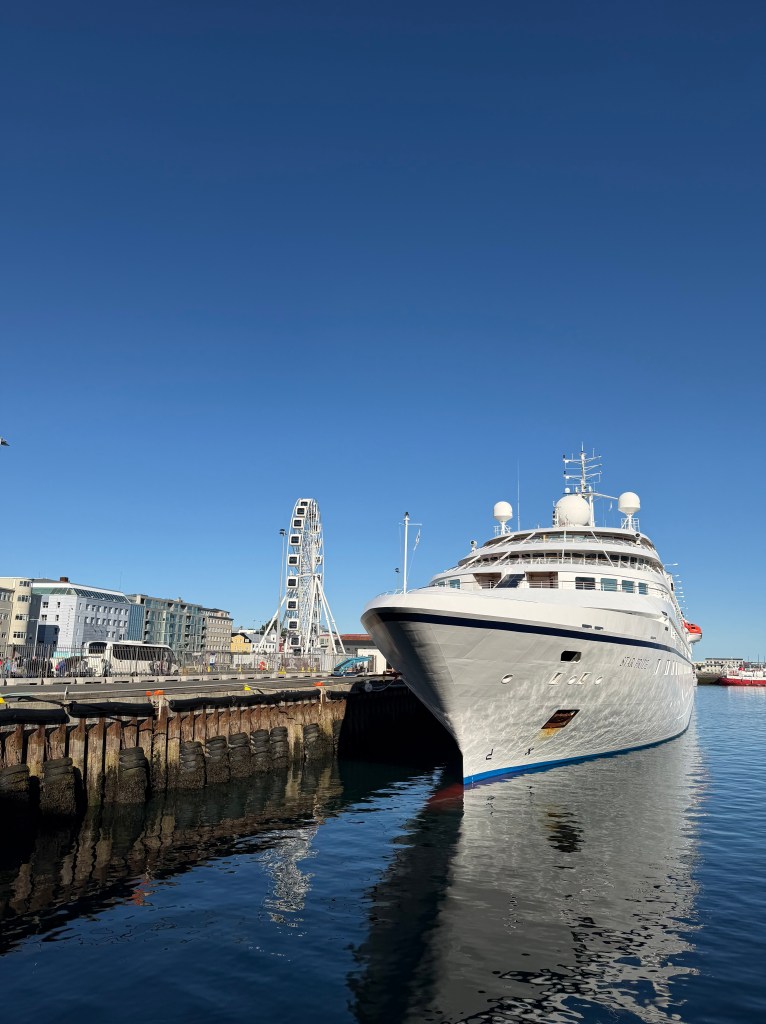
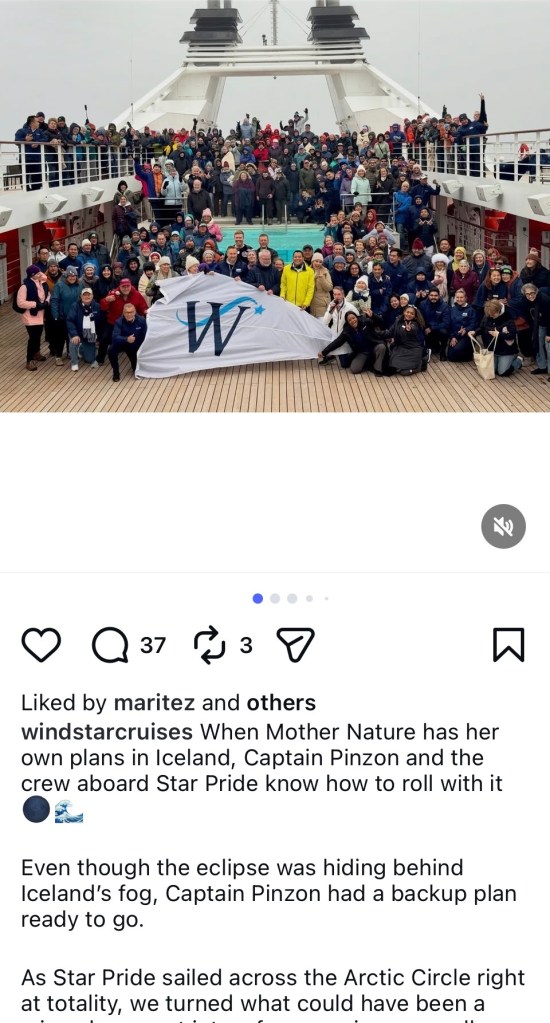
With this all in mind, I am sharing my individual portion of the cruise. There are a lot of solo travelers out there and I would encourage them to not wait to have a companion to do a big adventure. I see a lot of single friends of mine enjoying international travel by themselves and I think the safety of a cruise line like Windstar adds to that comfort. The initial cruise costs $6,439 with $14 for applicable taxes added. This amount was for the solar eclipse experience, the room, food, our drinks package, and the gratuity we added. I noticed some cocktails on ships were advertised to be about $10 or so for those without a beverage package. If you don’t pre-pay gratuity, I believe the suggested amount was $16 a day. The customer service was phenomenal; each staff person truly contributes to the success of the cruise experience. I had excellent support when it came to requesting dairy free meals. Even though I don’t eat a fully dairy free diet at home, I was concerned the limited bathroom situation on ship might be problematic if my lactose intolerance was hard to manage even with medication so I requested dairy free meals. I limited myself to the rare dairy treat when I knew I had medication on hand and a bathroom was nearby in case I felt unwell afterwards. By this I mean, I was only enjoying dairy on ship if eating a treat in our ship cabin. We also had great support when I inquired about how strenuous certain excursions might be since I deal with neuropathy and didn’t want to pay for an experience I would ultimately regret. With the advice of the crew member managing the scheduling of those remaining assignments, we felt it best to opt of out certain waterfall excursions that could be too painful. (The one “misstep” I noticed was whatever chef/cook decided calling a plant-based cookie shortbread was appropriate. I say this kindly, but shortbread is a particular type of cookie. I knew this to be a non-traditional shortbread as it was a plant-based cranberry shortbread but the ‘shortbread’ should have been swapped out from some other descriptor. If you are a foodie like me, shortbread conjures up a certain expectation. Instead, this item was essentially a no-bake chewy cookie, but other than that, the team excelled everywhere else!)
Not all travelers will pay for insurance ($708.29), laundry ($66.50 for unlimited service), or excursions (varies). We paid for those additional items, because they mattered to us. There were far more excursions than mattered to us and to do all would have been financially untenable. Each additional item will certainly expand your budget if you choose to add it, so it’s best to stop and think, does this thing align with my/our values? For that reason, we saved for two years to go to Iceland and with this cruise line and to bookend the cruise with a few days in Reykjavík before and after for safe measure. You can also pre-purchase an excursion and there is a window to cancel the excursion, as needed, if something changes. That lesson will come in handy for the next cruise.
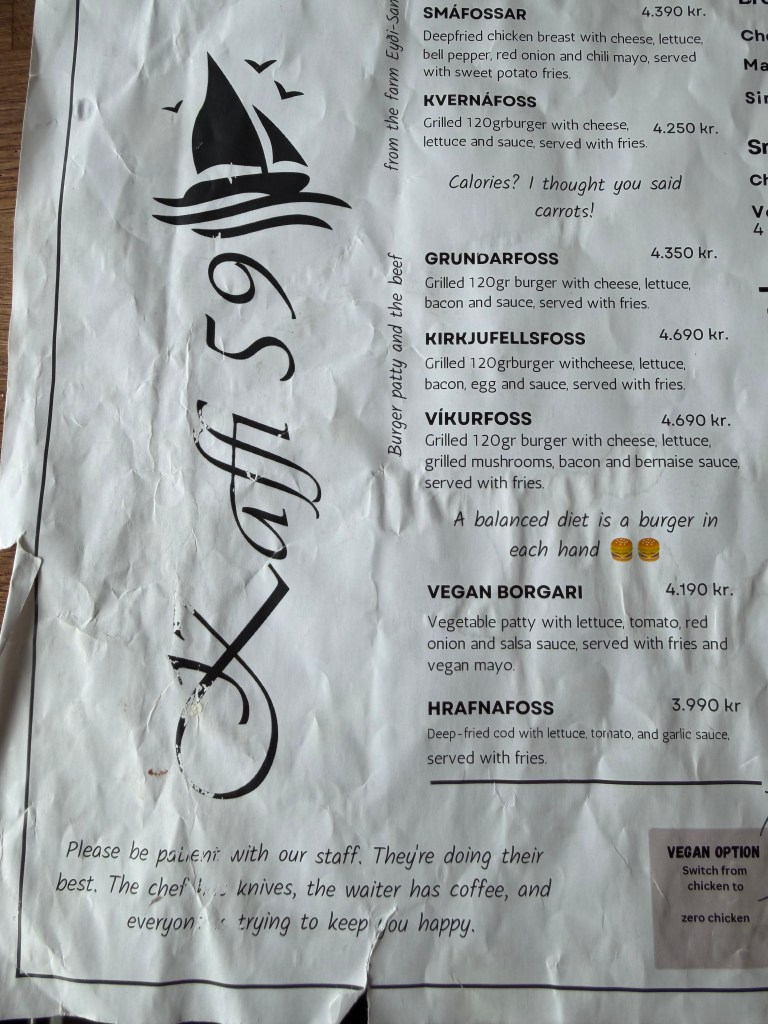
When accounting for the fact all meals, a bounty of snacks (as desired), and drinks were included on board (other than if we wanted to buy full bottles of wine), it was financially more savvy to consume our food and beverages on ship during the cruise than out in the port communities. We learned this lesson during our first stop; our diner lunch at a Kaffi 59 in Grundarfjörður was more expensive (generally) than lunch options we found in Reykjavík, which has more dining opportunities to offer tourists and locals. For anyone who wants to drop into a local venue there, I would still recommend this eatery. The staff were quite kind; the menu is embedded with a dose of humor; and the food is rather tasty.
My family and I had a hilarious experience due to a cultural misunderstanding although both the server and I were speaking English. I had asked about the soup of the day to which the server indicated there was none. I took her comment to mean there wasn’t any soup and ordered a vegan burger with fries instead. As if we were actors in a comedy, the waitress takes the next table’s order and the patrons ask if the restaurant serves mushroom soup. She informs them the soup being served is cauliflower and self-service. I had to hold it together and not laugh that I was “denied” soup–unintentionally, of course. Not wanting to be rude, I didn’t joke with my family at the table about it, but my husband and daughter know all too well of my love for soup. We had the best laugh about it once we were away from the restaurant and joked how the little community of Grundarfjörður “decided” I wasn’t allowed to have any soup. The past few months have been extremely stressful with my dad’s health situation and it felt good to laugh over a simple lunch misunderstanding.
For our other stops, when we wanted little bite during our strolls about, we popped into grocery stores. There are some things easy enough to grab without knowing all the details (if you have allergies or food sensitivities, feel free to ask staff for help): chocolate bars, chips, sandwiches (generally speaking I was comfortable with the options), etc. and so on.
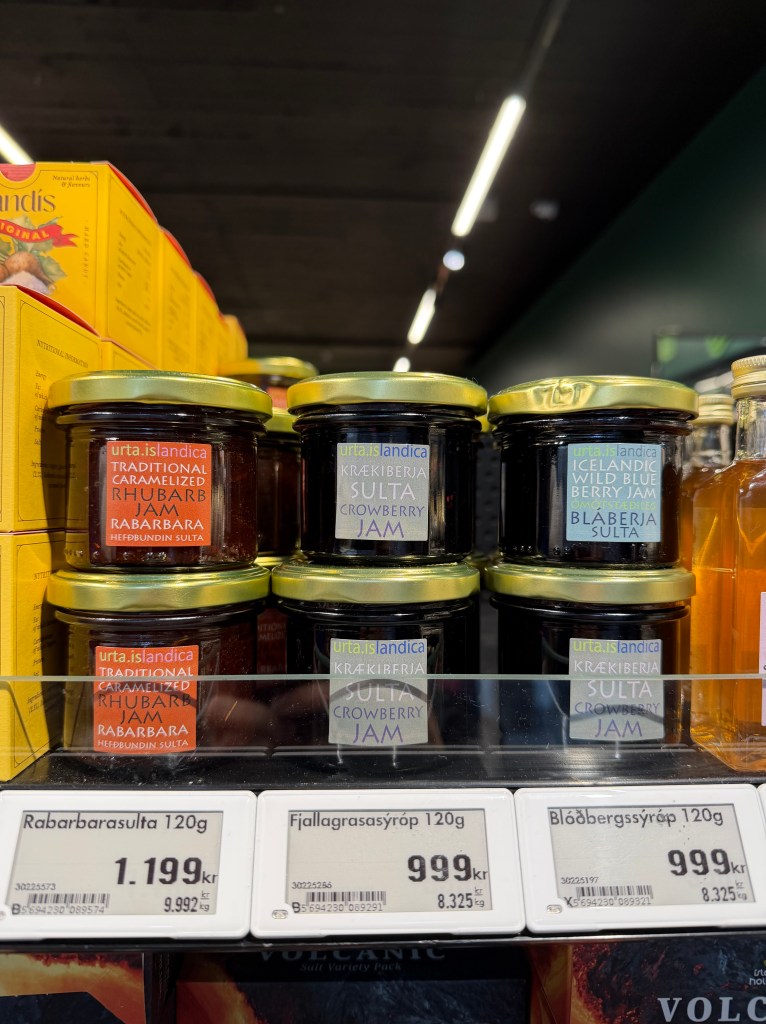
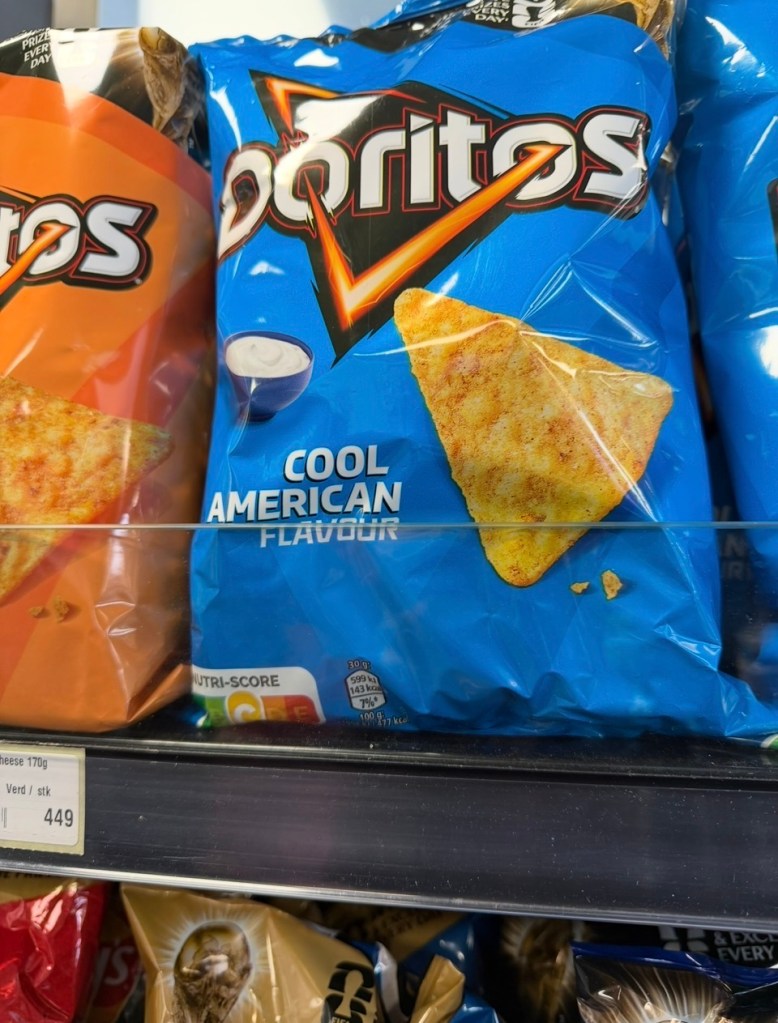
I learned a little Icelandic before the trip, so it helped to navigate the grocery stores. After receiving a licorice and caramel candy bar (Risa Þristur) from a hotel as a welcome present and not bothering to look at the ingredients list, I learned to look out for lakkris (licorice); I do not like American licorice, and I can also say I now know I don’t care for Icelandic licorice treats either. I never thought there would be licorice in chocolate bars, only in gummy candies or ice cream as it was something I’d heard of. I was only expecting I needed to look out for licorice on dessert menus and that would be where my risk of encountering the ingredient and possibly offending Icelanders would occur. Instead, we were happily ensconced in our hotel room watching a show, tried our treat, equally agreeing it wasn’t to our tastes, and disposed of the remnants respectfully in our hotel room trashcan. The Sirius brand candy bar (a non-licorice flavor, by the way, because they do have a licorice one) left in our ship cabin as a gift one night was more fitting to our American palates.
If you’re interested in trying some Icelandic treats, feel free to check out The Icelandic Store. Their site indicates they ship from Hafnarfjörður, Iceland to the U.S., Canada, and Europe.
Exploring Beyond Our Original Expectations
Preparing to see Iceland, I think a lot of us outsiders are greeted with the same messaging. There are waterfalls, Northern Lights, glaciers, black beaches (especially diamond beach), Reykjavík’s famous church and rainbow road, and so on. What to visit largely depends on when you plan to visit, your budget, and the time you have available (plus your mobility to traverse and wait out those more difficult excursions because there will be lots of visitors queuing up as well to visit the sites).
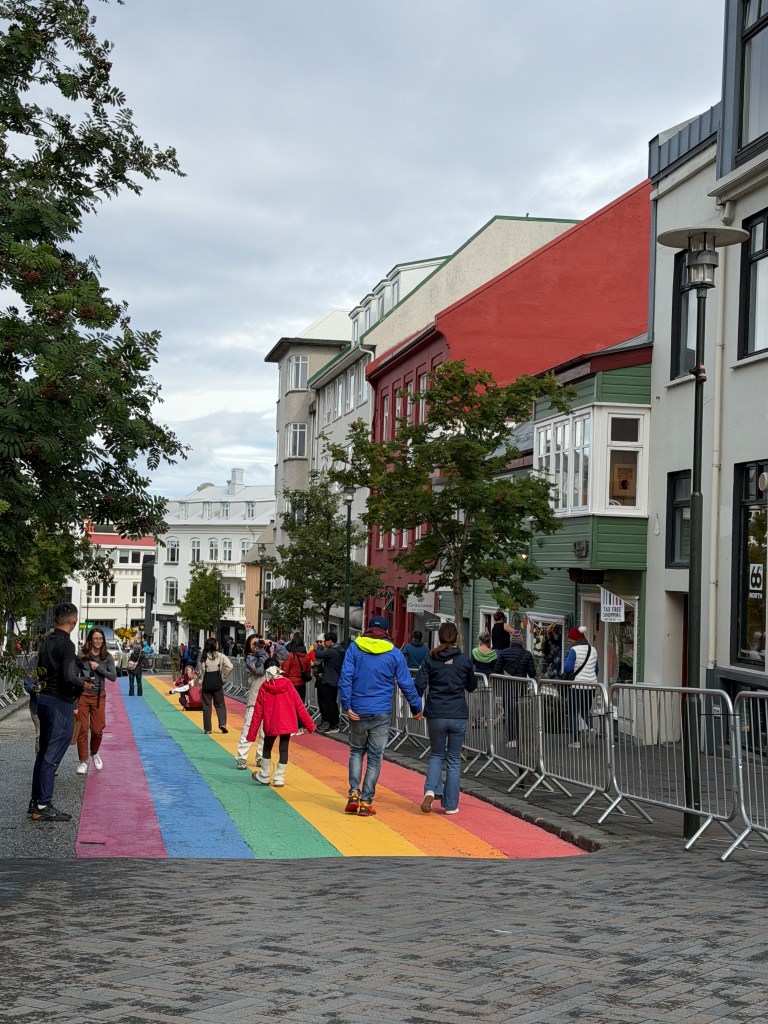
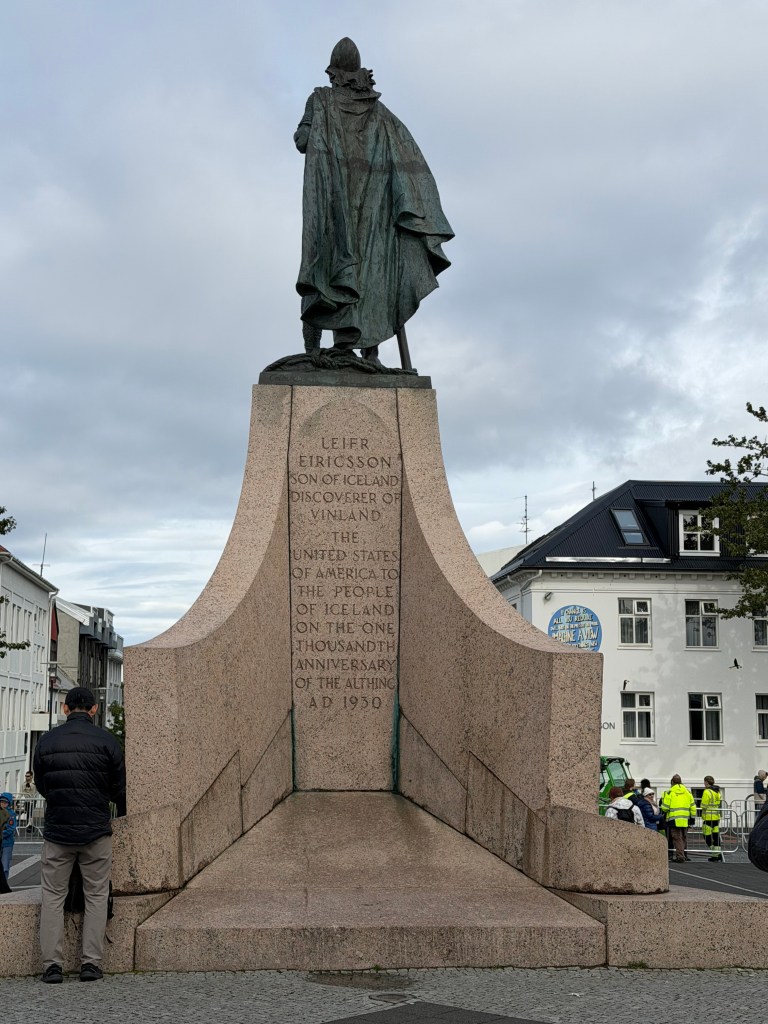
I wasn’t surprised to overhear a fellow tourist bringing up the name of Jewells Chambers, the founder of the All Things Iceland podcast. Her work was part of my Iceland research; I regret to inform you I totally forgot to drop by one of the plant-based bakeries she recommended. Plantan kaffihús had long been on my list of places to visit in Reykjavík and then I got a bit overwhelmed with the crowds of tourists ahead of the solar eclipse to the point that visiting the bakery slipped my mind. When there are hoards of visitors crowding around storefronts it is hard to see what is what in an area you are not familiar with; if I had planned better, I would have written down the address, both as a reminder to visit and to find the general area when storefronts are crowded with people taking their photos. The owners are kind-hearted and look out for tourists, handing out coffees on treacherously cold days, which is a significant reason why I wanted to visit them. For all the times they’ve handed out free coffees to strangers, I wanted to be a stranger who came in to buy something as a thank you for their generosity. And then I was a goof who got overwhelmed and never dropped in.
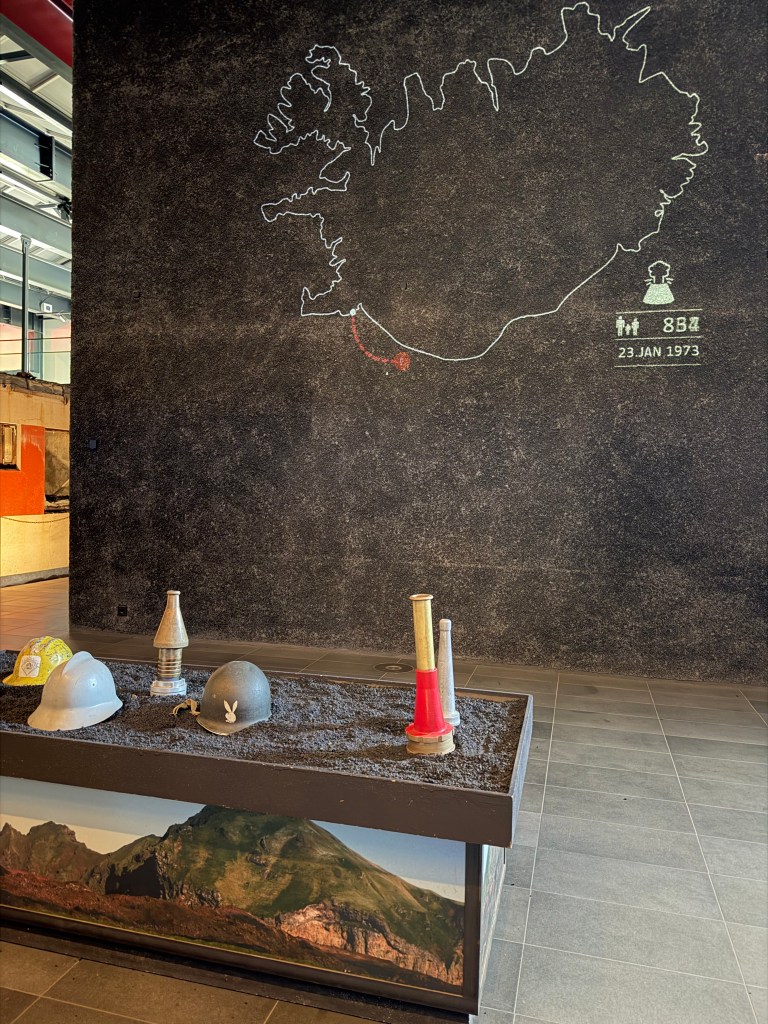
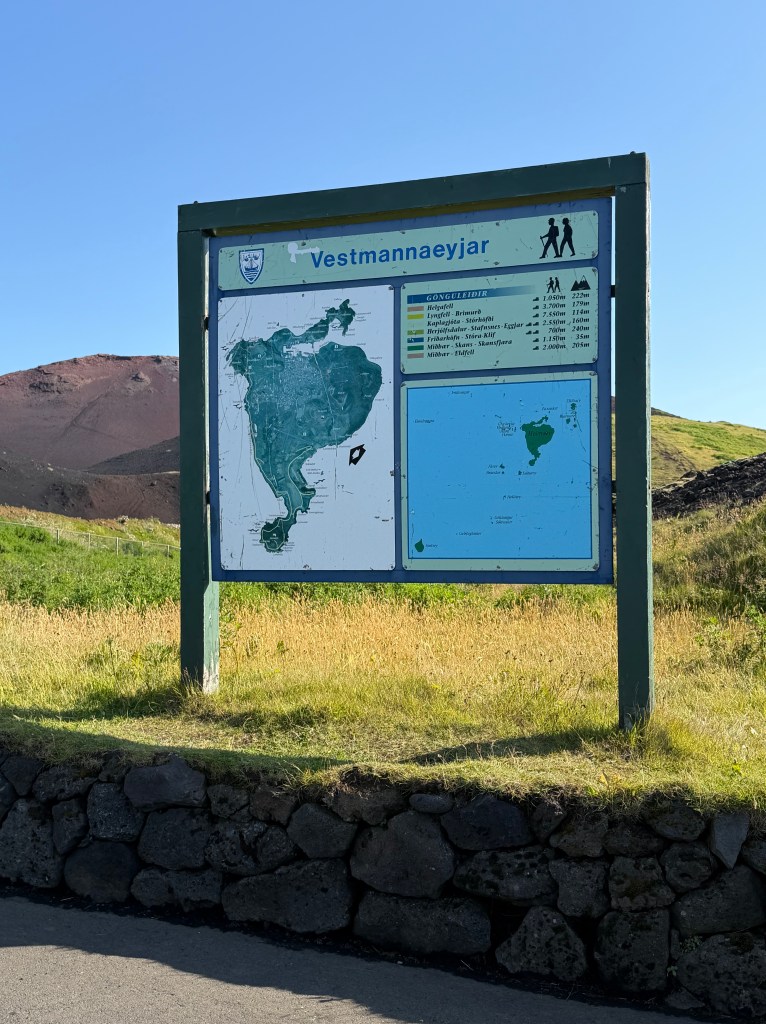
We discovered things about Iceland not on our original wishlist, and I’m grateful for the unplanned learning experiences. The opportunity to visit the Eldheimar Volcano Museum on Heimaey Island allowed us to learn about the destructive January 1973 volcanic eruption there. During our tour, there weren’t enough audio guides to go around. I wandered around, looking at the excavated home, the images, and tried to grasp what I could piece together. Afterwards, our tour guide and his dad (the bus driver!) took us to the spot where lava had overrun housing developments. I didn’t photograph the memorial post about it as it was close to a picnic spot being used that day although I, and others, captured photos of the site itself and other signage.
Challenges
Driving in Iceland won’t be for everyone. There are a large number of roundabouts to navigate. A new thing we encountered are the traffic light patterns; Iceland uses yellow lights before red and green lights. There are bus lanes with their own traffic signals. I happily let my husband be the driver. More so than driving, parking is something to talk about as we discovered not all parking garages operated 24 hours. We left Reykjavík before the city held its Culture Night celebration in honor of its 240th birthday and would have dealt with our 24 hour parking garage, the Hafnartorg Car Park, being closed for the event.
Iceland is very clean. Part of it seems to be accomplished by not offering a lot of public restrooms. I’d like to say that I’m joking but I’m not. A lot of retailers don’t have public restrooms, but restaurants and hotels do. We located a freestanding public restroom within Reykjavík we couldn’t use because someone deposited the wrong coinage in it. This contributed to us stopping by Pósthús Mathöll to use their downstairs restroom one night when we weren’t dining at any of their eateries. (Sorry, but it’s true.) We ate at Funky Bhangra and Fuku Mama located within the food hall during our stays in Reykjavík, so I don’t feel too guilty popping in to use the bathroom on the other occasion.
Simple Joys
Getting back to Iceland being clean, it’s really clean. I enjoyed how little we encountered litter in our walks around the various communities. The things you might notice instead are a handful of cigarette butts in the parking garages, graffiti being a bit more prominent, and locals will point out (not too unkindly from my observations) if you are walking in the bike lane in Reykjavík. You don’t see unhoused persons like we see chronic homelessness throughout the United States; how much is due to weather and how much is based on the social programs is not something I can speak to as an outsider, but it is better that less humans are living on the streets. Living unhoused has a lot of negative consequences for individuals in terms of their safety and health. (A few quick peeks at some Reddit posts and individuals have opened up that Iceland is no utopia despite what it might look like and it is not uncommon to live paycheck to paycheck there.)
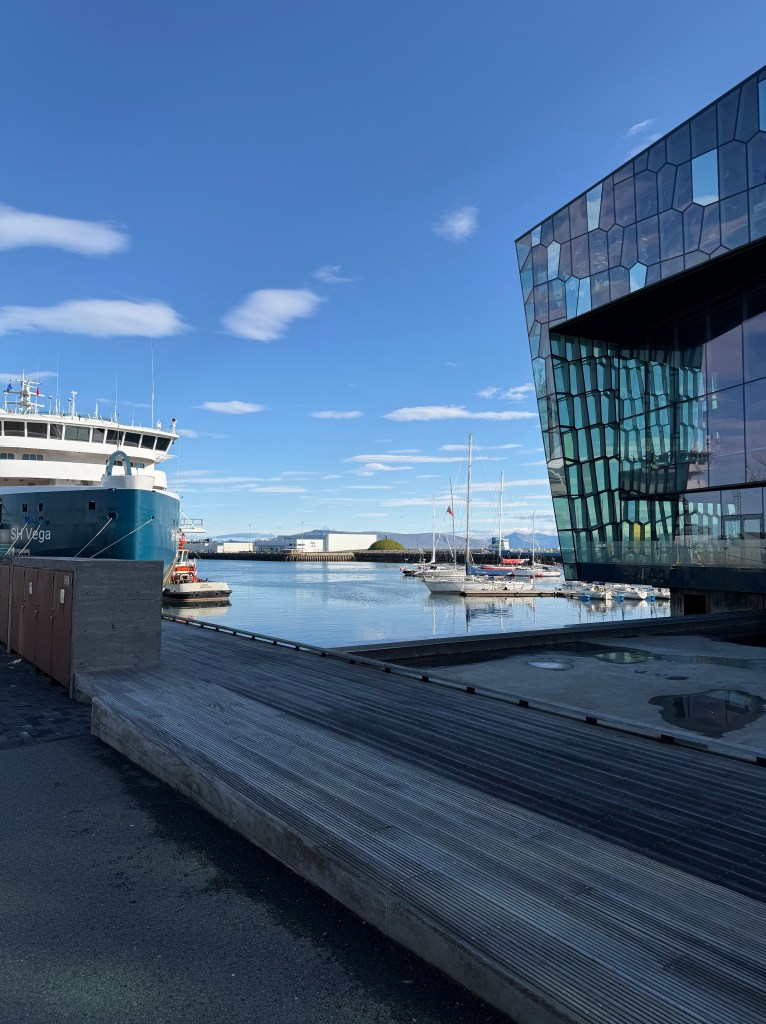
The cost of housing was brought up during our bus tour in Heimaey Island. Our guide mentioned the population there was about 4,500 persons and the housing was about 80 million ISK, which would be about $659,000 USD. It is no wonder then that apartment buildings are significant in number throughout Iceland, regardless of which community you are visiting.
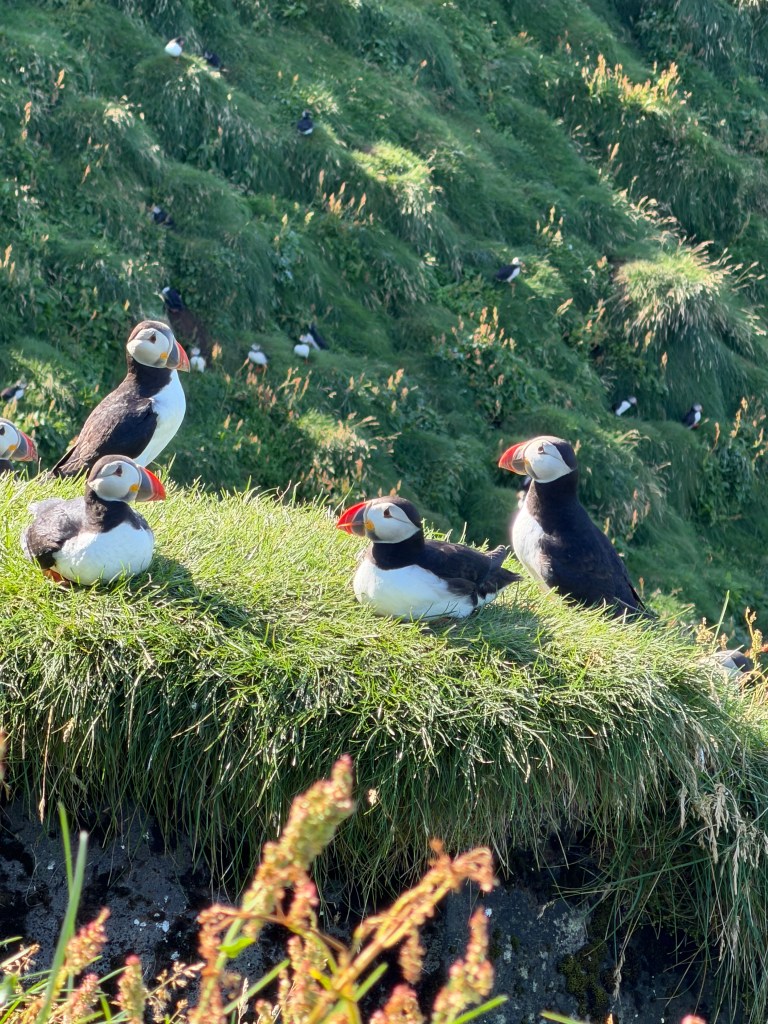
The tap water in Iceland is actually enjoyable. Sounds weird, I know. Please save yourself some money and only buy bottled water when necessary. Our cruise provided water bottles we were free to take out on excursions and we often found an extra one or two refilled in the room upon our arrival back on ship. The water station at Pósthús Mathöll has the Icelandic word for water (vatn) above it, but we found other places simply had a water station and water glasses accessible without signage. Geiri Smart (a restaurant we frequented, located with Canopy by Hilton Reykjavík City Centre) was another place worth mentioning for both its high quality customer service and food. They would bring a pitcher of water to the table and replace it when needed. When we enjoyed our complimentary breakfasts, we’d bring a water pitcher ourselves to our breakfast table.
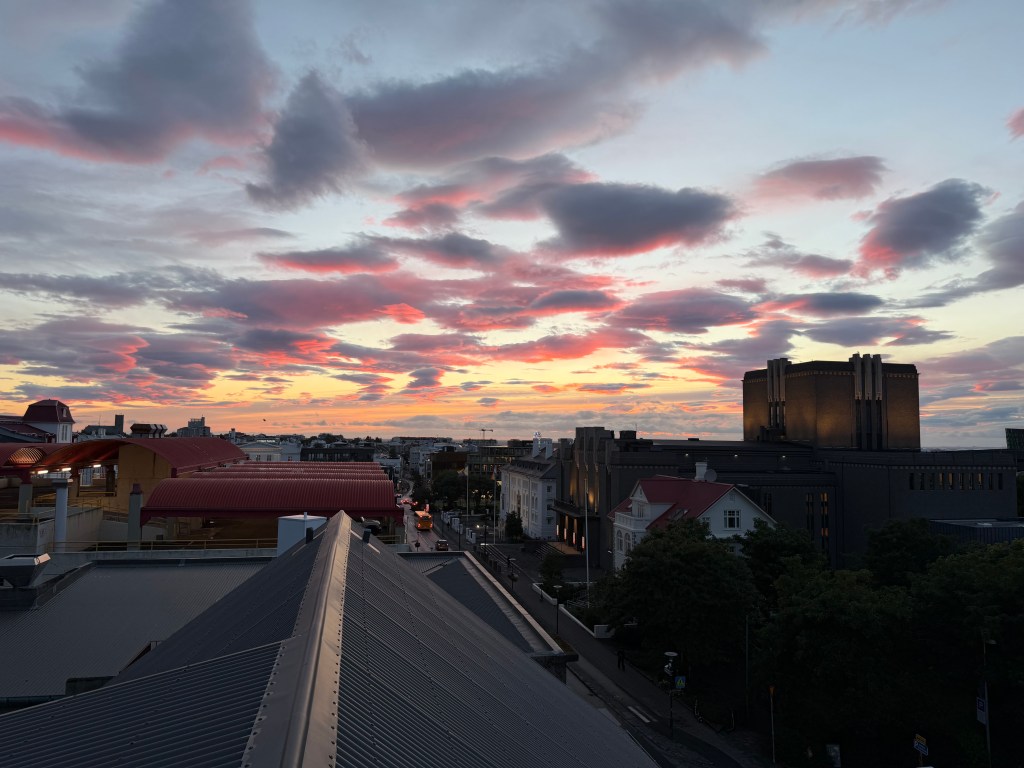
Our “early bird” lifestyle worked out pretty well in Reykjavík. Maybe because this time of year Iceland is enjoying 12 hours of daylight, but we had less crowds for our breakfast outings (around 8 a.m.). Evenings are when the city feels like it most comes alive and gets crowded with locals and tourists. Perhaps it is also because locals are off work and relaxing, but either way, the slower morning vibe works for us and granted me better photo opportunities. Did I share those photos with you? No. Sorry.
I felt extremely safe in Iceland as a tourist. The population is around 400,000 people and the available statistics indicates an average of 3 homicides occur per year across the country with domestic violence generally being relevant in those incidents. Like any other country, there’s always a concern for pickpocketing, so we were good about keeping an eye on our possessions and watching out for suspicious behavior.
We only bore witness to one traffic accident being cleared off the road during our travels and we had a bit of a comedy show seeing someone who appeared to be trying to flee an officer on a rural-ish road—our bet is it was a tourist thinking it was better to find a spot to pull over the vehicle. We never saw the end of the pursuit as our adventure continued beyond where the situation was unfolding.
I love soup, so being in Iceland was my way of jumping into “soup season” a bit early this year. Our Arizona summers in the Phoenix metropolitan area deliver temps around 110 to 115 degrees Fahrenheit (and slightly higher at times)and fall has been warmer the past few years, too. Craving soup and stews when temps are in the triple digits or just below is asking to be disappointed. Iceland allowed me to make up for the past few years. The temperature was just below 50 degrees in the morning and our highest day was 58 degrees Fahrenheit. We didn’t stay outside on ship too often in the evening, but one night the temperature was 43 degrees between 5 and 6 p.m., by comparison.
In Reykjavík, I enjoyed traditional lamb soup from Icelandic Street Food and a vegan Italian tomato soup topped fresh basil (2.990 kr or $24.66 USD currently) from Hornið. Geiri Smart has a shellfish soup for 3.990 kr or $32.90 USD at the current currency conversion rate.
The cafe in Eldheimar Volcano Museum had a mushroom soup that I doubt any place I will ever visit in the U.S. can compete with; we discovered both in Iceland and on the cruise mushrooms are treated better as an ingredient than they are here in our country. Every dish we had prepared with mushrooms was delightful.
On ship, I tried various soups and their soup adjacent cousin, seafood in broth, when it was presented for lunch. The cruise provided me a chance to try a tomato soup prepared with lemon grass. Also worth trying to replicate at home.
Iceland also presented far too many opportunities to obtain good landscape photographs; I am now challenged in deciding which ones are worthy to cover our walls, which ones can be happy phone memories, and which ones to park in a scrapbook. I’ve seen some of those digital glossy travel books as modern scrapbooks, but I want something “old school.” I have an array of receipts, a newspaper, and an IKEA store map (did you know Iceland had an IKEA?) that I want house together with some photos.
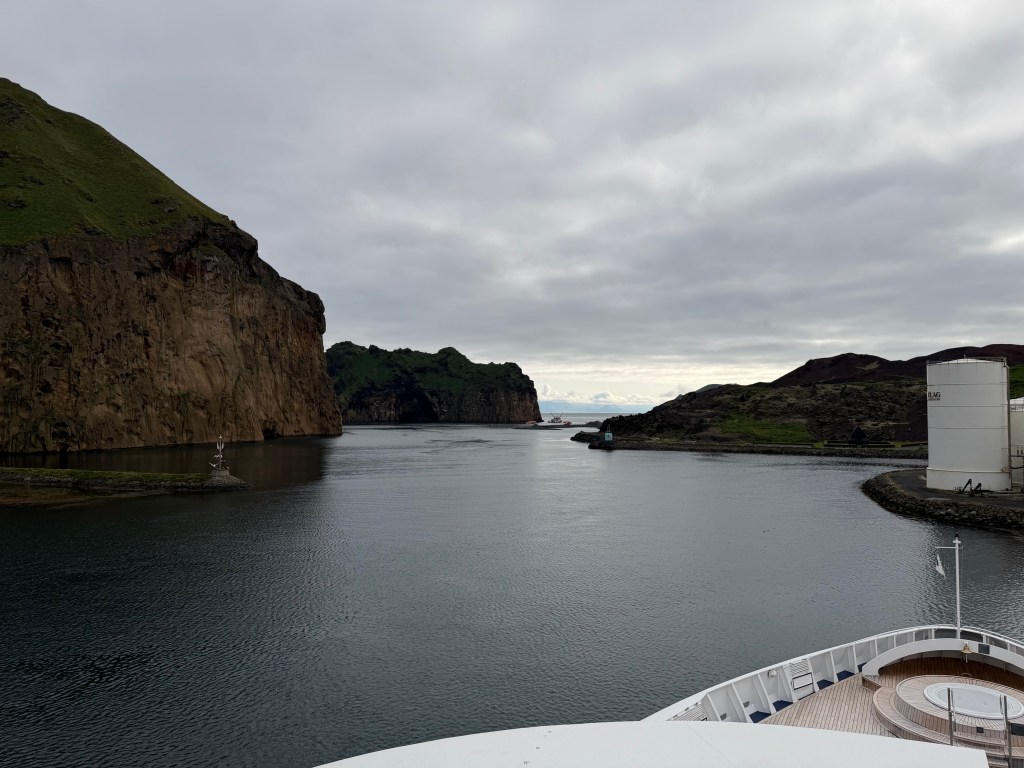
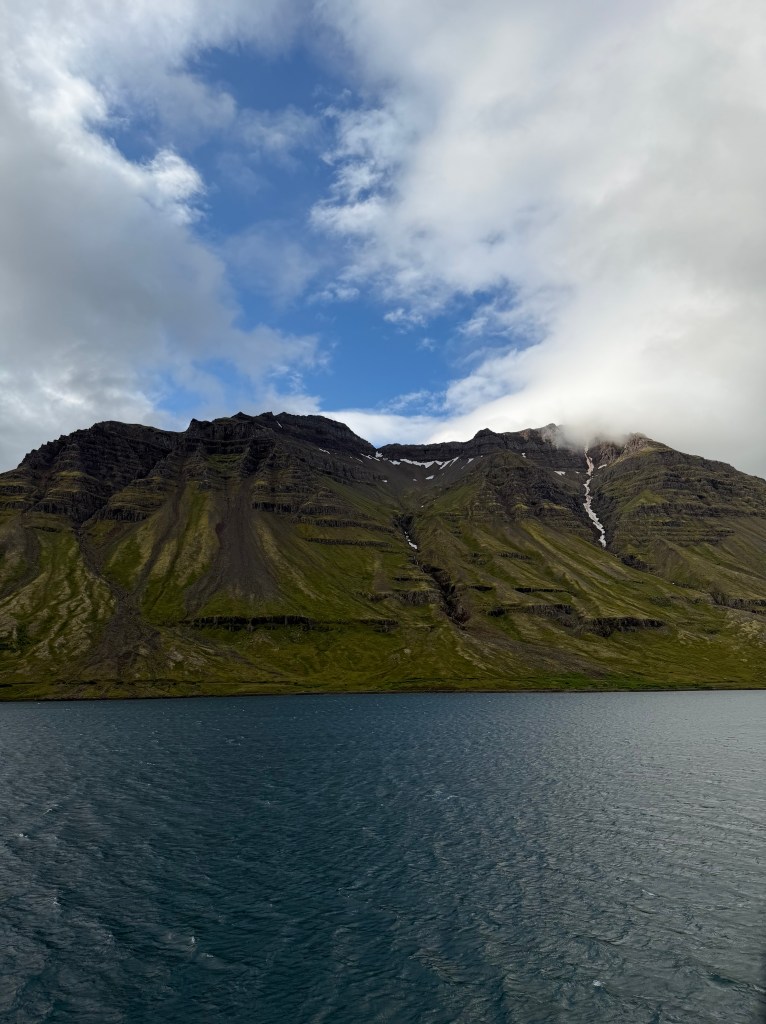
If you are planning a trip to Reykjavík, might I suggest reading a little bit of the Reykjavík Grapevine magazine?
Well, that’s my little recap of our trip. I wanted to offer a slightly different perspective and photos a little offbeat from everything else I tend to see offered. We did visit Sky Lagoon. I captured photos of every rainbow road I could find. We dropped into Perlan one day, which I also recommend seeing since it is a great way to learn about volcanoes and glaciers. Of course, there is no shortage of waterfalls to see. Plenty of people will talk about driving Ring Road.
I didn’t want my reflection to feel like a duplication of everything else that’s out there. When our stories feel like carbon copies of each other’s, I feel that the heart of the places we visit is ultimately lost in the process.
My travel story should be–and is–different. Traveling with a disability and special dietary needs (even when I don’t follow them well) influences my comfort and wellbeing. I would like to point that I felt, maybe due to where I am at currently in life, that it was easier to see individuals with disabilities navigating around Iceland. I saw tactile paving in Reykjavík to a greater degree than when I see utilized in the United States. A number of families were traveling with family members with mobility limitations for the solar eclipse. Not that I thought it was unexpected, but representation matters. How often do we see persons in that situation in advertising materials? Some of the sidewalks weren’t the best for wheelchairs since there were made of stone, but again, Reykjavík has a bike path and I see that opportunity as allowing persons with mobility issues to be out and about in their community more. On the food side of things, you do need to inform an establishment of allergies. This reality applies stateside and abroad. Not everything can be accommodated. Regarding Windstar Cruises, their full site on accommodation issues spans a broad spectrum and is a valuable learning tool I think for all of us as we build better workplaces.
Thanks for letting me share my experiences. I hope you’ve enjoyed the bits I’ve shared.
~Cheryl

 She Wears Dogtags